Selection & Specification
Drilling Fluid Shear Pumps: Duty and Hydration Evidence Review
View the model-specific values, conditions and sources
Start with the decision that could change the purchase
A quotation headed shear pump can leave three different questions unanswered: can the assembly circulate the required fluid through the proposed circuit, what treatment is intended, and what evidence will show that the prepared fluid is acceptable? Review them as separate decisions. A motor size cannot answer the last question, and a claim about hydration cannot establish the first.
Begin by naming the unresolved outcome. Is the purchaser replacing a known assembly, adding a treatment function, or addressing a mixing-quality concern? Existing equipment records can help define a replacement, but they do not automatically validate a changed recipe or circuit. This guide concerns technical document review, not an operating sequence, chemical-addition procedure or permission to change a drilling-fluid program.
Distinguish transfer, shear treatment and hydration
For a transfer requirement, ask the bidder to demonstrate the hydraulic duty against the specified fluid and system. For a shear-treatment proposal, ask what pump internals and package arrangement are actually offered and what treatment objective they address. For hydration acceptance, require the fluid specialist to define the properties and evaluation basis that would constitute an acceptable mixture. Do not use those three descriptions as interchangeable equipment specifications.
The GN official shear-pump page describes JQB series use in drilling-fluid preparation and hydration. That is a statement of application, not a formulation-specific trial. It does not justify a universal reduction in chemical consumption, guaranteed mixing time or improved polymer properties. A bidder should identify the limits of any application evidence rather than extending a successful result to every additive.
Give hydraulic evidence its own review track
Build a hydraulic review sheet around the required circulation and the available suction arrangement. State the fluid identity, density, relevant rheology data and measurement conditions, solids information, temperature and gas concerns. Include tank levels, a circuit drawing and the system losses used in the purchaser's duty definition. Where the basis is incomplete, mark it as an assumption rather than supplying a convenient water-like value.
Request a configuration-specific curve with its speed, geometry, test fluid and applicable tolerances identified. Ask how the supplier relates that evidence to the proposed mud and what limitations remain. Review the absorbed-power and suction requirements on the same basis. A single catalogue flow entry is neither a full operating envelope nor evidence of the required point on the actual circuit. Do not convert a lift entry into a casing pressure rating.
Treat motor power and electrical compatibility separately
The GN catalogue, printed page 48, lists motor power 55 kW for GNJQB6X5C-550. That installed motor entry is not measured absorbed power or a statement of compatible supply. Ask for the offered motor nameplate data, drive arrangement, speed relationship, starting method and the supplier's loading assessment for the proposed service.
Have the electrical reviewer reconcile voltage, frequency, controls, protection and any site classification requirement with the specific assembly. Where hazardous-area documentation is required, request identifiable documents covering the supplied equipment and its configuration. A short EX entry in a sales table does not establish certification scope, suitability for the destination or acceptance by the purchaser.
Define hydration acceptance before comparing promises
Ask the responsible fluid specialist to define the evaluation: the additive and base fluid, concentration basis, relevant chemistry, temperature, sampling time, measurement method and acceptance criteria. Require the bidder to identify which of those conditions its supporting evidence actually covers. Keep an observation from another recipe distinguishable from a commitment for this purchase.
For example, a fictional comparison may contain one offer supported by a hydraulic curve and another supported by a short mixing demonstration. Neither automatically replaces the missing evidence in the other. Record the curve's applicability separately from the demonstration's formulation and measurements. Leave the treatment result unconfirmed until the purchaser's reviewer accepts the relevant evidence; do not prescribe trial settings or operating changes from this comparison.
Close physical and documentary mismatches
The same GN row gives weight 965 kg and dimensions 1333 x 1000 x 931 mm. Those entries help flag an envelope mismatch, but do not establish axis names, accessory inclusions, service clearances or shipment gross mass. Request a scope-matched arrangement drawing and mass schedule before resolving layout or transport questions. Keep alternative drives or larger integrated systems on separate comparison lines.
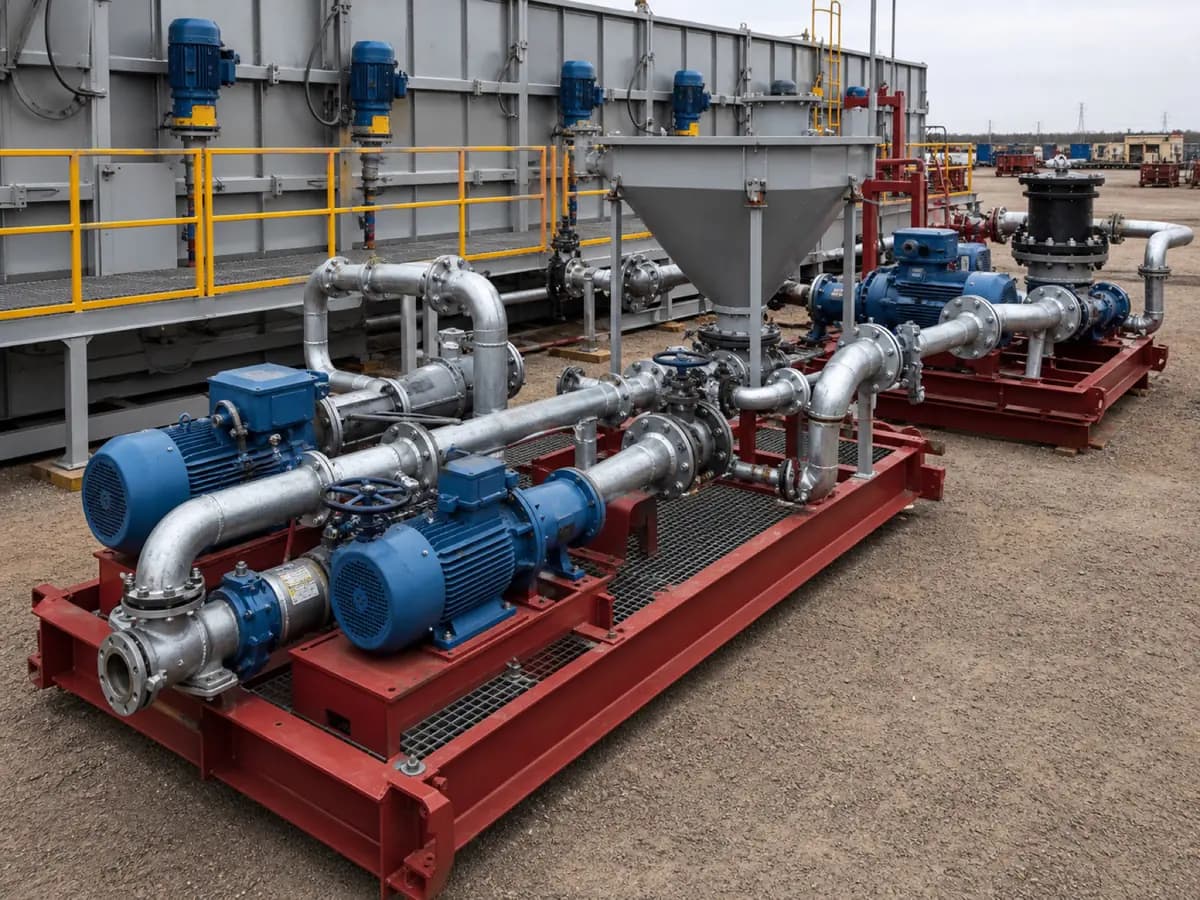
Use the drilling-fluid shear-pump reference for the retained model-bound facts. Carry unresolved hydraulic, treatment, electrical and package questions into the RFQ Builder, with a named technical owner for each gap. The shared AI-generated category image supplies context only; it is not a photograph of the cited configuration or evidence of its performance.
Referenced model data
- GNJQB6X5C-550Catalogue motor power
- 55 kW
Only the GNJQB6X5C-550 row in section 6.2. This is listed motor power, not measured absorbed power, supply voltage, operating load or confirmation for a diesel alternative. Current official HTML says parameters are for reference only.
Printed/PDF page 48, section 6.2 Shear Pump, GNJQB6X5C-550 row, Motor column.Checked 2026-10-24
- GNJQB6X5C-550Catalogue equipment weight
- 965 kg
Weight entry for the illustrated GNJQB6X5C-550 configuration. The table does not define included accessories or whether this is dry, operating or shipping mass; it is not shipment gross mass or an approved lifting load. Current HTML calls parameters reference only.
Printed/PDF page 48, section 6.2 Shear Pump, GNJQB6X5C-550 row, Weight column.Checked 2026-10-24
- GNJQB6X5C-550Catalogue dimension sequence
- 1333 x 1000 x 931 mm
Dimension sequence is transcribed in source order for GNJQB6X5C-550. Axis names, tolerances, maintenance clearances and package inclusions are not defined. These are reference dimensions only; confirm the offered configuration on an issued arrangement drawing.
Printed/PDF page 48, section 6.2 Shear Pump, GNJQB6X5C-550 row, Dimension(mm) column.Checked 2026-10-24
- GN JQB series shear pumpsFamily catalogue referenceGN's stated drilling-fluid preparation application
- JQB series is presented for drilling-fluid preparation and treatment, including mixing and hydration of added materials.
Attribution of intended application only. Not a verified hydration result, polymer-quality guarantee, energy saving, chemical saving or measured improvement. No formulation, test method or acceptance threshold is provided.
Shear pump page, DESCRIPTION, opening JQB series paragraph before Shear Pump Photos.Checked 2026-10-24
| Model | Parameter | Reference value | Conditions and source |
|---|---|---|---|
| GNJQB6X5C-550 | Catalogue motor power | 55 kW | Only the GNJQB6X5C-550 row in section 6.2. This is listed motor power, not measured absorbed power, supply voltage, operating load or confirmation for a diesel alternative. Current official HTML says parameters are for reference only. Printed/PDF page 48, section 6.2 Shear Pump, GNJQB6X5C-550 row, Motor column.Checked 2026-10-24 |
| GNJQB6X5C-550 | Catalogue equipment weight | 965 kg | Weight entry for the illustrated GNJQB6X5C-550 configuration. The table does not define included accessories or whether this is dry, operating or shipping mass; it is not shipment gross mass or an approved lifting load. Current HTML calls parameters reference only. Printed/PDF page 48, section 6.2 Shear Pump, GNJQB6X5C-550 row, Weight column.Checked 2026-10-24 |
| GNJQB6X5C-550 | Catalogue dimension sequence | 1333 x 1000 x 931 mm | Dimension sequence is transcribed in source order for GNJQB6X5C-550. Axis names, tolerances, maintenance clearances and package inclusions are not defined. These are reference dimensions only; confirm the offered configuration on an issued arrangement drawing. Printed/PDF page 48, section 6.2 Shear Pump, GNJQB6X5C-550 row, Dimension(mm) column.Checked 2026-10-24 |
| GN JQB series shear pumpsFamily catalogue reference | GN's stated drilling-fluid preparation application | JQB series is presented for drilling-fluid preparation and treatment, including mixing and hydration of added materials. | Attribution of intended application only. Not a verified hydration result, polymer-quality guarantee, energy saving, chemical saving or measured improvement. No formulation, test method or acceptance threshold is provided. Shear pump page, DESCRIPTION, opening JQB series paragraph before Shear Pump Photos.Checked 2026-10-24 |