Selection & Specification
Casing Centralizer Clearance and Cable Protection Review
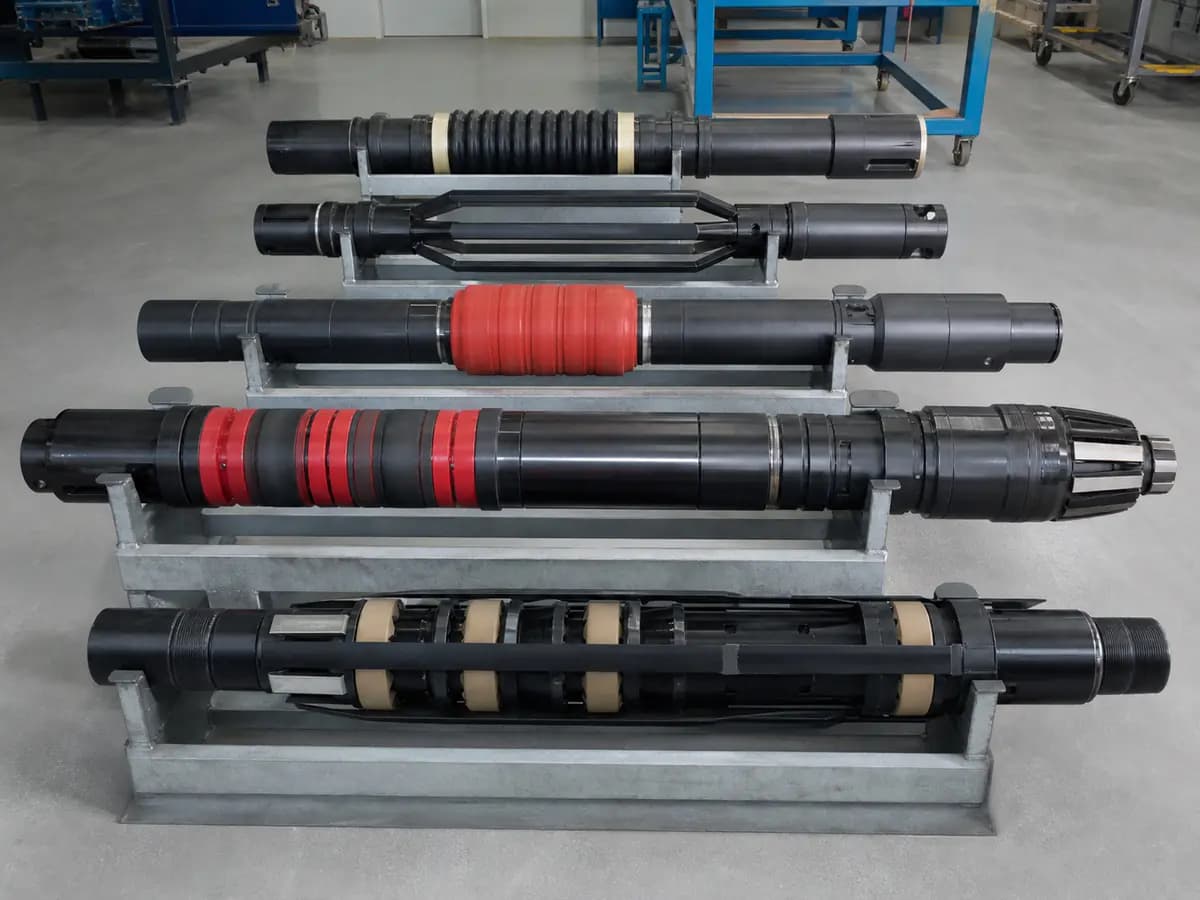
View the model-specific values, conditions and sources
Start with two independent review records
A completion purchase can contain both casing centralizers and ESP cable protectors without either item satisfying the other's requirement. Create a centralization record for casing support and a cable-protection record for external lines. Give each a configuration identifier, drawing revision and responsible technical reviewer. This prevents a broad description such as completion accessories from concealing unanswered interface questions.
The casing centralizers and cable protectors product reference contains the sourced accessory examples. Use this guide to organize the decision record, not as a placement calculation or an installation procedure.
Reconstruct the complete restriction path
Ask the buyer's technical team to identify the limiting restrictions along the intended path, not only the nominal final hole size. Record the supporting drawing or survey reference and whether a dimension is nominal, minimum or still unconfirmed. Include the casing or tubing connection geometry and every accessory that contributes to the assembled outside envelope.
A nominal casing designation does not identify the available passage through another component. Likewise, a centralizer body's dimension is not necessarily the envelope of its retention arrangement. Require the bidder to return the proposed assembly drawing against the same input revision. If the returned drawing omits a stop collar or coupling that affects clearance, mark the review incomplete rather than accepting the smaller bare-component outline.
Keep geometry separate from load response
The Completion Oil Tools catalogue, printed page 15, lists CT-HNBSC for 7 in casing and an 8-1/2 in hole with 9.724 in maximum OD and four bows. The listed outside envelope and bow construction do not establish that the chosen arrangement will meet a project's support requirement.
For a bow-spring proposal, request the applicable starting, running and restoring-force evidence with its test geometry and configuration. Keep that evidence tied to the placement assessment. A catalogue compressed diameter without stated force and assembly conditions should not close a restriction review. For a rigid proposal, ask for the applicable geometry and load basis rather than carrying a spring response from another construction into the evaluation.
The Weatherford family descriptions, printed page 35, illustrate why the construction field matters: its stamped standoff band has collapsible raised blades, whereas its short-spiral rigid centralizer is welded mild steel. Neither family description is a size-specific substitute for the offered drawing or test record.
Review the cable channel as a matched interface
Begin the protector record with actual cable and control-line drawings. A conductor designation alone does not describe the external shape, armor, encapsulation or combined bundle envelope. Identify the coupling that the protector crosses and the required line positions; require the supplier to mark the channels on the assembly drawing.
| Interface question | Return document | Keep the item open when |
|---|---|---|
| Does the body match the tubing and coupling? | Dimensioned assembly with connection reference | Only nominal tubing size is supplied |
| Do the channels match the actual lines? | Cable/bundle envelope and channel layout | Cable shape or extra line positions are missing |
| Is the complete envelope assessed? | Assembled outline including retention hardware | Only a protector body dimension is returned |
| What protection performance is supported? | Applicable load/test basis and limitations | A family headline replaces configuration evidence |
FET's Cannon low-profile ESP protector page supports the cable-and-capillary protection function across couplings. It does not provide a configured dimensional row here. Leave dimensions and available supply unconfirmed; do not borrow the centralizer's OD, infer universal channel fit or present family marketing as a cable-retention rating.
Close the document basis before price comparison
The API catalogue, printed page 21, distinguishes Spec 10D, seventh edition, April 2021, for casing bow-spring products from RP 10D-2, second edition, August 2023, for placement and stop-collar testing. The former excludes rigid centralizers. Record the agreed document, edition and applicable amendments per enquiry line; neither entry establishes an ESP protector specification or an offered product's compliance.
Return unresolved items as a dated exception list with an owner. Compare quotations against the same configuration revision, scope of supply, document deliverables, destination and packing requirements. Do not award technical equivalence from a similar photograph or a material name alone.
Submit both review records through the RFQ Builder. Ask for a line-by-line response identifying confirmed geometry, evidence still required and commercial availability. This is a procurement document workflow, not permission to run an assembly or a guarantee of cement placement or cable survival.
Referenced model data
- Completion Oil Tools CT-HNBSC, 7 in casing x 8-1/2 in holeCatalogue maximum outside diameter
- 9.724 in
Only the CT-HNBSC specification-guide row for 7 in casing and 8-1/2 in hole. The column is headed Maximum OD, not a certified assembled running envelope or a minimum restriction clearance. No tolerance, load condition, axial length or test force is supplied by this row. Do not transfer this value to welded centralizers, a different hole pairing, rigid products or cable protectors.
PDF page 19 / printed page 15, SPECIFICATION GUIDE (MODEL: CT-HNBSC), 7 casing group, first row Hole Size 8-1/2, Maximum OD column. Visually inspected sources/cot-review-p19-printed15.png; column geometry changes above the 5-1/2 group, so the printed row was checked rather than trusting text extraction.Checked 2026-10-24
- Completion Oil Tools CT-HNBSC, 7 in casing x 8-1/2 in holeNumber of bows in the configured row
- 4 bows
Same explicit CT-HNBSC 7 in casing x 8-1/2 in hole row as the maximum OD fact. Component count applies only to this dimensional pairing. Bow count alone establishes neither restoring force, spacing, accepted standoff nor actual supply availability.
PDF page 19 / printed page 15, CT-HNBSC table, 7 casing group, Hole Size 8-1/2 row, Nos. of Bows column: 4. Visually inspected sources/cot-review-p19-printed15.png.Checked 2026-10-24
- Weatherford Standoff Band Centralizer familyFamily catalogue referenceStandoff-band construction and described application
- Stamped steel with collapsible raised blades; described for vertical wells with minimal lateral loads
Weatherford family description only, not a size-specific load rating, collapsed envelope, interference permission or approval to pass an obstruction. Standoff is the centralization objective, not proof that every standoff device is rigid or interchangeable with a bow-spring design.
PDF page 37 / printed page 35, Standoff Band Centralizer paragraph at top. Visually inspected sources/weatherford-review-p37-printed35.png.Document 2016 copyright printed in catalogue; not a verified issue date · Checked 2026-10-24
- Weatherford Short-Spiral Rigid Centralizer familyFamily catalogue referenceShort-spiral rigid centralizer construction
- Fully welded mild-steel centralizer with spiral blades and a short vertical profile
Family design reference only. No model-specific OD, length, allowable side load or verified running clearance is adopted. Do not infer identical deformation behavior to the stamped standoff band or bow-spring family.
PDF page 37 / printed page 35, Short-Spiral Rigid Centralizer paragraph. Visually inspected sources/weatherford-review-p37-printed35.png.Document 2016 copyright printed in catalogue; not a verified issue date · Checked 2026-10-24
- FET Cannon Low Profile ESP Cable Protector familyFamily catalogue referenceESP cable-protector family function
- Mechanical protection of cables and capillaries across tubing couplings; custom configurations described
Official FET Cannon Services family reference, not a configured dimensional row. No tubing-size option, cable channel, running OD, material, load capacity or temperature rating is assigned to a model here. Family availability on a manufacturer's website is not evidence of this site's stock, supply access, authorization or delivery commitment; casing centralization is not established by this protector description.
Original HTML lines 1576-1577, Slim Design. Strong Protection. Smart Performance. paragraph; Features list line 1593, Available in custom configurations. Numerical tubing-family menu excluded.Checked 2026-10-24
- API Spec 10D, seventh edition, April 2021Family catalogue referenceAPI catalogued bow-spring centralizer standard
- API Spec 10D, seventh edition, April 2021: casing bow-spring testing, performance and marking; rigid centralizers excluded
Edition and scope verified against the official 2025 API catalogue, not the full purchased standard and not a claim of the latest edition in every jurisdiction. Does not certify CT-HNBSC, any other product or manufacturing facility. Not an ESP cable-protector acceptance specification. Do not use API 11D1 packer criteria as the cementing-accessory standard.
PDF page 25 / printed page 21, right column, Spec 10D entry and edition line. Visually inspected sources/api-review-p25-printed21.png.Revision 2025 Publications Catalog · Document 2025 · Checked 2026-10-24
- API RP 10D-2, second edition, August 2023Family catalogue referenceAPI catalogued placement and stop-collar reference
- API RP 10D-2, second edition, August 2023: centralizer placement calculations and stop-collar testing
Official catalogue description only; no spacing calculation, stop-collar holding rating or well acceptance result is derived. This is a different document purpose from the bow-spring product specification. Contract edition and amendments must be agreed separately.
PDF page 25 / printed page 21, right column, RP 10D-2 entry immediately below Spec 10D. Visually inspected sources/api-review-p25-printed21.png.Revision 2025 Publications Catalog · Document 2025 · Checked 2026-10-24
| Model | Parameter | Reference value | Conditions and source |
|---|---|---|---|
| Completion Oil Tools CT-HNBSC, 7 in casing x 8-1/2 in hole | Catalogue maximum outside diameter | 9.724 in | Only the CT-HNBSC specification-guide row for 7 in casing and 8-1/2 in hole. The column is headed Maximum OD, not a certified assembled running envelope or a minimum restriction clearance. No tolerance, load condition, axial length or test force is supplied by this row. Do not transfer this value to welded centralizers, a different hole pairing, rigid products or cable protectors. PDF page 19 / printed page 15, SPECIFICATION GUIDE (MODEL: CT-HNBSC), 7 casing group, first row Hole Size 8-1/2, Maximum OD column. Visually inspected sources/cot-review-p19-printed15.png; column geometry changes above the 5-1/2 group, so the printed row was checked rather than trusting text extraction.Checked 2026-10-24 |
| Completion Oil Tools CT-HNBSC, 7 in casing x 8-1/2 in hole | Number of bows in the configured row | 4 bows | Same explicit CT-HNBSC 7 in casing x 8-1/2 in hole row as the maximum OD fact. Component count applies only to this dimensional pairing. Bow count alone establishes neither restoring force, spacing, accepted standoff nor actual supply availability. PDF page 19 / printed page 15, CT-HNBSC table, 7 casing group, Hole Size 8-1/2 row, Nos. of Bows column: 4. Visually inspected sources/cot-review-p19-printed15.png.Checked 2026-10-24 |
| Weatherford Standoff Band Centralizer familyFamily catalogue reference | Standoff-band construction and described application | Stamped steel with collapsible raised blades; described for vertical wells with minimal lateral loads | Weatherford family description only, not a size-specific load rating, collapsed envelope, interference permission or approval to pass an obstruction. Standoff is the centralization objective, not proof that every standoff device is rigid or interchangeable with a bow-spring design. PDF page 37 / printed page 35, Standoff Band Centralizer paragraph at top. Visually inspected sources/weatherford-review-p37-printed35.png.Document 2016 copyright printed in catalogue; not a verified issue date · Checked 2026-10-24 |
| Weatherford Short-Spiral Rigid Centralizer familyFamily catalogue reference | Short-spiral rigid centralizer construction | Fully welded mild-steel centralizer with spiral blades and a short vertical profile | Family design reference only. No model-specific OD, length, allowable side load or verified running clearance is adopted. Do not infer identical deformation behavior to the stamped standoff band or bow-spring family. PDF page 37 / printed page 35, Short-Spiral Rigid Centralizer paragraph. Visually inspected sources/weatherford-review-p37-printed35.png.Document 2016 copyright printed in catalogue; not a verified issue date · Checked 2026-10-24 |
| FET Cannon Low Profile ESP Cable Protector familyFamily catalogue reference | ESP cable-protector family function | Mechanical protection of cables and capillaries across tubing couplings; custom configurations described | Official FET Cannon Services family reference, not a configured dimensional row. No tubing-size option, cable channel, running OD, material, load capacity or temperature rating is assigned to a model here. Family availability on a manufacturer's website is not evidence of this site's stock, supply access, authorization or delivery commitment; casing centralization is not established by this protector description. Original HTML lines 1576-1577, Slim Design. Strong Protection. Smart Performance. paragraph; Features list line 1593, Available in custom configurations. Numerical tubing-family menu excluded.Checked 2026-10-24 |
| API Spec 10D, seventh edition, April 2021Family catalogue reference | API catalogued bow-spring centralizer standard | API Spec 10D, seventh edition, April 2021: casing bow-spring testing, performance and marking; rigid centralizers excluded | Edition and scope verified against the official 2025 API catalogue, not the full purchased standard and not a claim of the latest edition in every jurisdiction. Does not certify CT-HNBSC, any other product or manufacturing facility. Not an ESP cable-protector acceptance specification. Do not use API 11D1 packer criteria as the cementing-accessory standard. PDF page 25 / printed page 21, right column, Spec 10D entry and edition line. Visually inspected sources/api-review-p25-printed21.png.Revision 2025 Publications Catalog · Document 2025 · Checked 2026-10-24 |
| API RP 10D-2, second edition, August 2023Family catalogue reference | API catalogued placement and stop-collar reference | API RP 10D-2, second edition, August 2023: centralizer placement calculations and stop-collar testing | Official catalogue description only; no spacing calculation, stop-collar holding rating or well acceptance result is derived. This is a different document purpose from the bow-spring product specification. Contract edition and amendments must be agreed separately. PDF page 25 / printed page 21, right column, RP 10D-2 entry immediately below Spec 10D. Visually inspected sources/api-review-p25-printed21.png.Revision 2025 Publications Catalog · Document 2025 · Checked 2026-10-24 |
Authoritative references
- Completion Oil Tools CT-HNBSC specification guide, printed page 15, exact 7 in x 8-1/2 in rowchecked 2026-10-24
- Weatherford Casing Accessories, printed page 35, construction distinctions onlychecked 2026-10-24
- FET Cannon Low Profile ESP Cable Protector, family function, not configured geometrychecked 2026-10-24
- API 2025 Publications Catalog, printed page 21, Spec 10D and RP 10D-2checked 2026-10-24