Selection & Specification
Casing Scrapers: Cleaning Envelope and Completion Clearance Review
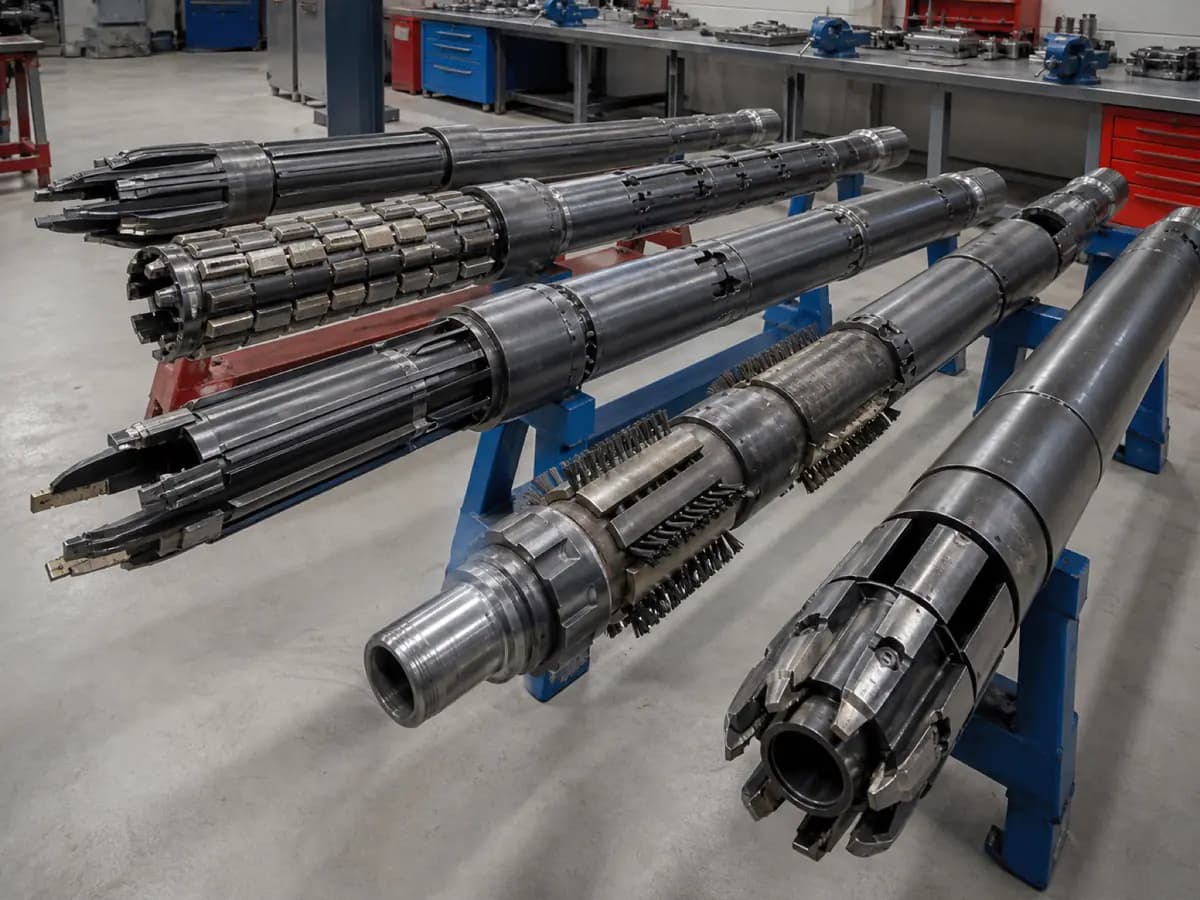
View the model-specific values, conditions and sources
Three decisions hidden inside one size label
A quotation saying that a scraper suits the casing can conceal three different decisions. The first concerns the physical assembly and the restrictions it must encounter. The second concerns which casing surfaces the cleaning elements are intended to contact. The third concerns the clearance and surface condition required by the completion equipment that follows. Treat these as separate document reviews, not as three ways to describe nominal casing size.
This guide concerns procurement and engineering review, not tool assembly or field execution. The useful outcome is a set of clearly bounded acceptances: what the manufacturer has documented, what the project reviewer has assessed, and what still requires evidence.
Read each dimension in the direction it measures
Begin with an identified configuration rather than a product-family heading. In the Crossover Specification Guide, BA-550 has 33-3/4 in length, 1-1/4 in bore and 97 lb tool weight. The separate crated-weight entry is 107 lb. These values answer different questions: length concerns layout, bore concerns the internal passage, and mass concerns the physical item or package. None supplies the missing external envelope.
The same row's casing-range label does not resolve casing weight or local restrictions. Nor does its connection designation define every end detail, tolerance or assembled dimension. Ask for a drawing identifying the actual configuration and dimensional datums. Record whether a number is a nominal catalogue reference, a toleranced drawing requirement or an inspection result. Keeping those evidence types distinct prevents a catalogue value from becoming an unintended acceptance criterion.
Keep the hard envelope separate from blade reach
For a spring-loaded proposal, request separate identification of rigid body features, retaining components, the defined collapsed blade assembly and extended blade reach. The Bowen manual, page 4, describes spring-loaded blades moving inward and outward. This explains a compliant cleaning element; it does not establish a certified passing diameter. It also does not identify the construction of the unrelated Crossover reference.
A published extended blade OD is therefore not a rigid gauge size. A collapsed dimension needs its stated configuration and conditions, while a body dimension may exclude other projecting features. Request a complete assembly-envelope review instead of selecting whichever diameter makes a comparison look favourable. The manufacturer should identify what its drawing covers; the responsible project reviewer should decide what evidence is adequate for the actual restriction register.
Ask what coverage means, without assuming a result
Crossover's family description concerns circumferential blade coverage. Coverage describes intended contact geometry, not proof that all deposits have been removed or that a sealing surface meets the next tool's requirements. Review axial locations as well as circumference: which interval matters, and which completion component depends on its condition?
Keep the debris question separate too. Dislodging material and recovering it are different package requirements. A bid should identify any additional recovery equipment and the evidence proposed for its purpose, rather than using the word cleanout to imply an unspecified complete system. Do not invent recovery capacity, cleaning efficiency or contact-force values where the supplied documents are silent.
Do not let scraper passage approve the next tool
Consider a fictional review in which a supplier provides an acceptable scraper drawing but describes subsequent packer clearance only as scraper passed. That response leaves the completion decision open. A compliant cleaning element and a different completion assembly need not present the same external profile, length or surface requirements. Request the actual next-tool configuration and its manufacturer's clearance and condition criteria.
| Review question | Relevant record | Conclusion to avoid |
|---|---|---|
| What is the scraper's physical envelope? | Configuration drawing and applicable dimensional inspection | Internal bore proves external passage |
| Where is contact intended? | Blade arrangement and supported casing basis | Circumferential coverage proves a clean sealing surface |
| What must the next assembly encounter? | Completion drawing, restriction register and acceptance criteria | Scraper passage certifies completion clearance |
| What does the package include? | Identified equipment list and agreed verification scope | A scraper line item includes debris recovery |
Assign each unresolved statement to an owner and a document. A change in blade arrangement reopens the coverage review; a change in the next completion assembly reopens its clearance review even if the scraper is unchanged. These are document-control decisions, not operating instructions.
Use the casing scrapers and wellbore cleanout tools reference for the named catalogue values. Submit the three-part review and identified exceptions through the RFQ Builder. Keep acceptance of the offered scraper distinct from approval of the subsequent completion equipment.
Referenced model data
- Crossover BA-550Catalogue tool length
- 33-3/4 in
Explicit BA-550 row only: casing range 5-1/2 through 6 in; API Reg. connection column 2-7/8. Source heading is Length, without defined end datums, tolerance or made-up-length basis. Not an installed assembly length or guaranteed restriction-passage dimension. Confirm the offered configuration drawing.
Specification Guide table, BA-550 row, Length (inches) columnChecked 2026-10-24
- Crossover BA-550Catalogue internal bore
- 1-1/4 in
Same explicit BA-550 row as the 33-3/4 in length and 97 lb tool weight. Bore denotes the listed internal dimension, not body OD, collapsed blade OD, extended blade OD, external bypass area or certified drift. No pressure-loss curve, flow rating, tolerance or assembled minimum bore is established.
Specification Guide table, BA-550 row, Bore (inches) columnChecked 2026-10-24
- Crossover BA-550Catalogue tool mass (source: Tool Weight)
- 97 lb
Same explicit BA-550 row as the listed length and bore. Tool Weight (lbs) is product mass, not casing linear weight, blade contact force, tensile capacity, submerged weight or a lifting-system rating. No mass tolerance or order-specific accessory inclusion is given.
Specification Guide table, BA-550 row, Tool Weight (lbs) columnChecked 2026-10-24
- Crossover BA-550Catalogue crated mass (source: Crated Weight)
- 107 lb
BA-550 only, separate Crated Weight column. Catalogue packing reference, not confirmed shipment gross mass, crate dimensions, lifting approval or a fixed packing allowance for any quantity. Do not count this as a different physical parameter type from tool mass.
Specification Guide table, BA-550 row, Crated Weight (lbs) columnChecked 2026-10-24
- Crossover casing scraper familyFamily catalogue referenceManufacturer blade-coverage description
- Blade arrangement described as providing complete circumferential coverage
Family-level design description in the paragraph above the Specification Guide. Not measured cleaning efficiency, a BA-550 blade count, confirmed spring design, blade contact force, certified passing diameter or evidence of the condition of a particular well. No field method is adopted.
Casing Scrapers, introductory paragraph above Specification Guide, blade-arrangement sentenceChecked 2026-10-24
- Bowen Full-Circle Casing Scraper familyFamily catalogue referenceSpring-loaded blade construction reference
- Spring-loaded blades can move inward and outward
Bowen family principle only from this historical manual. The explanation distinguishes movable blade contact from a fixed mechanical envelope; it supplies no certified restriction diameter or acceptance evidence for later completion equipment. Do not transfer the design to Crossover BA-550 or any unnamed scraper. Assembly, maintenance and field-running instructions are excluded.
PDF page 4 / printed page 4, Construction first paragraph and middle-column blade-movement paragraphRevision Sixth Printing · Document September 2005 · Checked 2026-10-24
| Model | Parameter | Reference value | Conditions and source |
|---|---|---|---|
| Crossover BA-550 | Catalogue tool length | 33-3/4 in | Explicit BA-550 row only: casing range 5-1/2 through 6 in; API Reg. connection column 2-7/8. Source heading is Length, without defined end datums, tolerance or made-up-length basis. Not an installed assembly length or guaranteed restriction-passage dimension. Confirm the offered configuration drawing. Specification Guide table, BA-550 row, Length (inches) columnChecked 2026-10-24 |
| Crossover BA-550 | Catalogue internal bore | 1-1/4 in | Same explicit BA-550 row as the 33-3/4 in length and 97 lb tool weight. Bore denotes the listed internal dimension, not body OD, collapsed blade OD, extended blade OD, external bypass area or certified drift. No pressure-loss curve, flow rating, tolerance or assembled minimum bore is established. Specification Guide table, BA-550 row, Bore (inches) columnChecked 2026-10-24 |
| Crossover BA-550 | Catalogue tool mass (source: Tool Weight) | 97 lb | Same explicit BA-550 row as the listed length and bore. Tool Weight (lbs) is product mass, not casing linear weight, blade contact force, tensile capacity, submerged weight or a lifting-system rating. No mass tolerance or order-specific accessory inclusion is given. Specification Guide table, BA-550 row, Tool Weight (lbs) columnChecked 2026-10-24 |
| Crossover BA-550 | Catalogue crated mass (source: Crated Weight) | 107 lb | BA-550 only, separate Crated Weight column. Catalogue packing reference, not confirmed shipment gross mass, crate dimensions, lifting approval or a fixed packing allowance for any quantity. Do not count this as a different physical parameter type from tool mass. Specification Guide table, BA-550 row, Crated Weight (lbs) columnChecked 2026-10-24 |
| Crossover casing scraper familyFamily catalogue reference | Manufacturer blade-coverage description | Blade arrangement described as providing complete circumferential coverage | Family-level design description in the paragraph above the Specification Guide. Not measured cleaning efficiency, a BA-550 blade count, confirmed spring design, blade contact force, certified passing diameter or evidence of the condition of a particular well. No field method is adopted. Casing Scrapers, introductory paragraph above Specification Guide, blade-arrangement sentenceChecked 2026-10-24 |
| Bowen Full-Circle Casing Scraper familyFamily catalogue reference | Spring-loaded blade construction reference | Spring-loaded blades can move inward and outward | Bowen family principle only from this historical manual. The explanation distinguishes movable blade contact from a fixed mechanical envelope; it supplies no certified restriction diameter or acceptance evidence for later completion equipment. Do not transfer the design to Crossover BA-550 or any unnamed scraper. Assembly, maintenance and field-running instructions are excluded. PDF page 4 / printed page 4, Construction first paragraph and middle-column blade-movement paragraphRevision Sixth Printing · Document September 2005 · Checked 2026-10-24 |