Selection & Specification
Reamer-Shoe Selection: A Casing-Running Review Before RFQ
View the model-specific values, conditions and sources
Write the problem before choosing the shoe
A request for a reamer shoe often conceals different problems: passing an existing ledge, addressing a restricted interval, or drilling formation that has not yet been opened. Those duties should not share an unanswered purchase description. Start with the intended outcome, the known hole condition and what remains uncertain. Assign the application decision to the responsible engineering reviewer before asking suppliers to price a preferred design.
Weatherford's S10 literature describes guiding casing or liners past obstructions and reaming tight spots during running. The manufacturer's separate drilling-with-casing description identifies Defyer casing bits for a different duty. This distinction is a routing question, not an instruction to rotate, reciprocate or load a casing string.
Create a duty-and-evidence register
Make each unanswered question visible in a short register. Record the buyer's input, the supplier's proposed configuration, the document that supports it and the person responsible for accepting the response. Avoid a single broad compliance box: it can hide a satisfactory dimensional answer beside an unresolved application assumption.
| Review question | Input to attach | Response needed before closing the question |
|---|---|---|
| Running assistance or new-hole drilling? | Intended interval and description of the obstruction or formation | Explicit offered duty and exclusions |
| Which external envelope must pass? | Restriction information and assembly layout | Controlled maximum-envelope drawing |
| Which tubular interface is being purchased? | Casing schedule and connection designation | Matching connection and internal-profile details |
| Is float equipment included? | Proposed cementing assembly and required valve duty | Identified valve arrangement and applicable test evidence |
| What remains after cementing? | Subsequent BHA proposal and passage requirements | Drillout-material and compatibility assessment |
Treat missing information as an open item rather than filling it with a family maximum. A catalogue option list tells the reviewer what may need selection; it does not prove that all attractive options coexist in the offered assembly.
Check dimensions against the same configuration
Suppose one quotation gives a casing size and another supplies a shoe drawing. They are not yet comparable. The casing size describes the tubular interface; it is not necessarily the shoe's largest external dimension. Ask both bidders to identify the full tool code and the drawing revision that controls the envelope and axial layout.
For a traceable example, document 7069.01, printed page 3, lists RD070082CV-S10 with tool OD 8-1/4 in. and length 27.835 in. These independent dimensions belong to the same row. They illustrate how to bind an envelope review to a specific reference, not an acceptable clearance rule. The reference does not establish manufacturing tolerances, final threaded stack-up or suitability for an actual dogleg.
Keep the source document, complete code and selected configuration together when a bidder revises the proposal. If the drawing and quotation disagree, ask for a reconciled response. Do not combine the diameter of one row with the length, valve arrangement or connection of another merely because both appear under the same family heading.
Review valve evidence without extending its scope
Separate the shoe's mechanical configuration from any included float function. In the S10 sheet, CV identifies a single-valve carbide configuration, while the backpressure column explicitly concerns the valve only. Neither wording supplies an assembly-wide operating rating. Ask which physical component the submitted test report covers and which conditions apply.
The official API catalog, printed page 21, identifies Spec 10F, fourth edition, July 2018, for cementing float-equipment testing and marking. This is a scope reference, not evidence that an older shoe datasheet meets that edition or that the cutting structure is qualified. Agree the contractual edition and applicable amendments separately, and obtain configuration-specific evidence rather than accepting a standard name alone.
Close drillout and quotation exceptions separately
Request an annotated assembly section identifying the drillout path and materials that remain within it. Have the proposed subsequent BHA reviewed against that information. A statement that a shoe is drillable does not establish compatibility with every bit or guarantee removal time. Keep this assessment separate from the original running-duty selection.
Before comparing prices, return unresolved drawing, connection, valve and drillout questions as a consolidated exceptions list. Record whether each response changes the offered code, document revision or supply scope. Leave selection open where a requirement lacks supporting evidence.
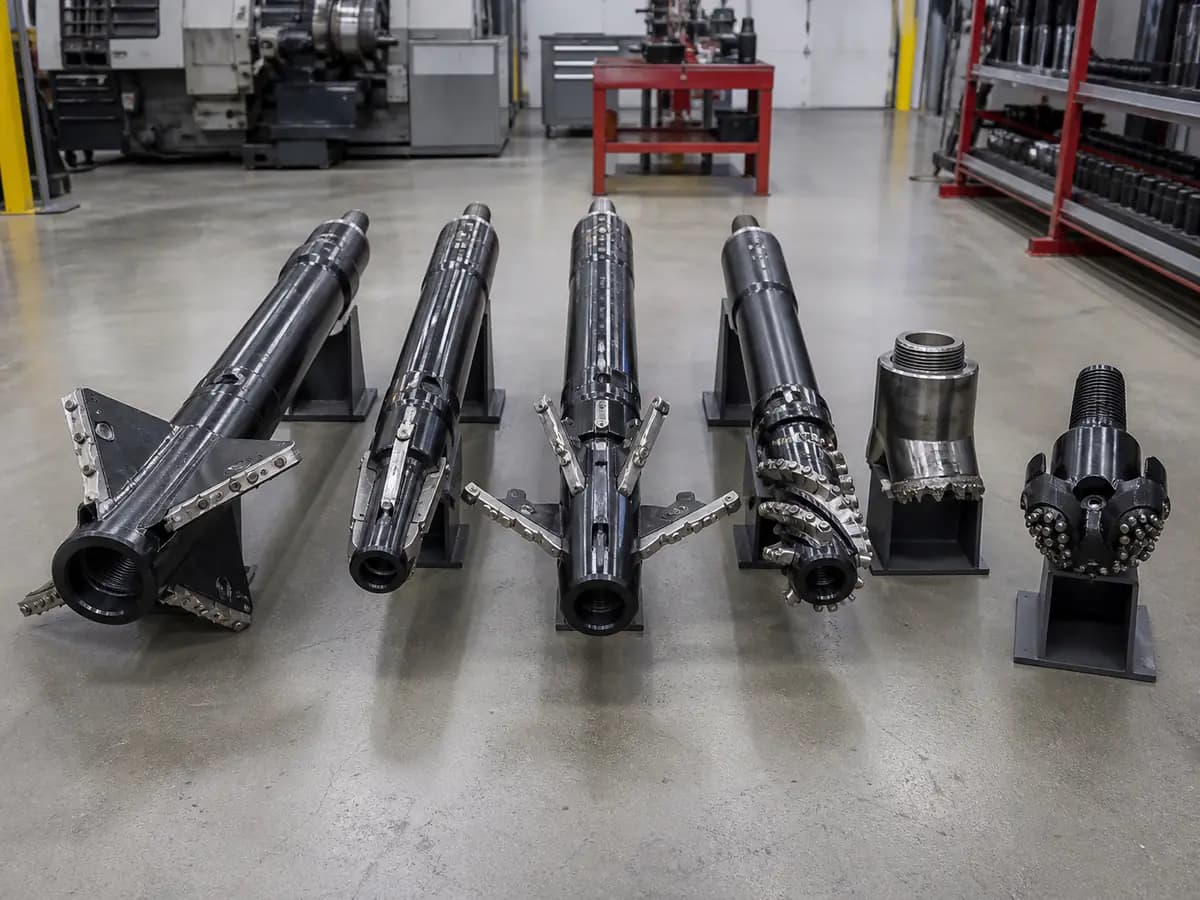
Use the reamer-shoe and casing-bit product reference for the named dimensional examples. Submit the register and supporting documents through the RFQ Builder, requesting a response against each open item. The guide's image is only a generated hole-enlargement category illustration; it establishes no model identity or technical performance.
Referenced model data
- Weatherford S10 DiamondBack RD070082CV-S10Catalogue tool outside diameter
- 8-1/4 in
Exact RD070082CV-S10 row in document 7069.01, not a family range. Tool OD is distinct from nominal casing size. CV is the single-valve carbide configuration defined in footnote a. Geometry does not establish operating clearance, load limits, an allowable hole restriction or new-hole drilling capability; require the offered configuration drawing.
PDF page 3 / printed page 3, Specifications table, second complete model row RD070082CV-S10, Tool OD (in./mm) column, upper imperial entry 8-1/4; visually inspected sources/s10-inspection-3.pngRevision 7069.01; printed footer on all three pages · Document Footer copyright 2010-2013; no separate issue date established · Checked 2026-10-24
- Weatherford S10 DiamondBack RD070082CV-S10Catalogue tool length
- 27.835 in
Exact RD070082CV-S10 single-valve carbide configuration row in document 7069.01. Axial Length is a separate physical quantity from Tool OD and cutting-pad count. Do not reinterpret it as stabilizer length, thread length or final assembly stack-up. No tolerance or order-specific connection allowance is given.
PDF page 3 / printed page 3, Specifications table, RD070082CV-S10 row, Length (in./mm) column, upper imperial entry 27.835; visually inspected sources/s10-inspection-3.pngRevision 7069.01; printed footer on all three pages · Document Footer copyright 2010-2013; no separate issue date established · Checked 2026-10-24
| Model | Parameter | Reference value | Conditions and source |
|---|---|---|---|
| Weatherford S10 DiamondBack RD070082CV-S10 | Catalogue tool outside diameter | 8-1/4 in | Exact RD070082CV-S10 row in document 7069.01, not a family range. Tool OD is distinct from nominal casing size. CV is the single-valve carbide configuration defined in footnote a. Geometry does not establish operating clearance, load limits, an allowable hole restriction or new-hole drilling capability; require the offered configuration drawing. PDF page 3 / printed page 3, Specifications table, second complete model row RD070082CV-S10, Tool OD (in./mm) column, upper imperial entry 8-1/4; visually inspected sources/s10-inspection-3.pngRevision 7069.01; printed footer on all three pages · Document Footer copyright 2010-2013; no separate issue date established · Checked 2026-10-24 |
| Weatherford S10 DiamondBack RD070082CV-S10 | Catalogue tool length | 27.835 in | Exact RD070082CV-S10 single-valve carbide configuration row in document 7069.01. Axial Length is a separate physical quantity from Tool OD and cutting-pad count. Do not reinterpret it as stabilizer length, thread length or final assembly stack-up. No tolerance or order-specific connection allowance is given. PDF page 3 / printed page 3, Specifications table, RD070082CV-S10 row, Length (in./mm) column, upper imperial entry 27.835; visually inspected sources/s10-inspection-3.pngRevision 7069.01; printed footer on all three pages · Document Footer copyright 2010-2013; no separate issue date established · Checked 2026-10-24 |
Authoritative references
- Weatherford S10 DiamondBack document 7069.01; application, exact model geometry and valve-only boundarychecked 2026-10-24
- Weatherford Drilling with Casing; independent casing-drilling-bit duty reference onlychecked 2026-10-24
- API 2023 Publications Catalog, printed page 21; float-equipment testing/marking scope, not shoe certificationchecked 2026-10-24