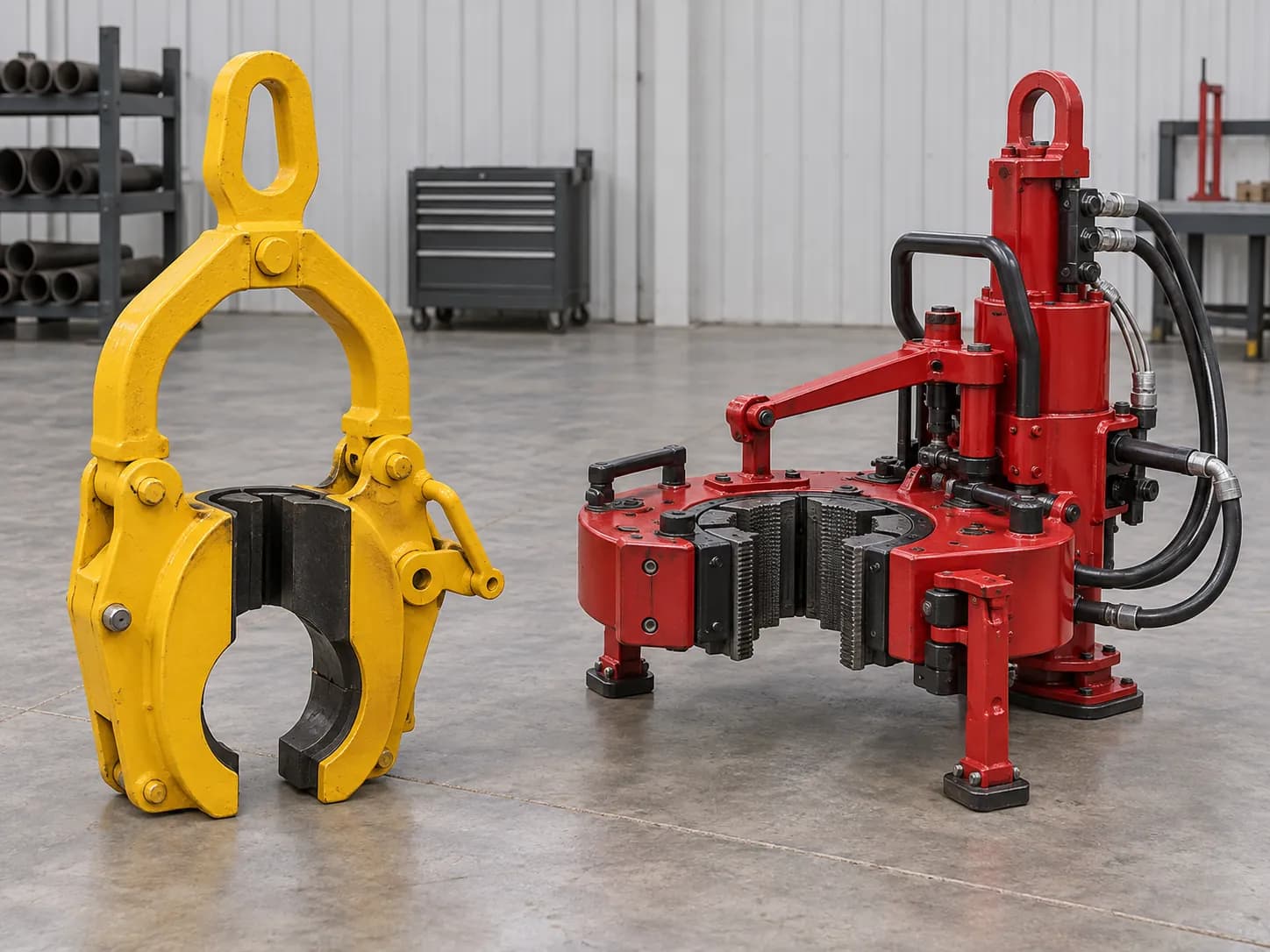
AI-generated category reference. It is not a photograph of a specific manufacturer or exact product model.
OCTG & Tubular Handling
Tubular Handling Tools: Single-Joint Elevator References
Compare specific NOV SJH and D-SJX single-joint elevator rows without transferring load ratings, size intervals or compatibility claims between assemblies.
Use these single-joint elevator references to define the handling task, not to approve whole-string lifting.
- Documented model references
- NOV SJH / 2-3/8 to 4-1/2 in tubing and drill-pipe row · NOV D-SJX Heavy Duty / 3-1/2 to 7-1/2 in row
- Parameters, conditions and sources
Before you choose a replacement
Documented technical references, not verified supply, certification or interchangeable fit.
Decision points
- The retained NOV SJH row is for single-joint tubing/drill-pipe handling. Keep the printed short-ton unit and the exact size row; neither establishes a complete lifting-system acceptance.Reference conditions
- D-SJX Heavy Duty is a separate size/load row. Metric figures differ between the source prose and table and remain unresolved; do not silently reconcile or transfer the rating.Reference conditions
Prepare for the request
- Single-joint handling task and tubular size/weight details
- Elevator nameplate, jaw/insert configuration and interface drawing
- Required inspection records and responsible lifting-system review
Attach available drawings or photos in the request. Unknown details can remain open for clarification; no offer or supply commitment is implied.
Source-bound technical references
Reference fields for quotation comparison. Final values must be confirmed in the signed manufacturer datasheet.
- NOV SJH / 2-3/8 to 4-1/2 in tubing and drill-pipe rowListed elevator rated load
- 5 short ton
NOV SJH / 2-3/8 to 4-1/2 in tubing and drill-pipe row; only this printed row is referenced. Load unit is short ton, not metric tonne. Single-joint equipment reference, never a whole-string lifting rating or acceptance of the complete lifting system. Exact jaw/insert configuration and intended duty require manufacturer confirmation. The first SJH tubing-and-drill-pipe row is used, not the other SJH size rows.
Page 1, SJH leftmost table, first rowRevision RigDoc 97077894 Rev. 1 · Checked 2026-10-23
- NOV SJH / 2-3/8 to 4-1/2 in tubing and drill-pipe rowListed tubular size range
- 2-3/8 to 4-1/2 in
NOV SJH / 2-3/8 to 4-1/2 in tubing and drill-pipe row; only this printed row is referenced. Load unit is short ton, not metric tonne. Single-joint equipment reference, never a whole-string lifting rating or acceptance of the complete lifting system. Exact jaw/insert configuration and intended duty require manufacturer confirmation. The first SJH tubing-and-drill-pipe row is used, not the other SJH size rows.
Page 1, SJH leftmost table, first row, Size columnRevision RigDoc 97077894 Rev. 1 · Checked 2026-10-23
- NOV D-SJX Heavy Duty / 3-1/2 to 7-1/2 in rowListed elevator rated load
- 12 short ton
NOV D-SJX Heavy Duty / 3-1/2 to 7-1/2 in row; only this printed row is referenced. Load unit is short ton, not metric tonne. Single-joint equipment reference, never a whole-string lifting rating or acceptance of the complete lifting system. Exact jaw/insert configuration and intended duty require manufacturer confirmation. Metric load figures differ between prose and table and are deliberately not reconciled.
Page 1, D-SJX Heavy Duty table, 3-1/2 to 7-1/2 in rowRevision RigDoc 97077894 Rev. 1 · Checked 2026-10-23
- NOV D-SJX Heavy Duty / 3-1/2 to 7-1/2 in rowListed tubular size range
- 3-1/2 to 7-1/2 in
NOV D-SJX Heavy Duty / 3-1/2 to 7-1/2 in row; only this printed row is referenced. Load unit is short ton, not metric tonne. Single-joint equipment reference, never a whole-string lifting rating or acceptance of the complete lifting system. Exact jaw/insert configuration and intended duty require manufacturer confirmation. Metric load figures differ between prose and table and are deliberately not reconciled.
Page 1, D-SJX Heavy Duty table, Size columnRevision RigDoc 97077894 Rev. 1 · Checked 2026-10-23
| Model | Parameter | Reference value | Conditions and source |
|---|---|---|---|
| NOV SJH / 2-3/8 to 4-1/2 in tubing and drill-pipe row | Listed elevator rated load | 5 short ton | NOV SJH / 2-3/8 to 4-1/2 in tubing and drill-pipe row; only this printed row is referenced. Load unit is short ton, not metric tonne. Single-joint equipment reference, never a whole-string lifting rating or acceptance of the complete lifting system. Exact jaw/insert configuration and intended duty require manufacturer confirmation. The first SJH tubing-and-drill-pipe row is used, not the other SJH size rows. Page 1, SJH leftmost table, first rowRevision RigDoc 97077894 Rev. 1 · Checked 2026-10-23 |
| NOV SJH / 2-3/8 to 4-1/2 in tubing and drill-pipe row | Listed tubular size range | 2-3/8 to 4-1/2 in | NOV SJH / 2-3/8 to 4-1/2 in tubing and drill-pipe row; only this printed row is referenced. Load unit is short ton, not metric tonne. Single-joint equipment reference, never a whole-string lifting rating or acceptance of the complete lifting system. Exact jaw/insert configuration and intended duty require manufacturer confirmation. The first SJH tubing-and-drill-pipe row is used, not the other SJH size rows. Page 1, SJH leftmost table, first row, Size columnRevision RigDoc 97077894 Rev. 1 · Checked 2026-10-23 |
| NOV D-SJX Heavy Duty / 3-1/2 to 7-1/2 in row | Listed elevator rated load | 12 short ton | NOV D-SJX Heavy Duty / 3-1/2 to 7-1/2 in row; only this printed row is referenced. Load unit is short ton, not metric tonne. Single-joint equipment reference, never a whole-string lifting rating or acceptance of the complete lifting system. Exact jaw/insert configuration and intended duty require manufacturer confirmation. Metric load figures differ between prose and table and are deliberately not reconciled. Page 1, D-SJX Heavy Duty table, 3-1/2 to 7-1/2 in rowRevision RigDoc 97077894 Rev. 1 · Checked 2026-10-23 |
| NOV D-SJX Heavy Duty / 3-1/2 to 7-1/2 in row | Listed tubular size range | 3-1/2 to 7-1/2 in | NOV D-SJX Heavy Duty / 3-1/2 to 7-1/2 in row; only this printed row is referenced. Load unit is short ton, not metric tonne. Single-joint equipment reference, never a whole-string lifting rating or acceptance of the complete lifting system. Exact jaw/insert configuration and intended duty require manufacturer confirmation. Metric load figures differ between prose and table and are deliberately not reconciled. Page 1, D-SJX Heavy Duty table, Size columnRevision RigDoc 97077894 Rev. 1 · Checked 2026-10-23 |
Product overview
Specify the handling tool, not just the tubular
Tubular handling equipment includes components with different functions and interfaces. A single-joint elevator, a slip assembly and a power tong cannot share a capacity merely because each handles the same pipe diameter. This page focuses on two named rows in NOV's manual single-joint elevator sheet so that an enquiry can identify a concrete reference without implying a complete lifting-system selection.
Two deliberately separate references
The NOV Manual Single Joint Elevators sheet identifies the following rows. Load is retained in short tons. The listed size interval belongs to the specified row and does not establish that one unspecified jaw set fits every tubular within it.
| Model and selected row | Listed load, short tons | Listed tubular size, in |
|---|---|---|
| SJH, first tubing-and-drill-pipe row | 5 | 2-3/8 to 4-1/2 |
| D-SJX Heavy Duty, listed size row | 12 | 3-1/2 to 7-1/2 |
The SJH first row is distinct from the other SJH sizes. The D-SJX reference is a separate model, not an upgraded rating for an SJH body. These catalogue values are not whole-string lifting ratings and do not approve the capacity of a complete handling arrangement.
Resolve fit and duty independently
Begin with the exact model and row. Then identify the tubular body, upset or coupling geometry that matters to the proposed interface, together with the required jaw or insert configuration. A diameter that falls within a catalogue interval is a screening observation, not proof that the offered components are correctly matched.
Keep intended duty on a separate line. Ask the equipment manufacturer or responsible qualified reviewer to confirm the application against the identified assembly and its documents. Do not infer a permissible lifting arrangement from this table, a product photograph or the largest load number available in the family.
Preserve the printed unit and document identity
A short ton is not a metric tonne. Retain the original unit when asking for confirmation of a model-specific rating. If an offer gives a different unit or a conflicting value, request a corrected manufacturer document rather than silently normalizing the number.
The source contains multiple model columns. A size range from another column must not be copied into the selected SJH or D-SJX line. Any wider family description also needs to remain separate from the specific row being quoted. This prevents a broad catalogue statement from becoming an unsupported exact-configuration promise.
Compare equipment and replacement parts separately
For complete-equipment enquiries, request the model, configuration drawing, included components and documentation scope. For replacement jaws, inserts or other parts, identify the installed assembly and the applicable part reference. An accessory with a familiar name is not automatically suitable for another elevator model.
List slips and tongs as separate equipment lines if they are also required. Their dimensions, load or torque claims need their own sources and manufacturer confirmation; they cannot inherit the elevator facts here. This reference provides no latch, rigging or lifting procedure.
Prepare a focused RFQ
Include quantity, precise tubular geometry, intended duty, existing equipment identification if relevant, requested inspection records and destination. Ask the bidder to distinguish confirmed details from open questions and to identify any proposed substitute explicitly.
The single-joint elevator selection guide provides a document review matrix for model identity, fit, rating and assembly boundaries. Start a tubular handling RFQ with the chosen reference row. The existing image is an AI-generated category illustration, not a photograph of either NOV model. The references imply neither stock nor manufacturer authorization.
Technical reference trail
These public references support the equipment family and selection context. They do not imply dealership, authorization or a guaranteed order specification.
Frequently Asked Questions
Does the SJH first-row rating cover an entire drill string?
No. The 5 short-ton figure belongs to the SJH single-joint elevator's first tubing-and-drill-pipe row, with a listed 2-3/8 to 4-1/2 in size interval. It is not a whole-string lifting rating or acceptance of a complete handling arrangement.
Can a D-SJX load rating or size interval be assigned to an SJH?
No. The D-SJX Heavy Duty row separately lists 12 short tons and 3-1/2 to 7-1/2 in. Neither value upgrades an SJH assembly, establishes jaw compatibility or replaces model-specific manufacturer confirmation.
Why are the reference loads kept in short tons?
That is the selected printed load unit. Short tons and metric tonnes must not be treated as the same quantity. A conflicting unit or value in an offer requires a corrected model-specific document, not an unmarked conversion.
Submit RFQ for Tubular Handling Tools: Single-Joint Elevator References
Send product, quantity, specification and destination details so the requirements can be reviewed with potential suppliers.
Technical and RFQ References
Check common units, standards and purchasing terminology, then build a structured request for this equipment.
Related Products
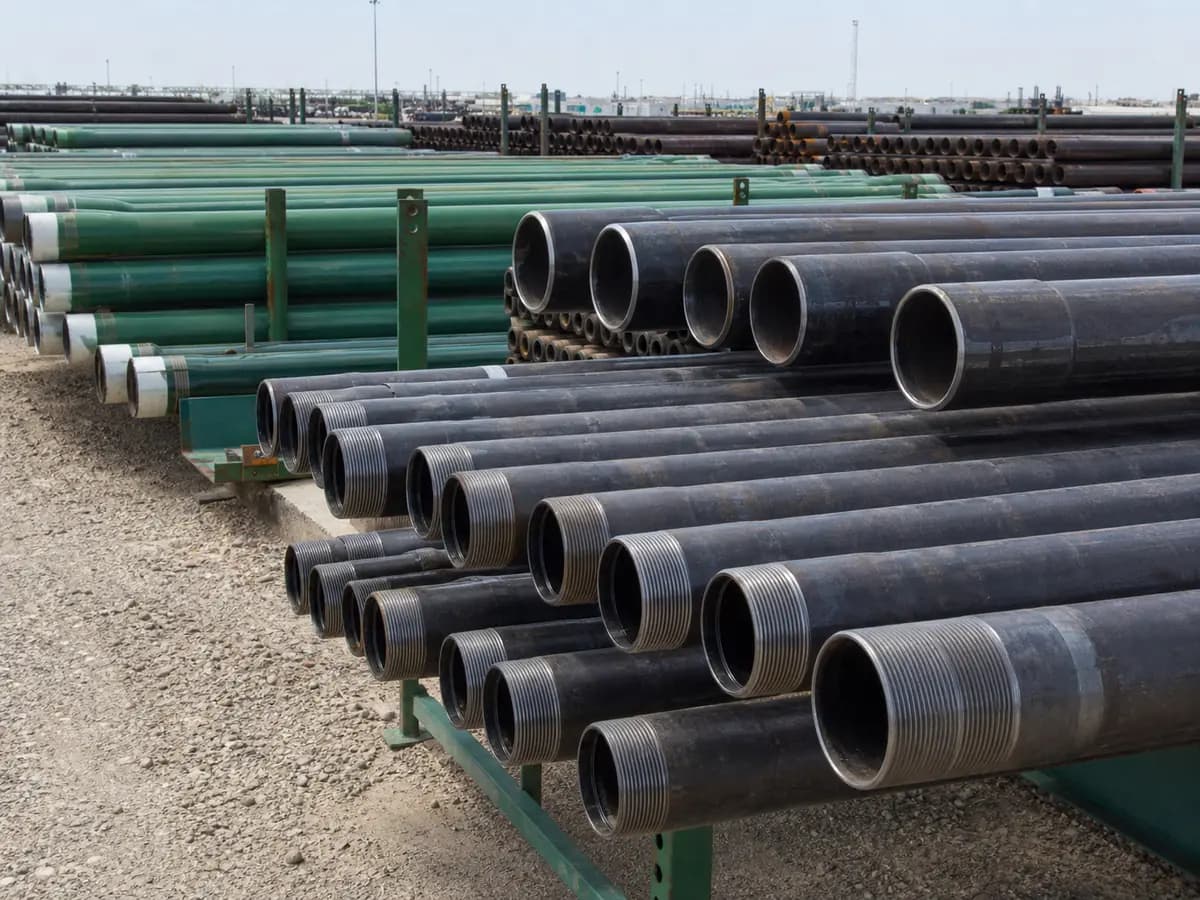
OCTG Casing and Tubing
OCTG casing and tubing with the dimensions an RFQ needs: OD, nominal weight, wall, ID and drift. A 7 in casing example shows how weight changes ID and internal capacity at the same OD.
Drill Pipe Configuration References
Compare two TSC drill-pipe configurations with NEW pipe-body dimensions, distinct heading-weight designations and connection-specific RFQ questions.
Related Technical Articles
Single-Joint Elevators: SJH and D-SJX Row-Specific Selection
Keep model identity, tubular fit, stated rating and assembly scope independent when comparing SJH and D-SJX single-joint elevator documents.
Oilfield Tools Supplier Selection Guide
Compare drilling, fishing, handling and downhole tools by application, interfaces, inspection records and replacement-part support.