Drilling Fluid Handling Equipment
Centrifugal Mud Pumps
Compare centrifugal mud-pump interfaces and duty points using NOV Mission references. Select flow and head together, then check mud density, shaft power, suction conditions and the actual impeller.
Selected manufacturer interface references
Reference fields for quotation comparison. Final values must be confirmed in the signed manufacturer datasheet.
| Referenced pump size | Suction size | Discharge size | Scope / drawing check |
|---|---|---|---|
| Mission Magnum / 2500 Supreme 3 x 2 x 13 | 3 in suction | 2 in discharge | Catalog p.46; reference flange sizes only |
| Mission Magnum / 2500 Supreme 6 x 5 x 14 | 6 in suction | 5 in discharge | Catalog p.46; compare the complete mounting drawing |
| Mission Magnum / 2500 Supreme 8 x 6 x 14 | 8 in suction | 6 in discharge | Catalog p.46; motor and hydraulic duty are separate selections |
Model-specific technical reference
Do not combine separate catalog maxima
A family flow limit and a family head limit need not lie on the same curve or operating point. Accept a stated flow/head pair only with the selected speed, impeller and fluid basis. Also check the pump's permitted casing pressure separately from the developed differential head; the inlet pressure contributes to the pressure seen by the casing.
Published manufacturer data is a selection reference, not a quotation or evidence of supply availability.
Product overview
A transfer or charging pump, not the high-pressure mud pump
A centrifugal mud pump moves drilling fluid between tanks, mixers and treatment equipment or supplies a charging duty. The selection problem is the required flow against the installed system resistance. It is different from choosing the high-pressure reciprocating pump that feeds the drilling circuit. A familiar casing size does not determine the operating point.
The NOV Mission catalog gives reference dimensions for the Magnum and 2500 Supreme families on printed page 46. The table here extracts only selected suction and discharge sizes. These are interface references, not performance guarantees or evidence that another manufacturer's pump is interchangeable. The catalog itself calls for certified drawings for construction.
Two checks before accepting a replacement
First compare the installed piping and baseplate. Request the full general arrangement, flange drilling, facing, coupling position, shaft height and rotation viewed from a stated direction. A pump that connects to the suction pipe may still require discharge-pipe or drive modifications. Keep the old unit's nameplate and photographs alongside the new drawing.
Then compare the duty. Plot minimum, normal and maximum flow on the proposed speed and impeller curve. Ask for the head, absorbed power, efficiency and required net positive suction head at each point. The pump supplier should evaluate the actual mud, including viscosity, solids and entrained gas; an uncorrected water curve is not a slurry acceptance test.
Density changes the quotation comparison
KSB's power-input reference distinguishes mechanical power taken at the pump shaft from motor electrical consumption. This matters when one offer quotes a motor nameplate and another quotes absorbed pump power: they are not the same quantity.
For a worked, explicitly assumed duty, read centrifugal pump head, density and power. It shows why a reasonable-looking water duty can need more shaft power at higher fluid density without turning the example into a motor recommendation.
RFQ checklist
- Normal and limiting flow, total dynamic head and suction-vessel arrangement.
- Mud density and rheology at operating temperature, solids concentration and particle size.
- Selected speed, actual impeller diameter, material and seal arrangement.
- Motor duty, supply, hazardous-area requirements and complete drive scope.
- Existing dimensions, suction/discharge connection drawings and maintenance access.
- Curve with duty markers, suction-margin review, test basis and a line-by-line deviation list.
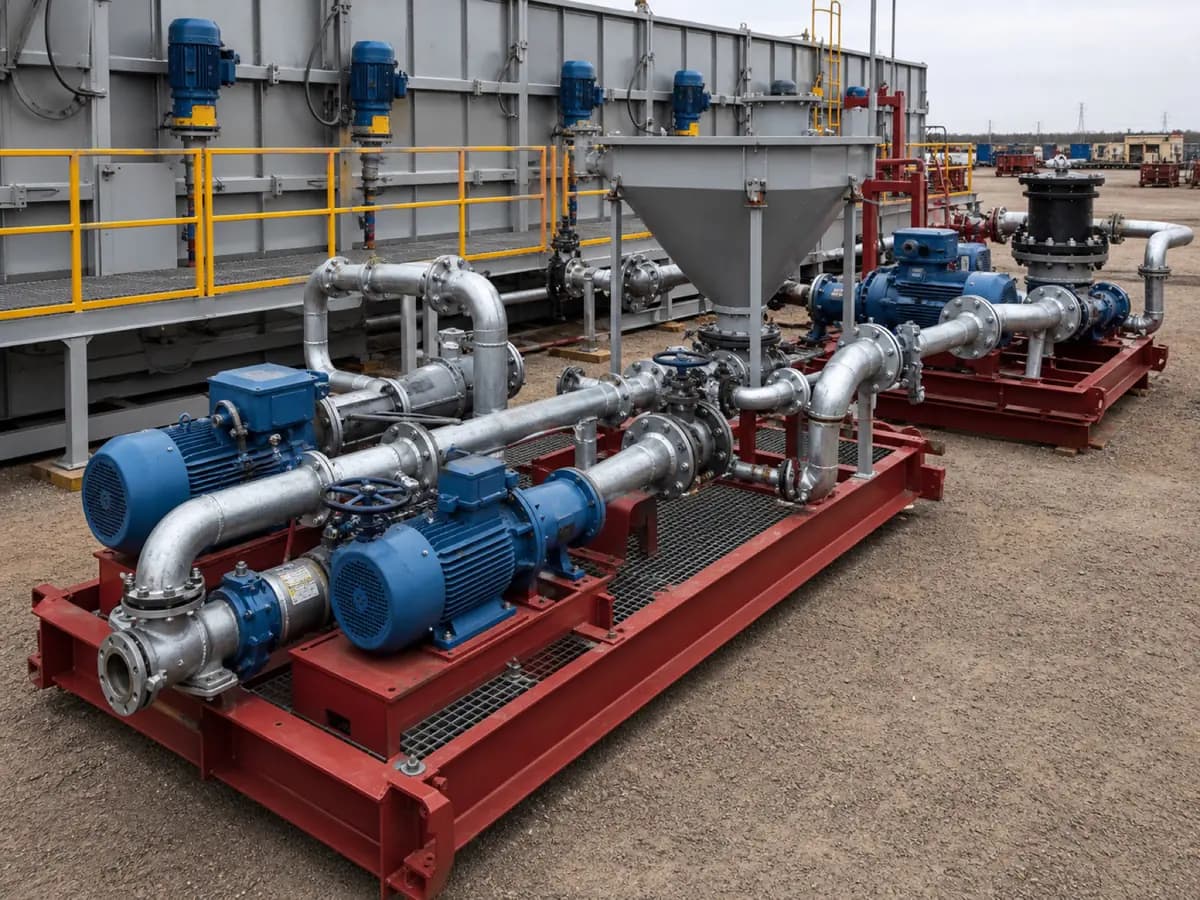
The retained image is a category illustration, not a photograph identifying the referenced Mission size. These examples do not establish our stock, dealership or a confirmed supply offer.
Technical reference trail
These public references support the equipment family and selection context. They do not imply dealership, authorization or a guaranteed order specification.
Frequently Asked Questions
Does a 6 x 5 connection identify the impeller or motor?
No. Keep the complete pump designation, speed, installed impeller, motor and drive details together. Pipe connection sizes alone do not establish the hydraulic duty.
Can I compare two offers using only their motor power?
No. Compare both pumps at the same flow, head and fluid properties, then compare absorbed power, permitted operating range and the proposed drive allowance.
What is missing if the supplier only sends a clean-water curve?
Ask for an assessment of the stated mud properties, solids and gas, plus the suction arrangement. Clarify the guaranteed duty and acceptance-test basis rather than assuming the reference curve represents the site.
Submit RFQ for Centrifugal Mud Pumps
Send product, quantity, specification and destination details so the requirements can be reviewed with potential suppliers.
Technical and RFQ References
Check common units, standards and purchasing terminology, then build a structured request for this equipment.
Related Products
Triplex and Quintuplex Drilling Mud Pumps
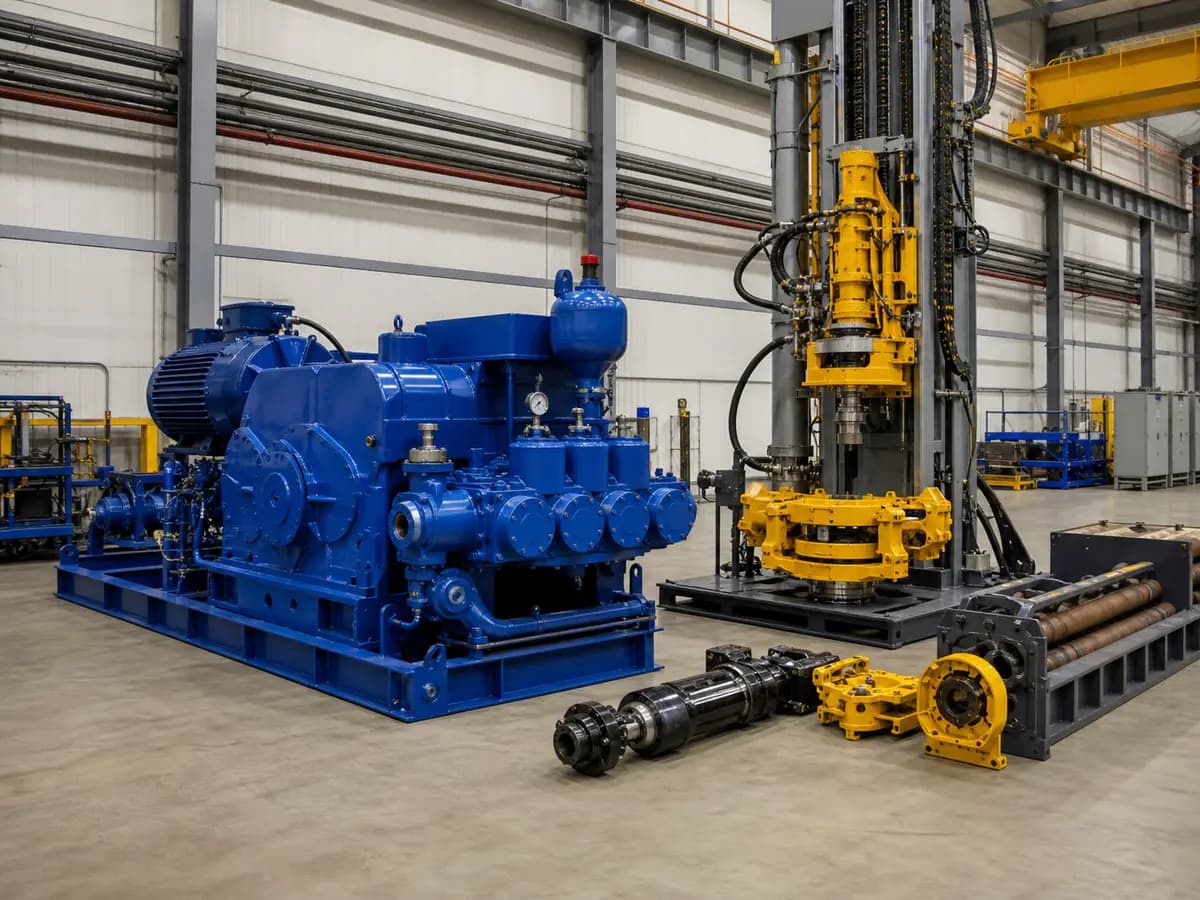
High-horsepower triplex and quintuplex mud pumps with reference packages up to 2400 HP, 51.7 MPa discharge pressure and 105-127 SPM rated speed.
Mud Pump Spare Parts
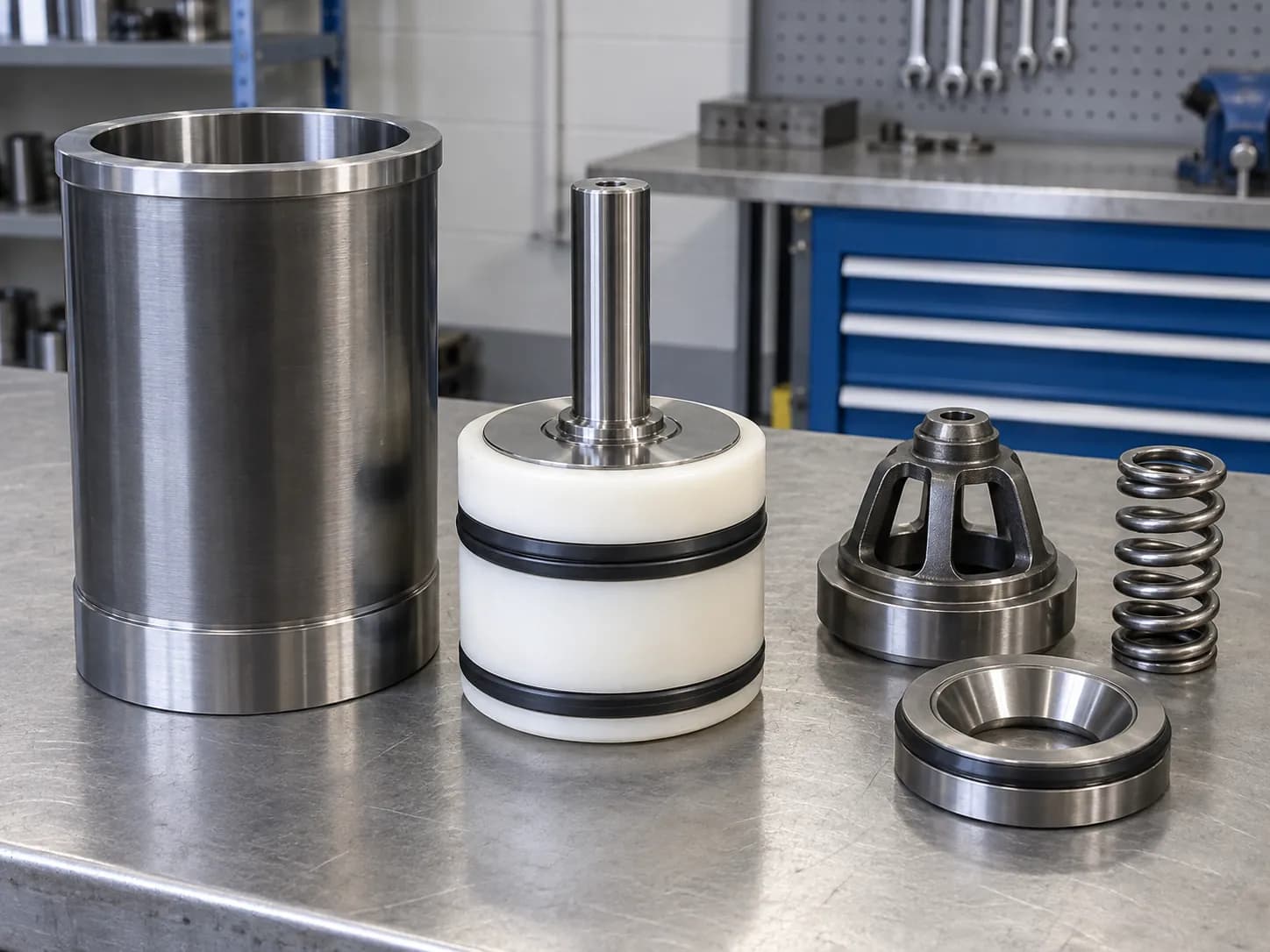
Match mud-pump pistons, liners, valves and seats by installed model, drawing and service. Compare documented NOV piston and drilling-valve examples without assuming equal bore means interchangeable parts.
Mud Tank Agitators
Mud Tank Agitators for suspension of weighting material and maintenance of uniform drilling-fluid properties in active and reserve tanks. Review process duty, fluid properties, package interfaces, controls, testing and documentation before requesting a comparable quotation.
Related Technical Articles
Centrifugal Mud Pump Selection: Head, Density and Shaft Power
Work through an assumed 180 m3/h, 30 m duty to separate head, pressure and shaft power, then identify the curve and suction checks still needed.
Mud Pump Spare Parts: How to Check Fit Before Ordering
Separate host-pump identification, mating dimensions and material limits. A metric-versus-inch liner example shows why a similar size is not proof of interchangeability.
How to Identify Oilfield Spare Parts from Nameplates and Photos
A field-ready photo and measurement checklist for requesting mud pump, rig, BOP and other oilfield replacement parts.