Parts & Compatibility
Mud Pump Spare Parts: How to Check Fit Before Ordering
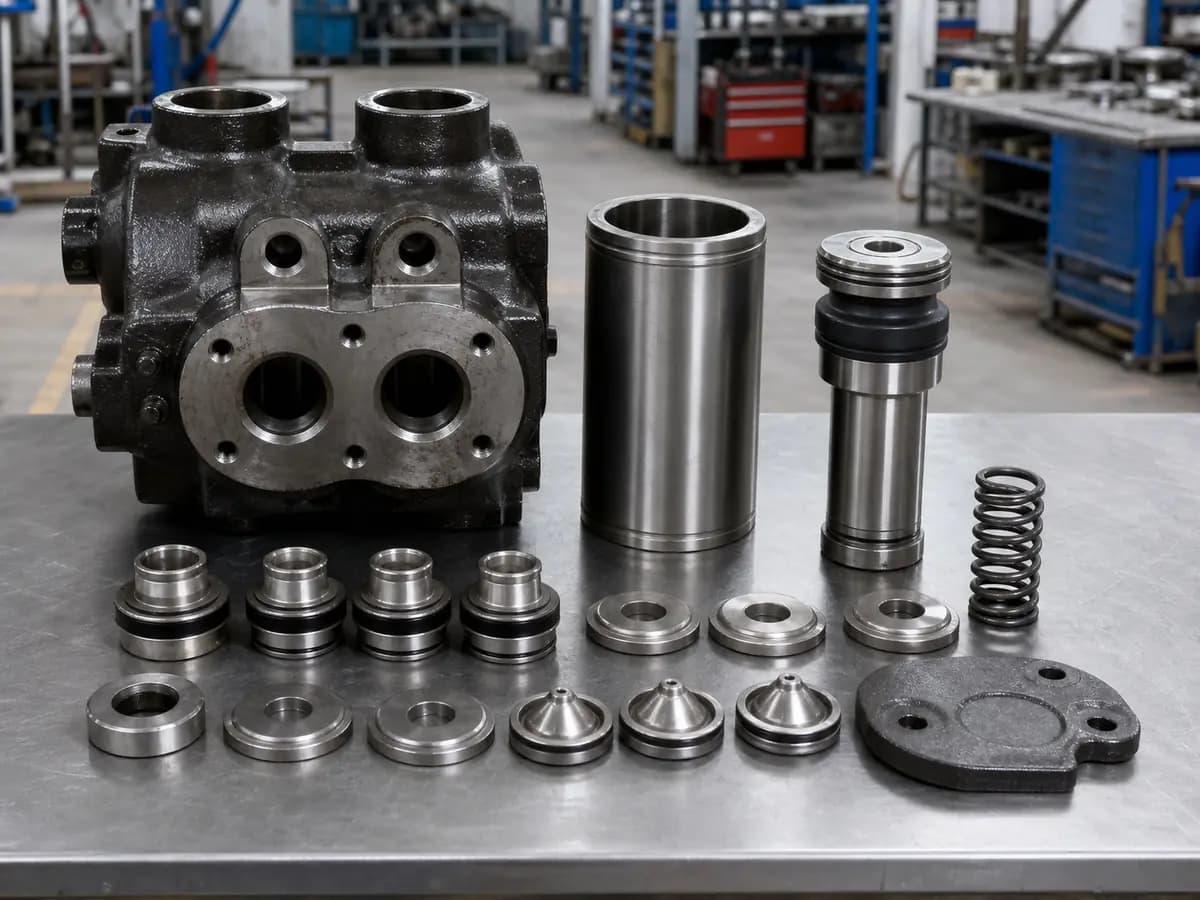
Identify the assembly before comparing the price
A useful mud-pump parts comparison starts with the installed assembly, not a photograph of a loose component. Record the pump maker and model, the fluid-end reference, the original part number and the drawing revision. A pump may have been retrofitted, so distinguish the original nameplate from the assembly currently in service.
Divide an offer into three checks: dimensional fit, operating suitability and supplied scope. A bidder may satisfy one and leave the others unresolved. Keeping those checks separate makes a deviation visible before it becomes an urgent site problem.
Why 230 mm is not the same as 9 inches
The APEX P-2200 page lists metric and imperial liner programs separately. Its maximum metric liner is 230 mm; its imperial maximum is 9 inches. Using the exact inch conversion, 9 x 25.4 = 228.6 mm, a nominal difference of 1.4 mm.
That calculation compares names, not finished-part tolerances. It does not establish that two specific parts differ by exactly that amount, or that either can be installed in place of the other. Request the actual drawing and tolerance. Do not round a bore size to the nearest convenient unit when ordering a matched piston and liner.
| Check | Useful evidence | Still unresolved without a drawing |
|---|---|---|
| Nominal bore | Original designation, units and quoted size | Finished diameter and permitted tolerance |
| Liner body | Maker's part number and dimensioned section | Outside geometry, seal location and retention |
| Piston | Full assembly reference and proposed compound | Hub and rod interface, sealing profile |
| Valve and seat | Matched part numbers and assembly revision | Taper, guide, spring and installed clearances |
The host-pump page's API 8# valve designation is a lead for identification, not a universal spare-part number. Do not infer a cross-brand match from that label alone.
Find the parts book for the installed fluid end
Use the installed suction and discharge module references, or the retrofit assembly drawing, to choose the parts book. The National 12-P-160 nameplate alone does not tell you which fluid end is installed. These are three separate entries in NOV Mission Databook rev. 12.3:
- Standard 12-P-160 (NOV Databook p. 9) - use for the standard entry after checking the installed assembly.
- 12-P-160HP, 7,500 psi (NOV Databook p. 10) - use when the installed assembly is identified as the HP configuration.
- 12-P-160 with 7,500 psi Mission L fluid end (NOV Databook p. 11) - use when the installed assembly is identified as Mission L. The shared pressure label does not make this the HP entry.
Read the part family column as well as the bore row. For example, the regular Roughneck valve and seat differ between the HP and Mission L entries, and the standard and Mission L entries list different springs even where they share a valve and seat. If all you know is the pressure label, ask for the assembly reference and current drawing before selecting a book.
If the installed equipment is identified as a Southwest 8476-25A, its Rev. D expendable parts list is specific to that aftermarket fluid-end assembly for the National 12-P-160. It is not a NOV service manual. Check the assembly contents and the bore-specific ordering table against the actual revision. Do not use a Southwest part number as an OEM interchange claim, even when bore and pressure class match.
The liner selection notes and part-number comparison show where a shared liner reference does and does not help. Keep the drawing number, part suffix and any supersession evidence on the same RFQ line.
Match the material to the service, not the color
The NOV Mission expendables guide, printed pages 23-24, distinguishes the Supreme nitrile piston from the Regular natural-rubber piston. Its Supreme pressure limit depends on size, and it excludes the Regular construction from oil- and synthetic-based mud duty. These are construction-specific examples, not recommendations for every pump using the same nominal bore.
Ask the proposed manufacturer to name the compound and confirm the actual fluid composition, pressure and temperature envelope. Keep any qualification attached to the part number it covers. A generic statement that a seller supplies "high-temperature pistons" cannot close a line-item material requirement.
The mud-pump spare-parts reference contains selected manufacturer figures with their conditions. It is not a stock list or proof that we can supply an original branded item.
Make alternatives auditable
Use one comparison line per original part rather than accepting one blanket "equivalent" statement. Record the proposed maker, part number, drawing revision, compound, quantity and any deviation. Ask who is responsible for confirming the assembled fit and which evidence supports that confirmation.
An acceptable commercial offer should say what is included. A piston rubber kit, complete piston assembly, valve insert and matched valve-and-seat set are different scopes. Do not let a lower price conceal omitted components or a different inspection package.
When wear history matters
Repeated replacement of the same part is a reason to collect evidence before changing material. Photograph the wear pattern, record the operating hours and note changes in mud, temperature, pressure or maintenance history. Treat those observations as questions for the OEM or qualified service engineer, not as a diagnosis from a photograph.
This article does not prescribe repair, disassembly or pressure-testing steps. Follow the installed equipment's current manual and approved isolation procedure.
RFQ package that can be checked line by line
Attach the nameplate, installed assembly reference, original and proposed drawings, required quantity by size, service data and photographs. State whether an OEM item is mandatory or an alternative is allowed, then request a deviation list and the relevant inspection records.
Keep dimensional approval separate from price and delivery acceptance. For a whole-pump comparison rather than expendables, use the triplex and quintuplex pump reference.
Authoritative references
- APEX P-2200 metric and imperial liner programschecked 2026-10-13
- NOV Mission expendables guide, printed pp.23-24checked 2026-10-13
- NOV Mission Databook rev. 12.3: National 12-P-160, HP and Mission L entrieschecked 2026-11-12
- Southwest 8476-25A Rev. D expendable parts list; aftermarket fluid end onlychecked 2026-11-12