Selection & Specification
Triple-Offset Butterfly Valves: DP, Materials and Connections
View the model-specific values, conditions and sources
Select one configuration, not the best feature from each page
A butterfly-valve enquiry can become internally inconsistent when the buyer takes a connection form from one illustration, a material from another configuration and a temperature claim from a third. The result may look detailed without describing an actual offered valve.
Keep a configuration record with four connected subjects: piping interface, material combination, differential-pressure duty and acceptance basis. Each supplier clarification should identify which record it changes. The aim is to make selection questions answerable, not to calculate actuator torque or declare a pressure-temperature rating from catalogue fragments.
What the reviewed examples can establish
The DBV brochure describes conical triple-offset sealing and shows flanged, wafer, lug and butt-weld forms. Its illustrated flanged materials include an A216 WCB body, A351 CF8 disc, 17-4PH stem and F304+STL seat and seal ring. This is an attributed configuration example, not a material schedule for every valve in the family.
The separate lug-valve listing identifies a 4-inch, Class 600 configuration with a 5A body and F53+STL disc and seat. Its invalid temperature entry is excluded; it must not be repaired by guessing another unit. Keep the supported material and connection information attached to that listing without borrowing its temperature claim.
Prepare a configuration consistency sheet
| Subject | Information to define | Supplier document to request | Shortcut to reject |
|---|---|---|---|
| Piping interface | Connection form, dimensions and installation clearances | Offered arrangement and face-to-face information | Treating lug, wafer, flanged and butt-weld forms as interchangeable |
| Materials | Required body, disc, stem and sealing combination | Configuration-specific material schedule | Copying the brochure illustration onto a different offer |
| Service duty | Fluid, contaminants, temperature, pressures, differential pressure and direction | Issued pressure-temperature and duty basis | Relabelling a class designation as psi |
| Actuation | Operating cycle, required response, utilities and control scope | Torque information and actuator sizing for the stated duty | Selecting from valve size alone |
| Acceptance | Leakage criterion, test basis and project-specific requirements | Applicable documents and test records | Assuming a standard reference proves completed testing |
Use the sheet to expose an inconsistency before asking which offer is cheaper. A correct material designation cannot compensate for an unidentified connection, and a matching connection cannot establish the requested differential-pressure capability.
Keep differential pressure distinct from a class label
State the maximum differential pressure and required flow direction as part of the buyer's duty information. Request the manufacturer's supporting torque and actuator-sizing information for that duty. The general triple-offset description does not guarantee zero leakage or unrestricted bidirectional differential pressure.
Likewise, a listed size and class do not establish allowable pressure at the intended operating temperature. Ask for the issued schedule tied to the actual materials, seat design, size and order code. This avoids substituting a family description for the configuration being purchased.
If throttling is part of the intended service, state it rather than assuming an isolation-valve enquiry covers it. The supplier's response must address the requested duty; this guide supplies no operating position, allowable cycle rate or actuator setting.
Handle a substitution as a linked-document change
Imagine a fictional quotation revision that changes the body material but leaves the actuator attachment and pressure-temperature reference unchanged. The purchasing response should identify which supporting documents still apply and which need revision. It should not assume that the change is either automatically equivalent or automatically unacceptable.
Ask the bidder to return a coordinated configuration record with the affected drawing, material schedule and duty documents identified. Keep the earlier revision so the reviewer can see what changed. This is particularly useful when a commercial alternative changes both connection form and materials, because separate email answers can otherwise describe different valves.
Distinguish references from acceptance records
A DBV gear-operated lug page references API609 for design and ISO5208/API598 for testing. These manufacturer references do not identify a witnessed test, the applicable editions or serial-specific acceptance evidence. Request the records required for the ordered configuration and any special-service requirements separately.
Use the metal-seated butterfly-valve reference and RFQ Builder to send the consistency sheet, duty conditions and required inspection documents.
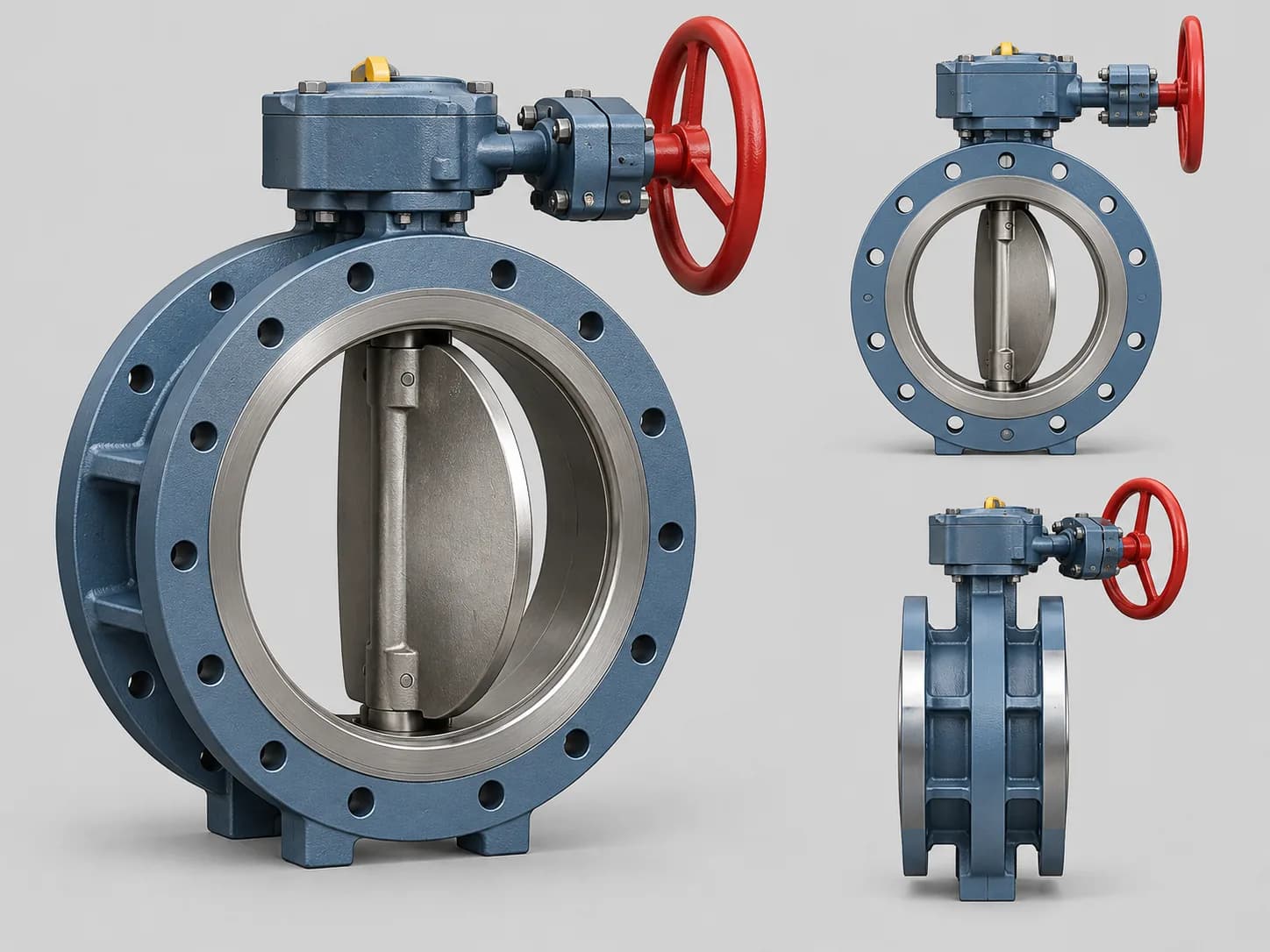
The AI-generated metallic butterfly-valve family image does not verify three offset axes, seat geometry or an exact model. Neither the illustration nor this guide establishes certified performance, manufacturer authorization or available stock.
Referenced model data
| Model | Parameter | Reference value | Conditions and source |
|---|---|---|---|
| Metal-seated Triple-offset Butterfly Valves (family reference; no model code)Family catalogue reference | Triple-offset metal-seat family | Conical triple-offset sealing geometry; replaceable seat/seal-ring arrangements are described | DBV family brochure explanation, not a guarantee of zero leakage or unrestricted bidirectional differential pressure for all configurations. PDF file page7 / printed6; file9–10 / printed8–9Checked 2026-10-23 |
| Metal-seated Triple-offset Butterfly Valves (family reference; no model code)Family catalogue reference | Connection forms | Flanged; Wafer; Lug; Butt weld | Forms shown together in brochure; not individually orderable models or interchangeable face-to-face dimensions. PDF file page8 / printed7Checked 2026-10-23 |
| Metal-seated Triple-offset Butterfly Valves (family reference; no model code)Family catalogue reference | Illustrated flanged bill of materials | body: A216 WCB; disc: A351 CF8; stem: 17-4PH; seat: F304+STL; sealRing: F304+STL material designations, no unit | Illustrated flanged configuration only; PDF explicitly allows other materials by customer requirement. Do not overwrite the4-inch5A website configuration or claim all valves use these materials. PDF file page11 / printed10 > parts7,10,13,17,18Checked 2026-10-23 |
| Metal-seated Triple-offset Butterfly Valves (family reference; no model code)Family catalogue reference | Valve size/class and material example | nominalSize: 4; pressureClass: 600#; body: 5A; disc: F53+STL; stem: 17-4PH; seat: F53+STL; connection: Lug nominal inch; pressure class NOT psi | Exact unnamed page configuration only. No model/order code. Temperature on this page is invalid and excluded. No current supply or material certificate verified. Product description / valve parametersChecked 2026-10-23 |
| Metal-seated Triple-offset Butterfly Valves (family reference; no model code)Family catalogue reference | Published design and test references | design: API609; test: ISO5208/API598 standard labels | Gear-operated lug page references standards without edition, report or serial-specific acceptance evidence. Reference claim is not certification. Valve parameters / testing and design standardsChecked 2026-10-23 |
Authoritative references
- DBV butterfly valve product brochurechecked 2026-10-23
- 4-inch Class 600 5A lug triple-offset valve: invalid temperature presentchecked 2026-10-23
- Actual page: gear-operated lug triple-offset butterfly valvechecked 2026-10-23