Selection & Specification
Pumping Unit Selection: Keep Load, Stroke and Torque Separate
View the model-specific values, conditions and sources
Start with three separate decisions
A pumping-unit bid can contain a familiar model number and still leave the selection unresolved. The purchasing problem is not finding the largest catalogue number. It is keeping the well requirement, the selected mechanical arrangement and the offered package connected without treating one rating as a substitute for another.
Use three independent review lines: polished-rod loading, selected stroke and torque. Closing one line does not close the others. A documented load capacity does not identify the required stroke, and a stroke choice does not describe the cyclic torque demand of the proposed installation. This guide organizes the questions for the responsible lift-system engineer; it does not calculate a well design or prescribe operating settings.
Keep the complete catalogue row intact
The APEX Endurance table lists AC2560-500-320 with 50,000 lb rated polished-rod capacity, discrete strokes of 320 / 276 / 234 / 193 in and rated torque of 2,560,000 in-lb. The APEX conventional table separately lists AC1824-427-240 at 42,700 lb, with 240 / 200 / 163 / 127 in strokes and 1,824,000 in-lb torque.
These Chinese tables explicitly identify the torque unit; the abbreviated English heading is not a complete unit reference. Neither row establishes a production rate, the operating speed for the intended well or an installed reducer's cyclic torque curve. Keep the family name and full designation beside every transcribed value.
A selection record with independent closure points
The following worksheet is a procurement aid, not a capacity calculation. Ask the bidder to complete the offer column and the responsible engineer to identify what remains unresolved.
| Review line | Buyer input to identify | Bidder response to request | Item that does not close the question |
|---|---|---|---|
| Polished-rod loading | Available well and rod-system load information | Model-specific selection basis for the stated duty | A larger headline capacity alone |
| Stroke | Proposed operating programme and required arrangement | One selected catalogue choice and assembly reference | The longest available stroke copied into a generic range |
| Torque | The proposed loading and balance arrangement | Selection documentation tied to that configuration | A rated torque number without its model or unit |
| Drive and controls | Site interfaces and items to be reused | Included drive, transmission, controls and exclusions | The unit name with no package schedule |
| Site interface | Foundation and installation responsibility | Controlled drawings and responsibility allocation | A catalogue illustration |
Give each open item an owner and a document reference. Avoid a single overall “complies” cell that hides unanswered selection questions behind a complete-looking data row.
Spot a mixed-row offer before comparing price
Consider a fictional desk review. Offer A names a conventional unit but attaches a stroke list copied from an Endurance row. Offer B keeps its full designation and stroke list together but has not returned the requested selection basis. Neither offer is ready for technical comparison.
For A, request a corrected model-specific schedule; do not repair the offer by selecting whichever value looks more conservative. For B, keep the missing selection document visible. Its internally consistent row is useful, but consistency is not proof that it suits the well. No additional load, speed or production assumption is needed to identify either gap.
The same discipline applies to a replacement inquiry. An existing model prefix can help locate records, but it does not prove that retained accessories fit a new assembly. List the old equipment identity and distinguish retained items from new supply.
Separate selection questions from supply exclusions
After the technical lines are understood, compare the package boundaries. Is the price for the mechanical unit, a unit with drive and controls, or a wider installation scope? Identify transport splits, handling documents, guards, brake, balance equipment and site services as included, excluded or awaiting clarification.
An exclusion is not automatically a technical defect. It becomes a comparison problem when one bidder includes work that another leaves with the buyer and the difference disappears into a single price. Keep that commercial normalization separate from the engineer's selection decision.
Send the unresolved questions with the RFQ
Use the surface rod-lift pumping-unit reference to retain the named catalogue rows. In the RFQ Builder, request the chosen model and stroke, selection documentation, package schedule and site responsibilities. Put replacement parts on separate lines rather than treating them as a complete-unit alternative.
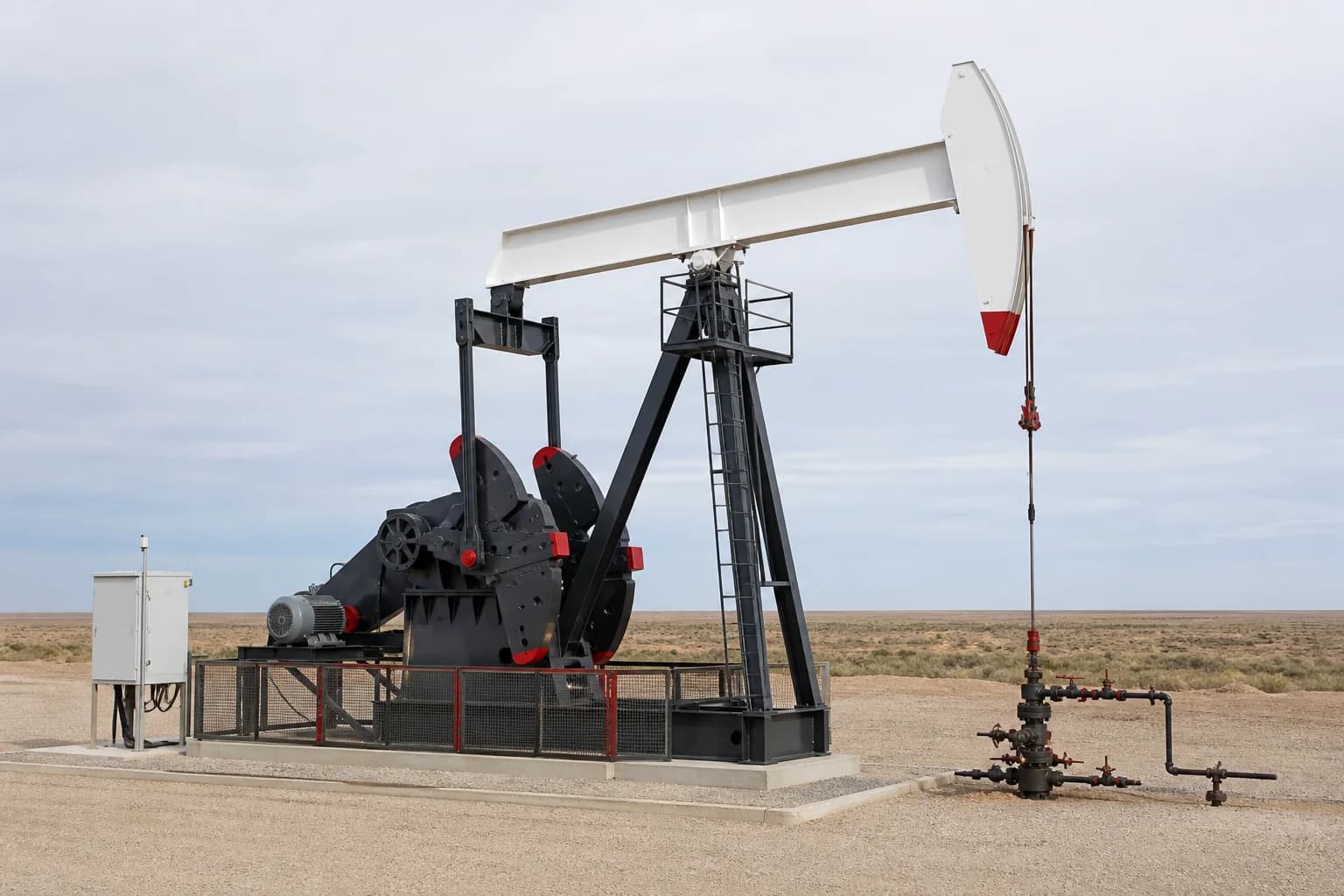
The accompanying image is an AI-generated pumping-unit category reference, not an exact-model photograph or evidence of mechanism dimensions. Catalogue references and a completed worksheet do not establish stock, manufacturer authorization or acceptance of a well design.
Referenced model data
| Model | Parameter | Reference value | Conditions and source |
|---|---|---|---|
| AC2560-500-320 | rated polished rod capacity | 50000 lb | Rated Polished Rod Capacity in the Endurance model row only; not the dynamic load or production capacity of a particular well. Endurance model table / AC2560-500-320 / Rated Polished Rod CapacityRevision Web page has no controlled revision identified; retrieval time is not the issue date. · Checked 2026-10-23 |
| AC2560-500-320 | stroke length choices | 320 / 276 / 234 / 193 in | Discrete stroke choices in the same model row, not a continuous range. The applicable strokes per minute are not specified with these choices. Endurance model table / AC2560-500-320 / Stroke LengthRevision Web page has no controlled revision identified; retrieval time is not the issue date. · Checked 2026-10-23 |
| AC2560-500-320 | rated torque | 2560000 in-lb | The Chinese table explicitly labels torque in in.-lb. The English heading only says in.; it is not treated as a complete torque-unit reference. Endurance model table / AC2560-500-320 / Rated Torque (in.-lb)Revision Web page has no controlled revision identified; retrieval time is not the issue date. · Checked 2026-10-23 |
| AC1824-427-240 | rated polished rod capacity | 42700 lb | Conventional model row only; do not combine it with an Endurance model sharing the same prefix. Conventional model table / AC1824-427-240 / Rated Polished Rod CapacityRevision Web page has no controlled revision identified; retrieval time is not the issue date. · Checked 2026-10-23 |
| AC1824-427-240 | stroke length choices | 240 / 200 / 163 / 127 in | Discrete catalogue stroke settings; the longest stroke is not necessarily suitable for every well. Conventional model table / AC1824-427-240 / Stroke LengthRevision Web page has no controlled revision identified; retrieval time is not the issue date. · Checked 2026-10-23 |
| AC1824-427-240 | rated torque | 1824000 in-lb | The Chinese table explicitly labels in.-lb. This is not the actual cyclic torque curve of an installed reducer. Conventional model table / AC1824-427-240 / Rated Torque (in.-lb)Revision Web page has no controlled revision identified; retrieval time is not the issue date. · Checked 2026-10-23 |
Authoritative references
- APEX Endurance Long-Stroke Pumping Units (Chinese catalogue table)checked 2026-10-23
- APEX Conventional Pumping Units (Chinese catalogue table)checked 2026-10-23