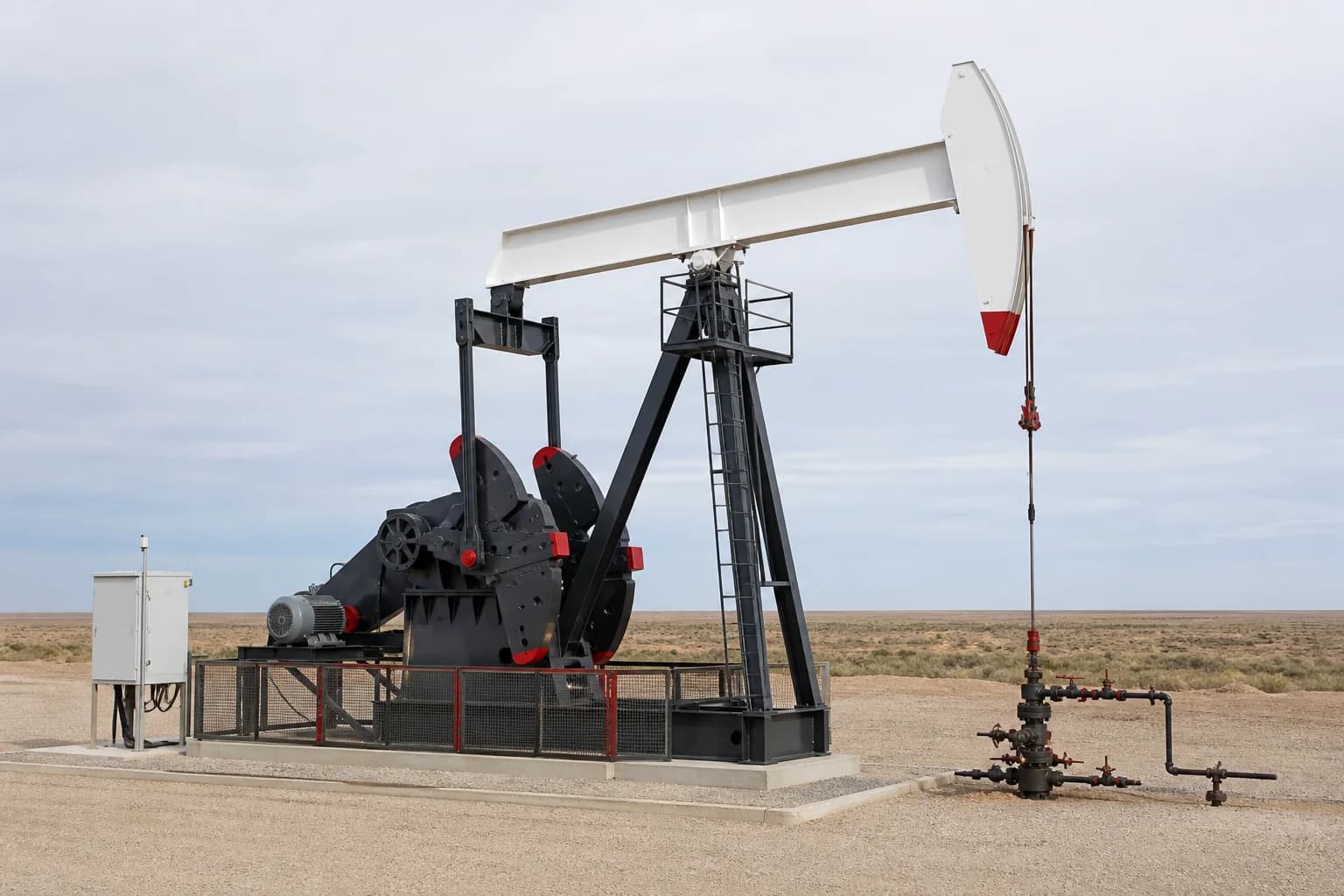
AI-generated category reference. It is not a photograph of a specific manufacturer or exact product model.
Production & Artificial Lift
Surface Rod-Lift Pumping Units
Compare complete surface rod-lift units by named-model polished-rod capacity, stroke choices, torque reference, drive scope and the well-specific selection basis.
- Documented model references
- AC2560-500-320 · AC1824-427-240
- Parameters, conditions and sources
Source-bound technical references
Reference fields for quotation comparison. Final values must be confirmed in the signed manufacturer datasheet.
| Model | Parameter | Reference value | Conditions and source |
|---|---|---|---|
| AC2560-500-320 | rated polished rod capacity | 50000 lb | Rated Polished Rod Capacity in the Endurance model row only; not the dynamic load or production capacity of a particular well. Endurance model table / AC2560-500-320 / Rated Polished Rod CapacityRevision Web page has no controlled revision identified; retrieval time is not the issue date. · Checked 2026-10-23 |
| AC2560-500-320 | stroke length choices | 320 / 276 / 234 / 193 in | Discrete stroke choices in the same model row, not a continuous range. The applicable strokes per minute are not specified with these choices. Endurance model table / AC2560-500-320 / Stroke LengthRevision Web page has no controlled revision identified; retrieval time is not the issue date. · Checked 2026-10-23 |
| AC2560-500-320 | rated torque | 2560000 in-lb | The Chinese table explicitly labels torque in in.-lb. The English heading only says in.; it is not treated as a complete torque-unit reference. Endurance model table / AC2560-500-320 / Rated Torque (in.-lb)Revision Web page has no controlled revision identified; retrieval time is not the issue date. · Checked 2026-10-23 |
| AC1824-427-240 | rated polished rod capacity | 42700 lb | Conventional model row only; do not combine it with an Endurance model sharing the same prefix. Conventional model table / AC1824-427-240 / Rated Polished Rod CapacityRevision Web page has no controlled revision identified; retrieval time is not the issue date. · Checked 2026-10-23 |
| AC1824-427-240 | stroke length choices | 240 / 200 / 163 / 127 in | Discrete catalogue stroke settings; the longest stroke is not necessarily suitable for every well. Conventional model table / AC1824-427-240 / Stroke LengthRevision Web page has no controlled revision identified; retrieval time is not the issue date. · Checked 2026-10-23 |
| AC1824-427-240 | rated torque | 1824000 in-lb | The Chinese table explicitly labels in.-lb. This is not the actual cyclic torque curve of an installed reducer. Conventional model table / AC1824-427-240 / Rated Torque (in.-lb)Revision Web page has no controlled revision identified; retrieval time is not the issue date. · Checked 2026-10-23 |
Technical selection notes
Catalogue ratings are identified by model and source language. Final operating speed, balance and foundation requirements are quotation-dependent. This page is not an operating or maintenance procedure.
Published manufacturer data is a selection reference, not a quotation or evidence of supply availability.
Product overview
Purchase the surface unit, not only its spares
A complete surface rod-lift pumping unit is a different purchase from a downhole sucker-rod pump or a replacement bearing, brake or reducer. The inquiry must identify the surface mechanism and drive package, its connection to the rod system, and the site work included in the offer. A parts quotation cannot be compared directly with a complete installed package.
APEX publishes conventional and Endurance long-stroke units as separate product families. The following examples retain their full model designations rather than combining the largest entries into one generic pumping-unit specification.
Named catalogue examples
| Manufacturer and model | Rated polished-rod capacity | Listed stroke choices | Listed rated torque |
|---|---|---|---|
| APEX Endurance AC2560-500-320 | 50,000 lb | 320 / 276 / 234 / 193 in | 2,560,000 in-lb |
| APEX Conventional AC1824-427-240 | 42,700 lb | 240 / 200 / 163 / 127 in | 1,824,000 in-lb |
Values come from the model rows in the APEX Chinese Endurance table and Chinese conventional table. Those tables explicitly label torque in in-lb; the English versions abbreviate that heading incompletely. Use the identified source when transcribing the torque reference.
Stroke entries are discrete catalogue choices, not a continuous adjustment range. The load and torque labels do not establish the load history of a particular well, the permissible operating speed or a production-rate guarantee.
Define the well and drive together
Provide the well and rod-system information available to the responsible lift-system engineer, including the intended operating programme and changing production conditions. Ask the bidder to return a model-specific selection basis showing the proposed stroke, speed, loading and balance arrangement. Keep uncertainties visible instead of choosing a unit solely because its headline capacity is larger.
The RFQ should distinguish the pumping structure, reducer, motor or other drive, transmission, brake, controls, guards and balance equipment. Identify existing items to be reused and new equipment to be supplied. A familiar model prefix does not demonstrate that an old accessory fits the new assembly.
Compare package boundaries before price
| Quotation line | Clarification to obtain |
|---|---|
| Mechanical unit | Full model, selected stroke and assembly drawing |
| Drive and controls | Included equipment, site supply and control interfaces |
| Civil interface | Foundation information and responsibility for site verification |
| Transport and installation | Shipping split, handling documents and included services |
| Acceptance documents | Agreed inspection, traceability and handover records |
Controlled foundation and transport drawings belong in the selected package's quotation and approval process. The catalogue examples are useful before those project documents exist, but they cannot replace them when an installation is accepted.
Prepare a traceable RFQ
Attach the existing equipment identity when replacing a unit, describe the proposed well duty, and list quantity, destination, required date and optional alternatives. Request a deviation schedule covering both technical selection and excluded work.
For a different supply scope, see pump-jack replacement parts or downhole sucker-rod pumps. Use the RFQ Builder to keep complete units and spare parts on separate lines. Manufacturer references are not evidence of our inventory, authorization or an accepted well design.
Review how polished-rod load, discrete stroke and drive scope affect a complete-unit selection in Pumping Unit Selection: Keep Load, Stroke and Torque Separate.
Technical reference trail
These public references support the equipment family and selection context. They do not imply dealership, authorization or a guaranteed order specification.
Frequently Asked Questions
Does the highest polished-rod capacity identify the best unit?
No. Selection needs the well and rod-system load history, proposed operating programme, drive and balance configuration.
Are the listed strokes a continuous adjustment range?
No. They are the discrete choices printed for the named model row; confirm the selected arrangement in the offer.
Submit RFQ for Surface Rod-Lift Pumping Units
Send product, quantity, specification and destination details so the requirements can be reviewed with potential suppliers.
Technical and RFQ References
Check common units, standards and purchasing terminology, then build a structured request for this equipment.
Related Products
Pumping Unit and Pump Jack Parts
Pumping Unit and Pump Jack Parts for rod lift, ESP completion, surface pumping-unit maintenance and production optimization, with quotation fields for well depth, production rate, fluid properties, gas and solids content, temperature, tubing/casing geometry, installed equipment model and electrical data where applicable.
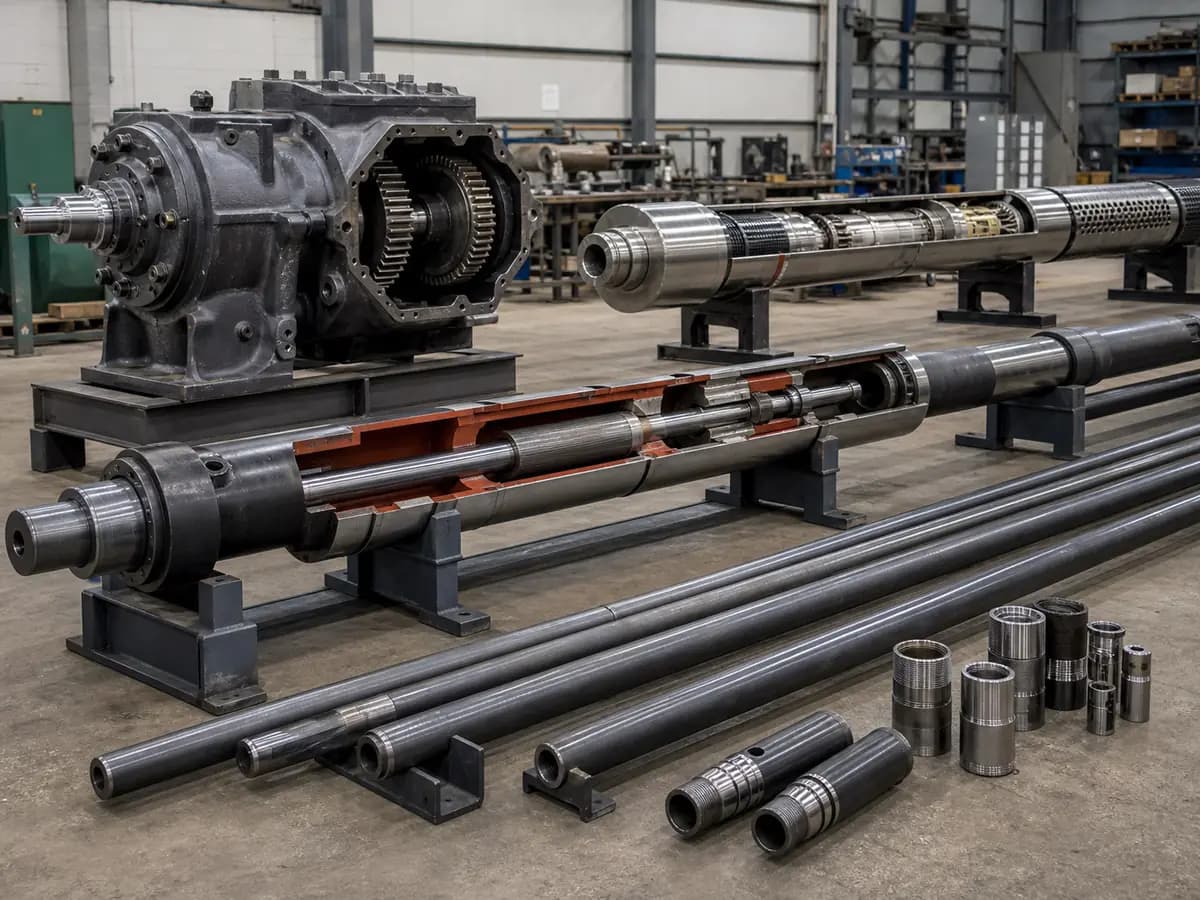
Sucker Rod Pumps
Sucker Rod Pumps for rod lift, ESP completion, surface pumping-unit maintenance and production optimization, with quotation fields for well depth, production rate, fluid properties, gas and solids content, temperature, tubing/casing geometry, installed equipment model and electrical data where applicable.
Related Technical Articles
Pumping Unit Selection: Keep Load, Stroke and Torque Separate
Build a model-specific selection record that separates polished-rod capacity, discrete stroke choices and rated torque before comparing complete pumping-unit offers.
How to Compare Oilfield Equipment Quotations Line by Line
Normalize technical scope, documents, delivery and commercial terms before selecting an oilfield equipment quotation.
BOP Control Selection: Pressure Ratings and Usable Fluid
A document-review framework that separates BOP wellbore pressure, hydraulic-control ratings and usable accumulator fluid before comparing a control-unit quotation.