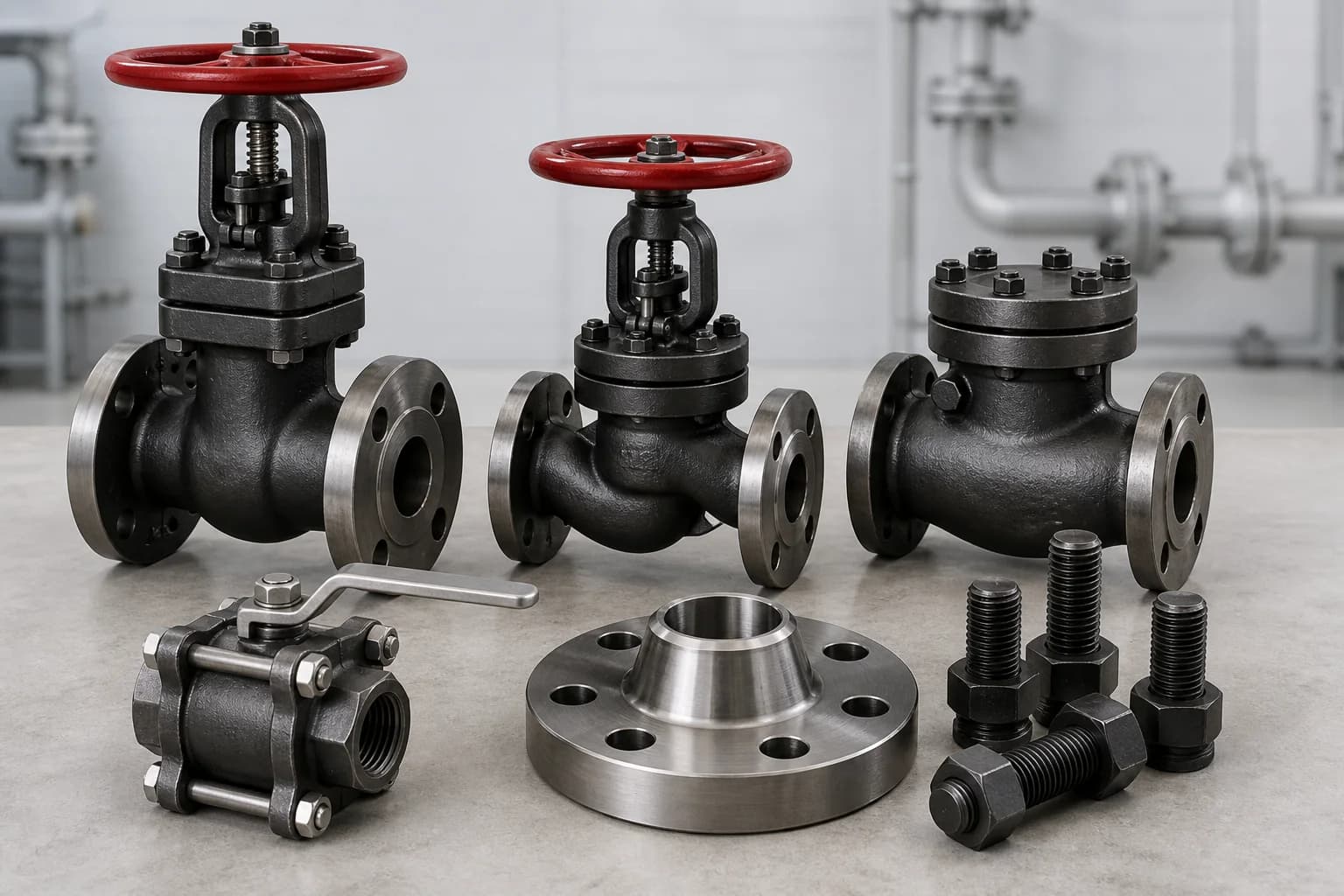
AI-generated category reference. It is not a photograph of a specific manufacturer or exact product model.
Process Valves, Pumps & Compression
Forged-Steel Gate, Globe and Check Valves
Small-bore forged valves for oil, gas and process piping, with published manufacturing ranges of DN10-DN80, Class 150-2500 and -196 to 800 degrees C.
Published manufacturing envelope
Reference fields for quotation comparison. Final values must be confirmed in the signed manufacturer datasheet.
| Parameter | Reference value | Notes |
|---|---|---|
| Nominal size | 3/8-3 in (DN10-DN80) | Confirm size availability for the selected valve design |
| Pressure class | Class 150-2500 / 0.1-42 MPa | Use the project pressure-temperature rating |
| Published temperature range | -196 to 800 degrees C | Material, trim and packing limits govern the final choice |
| Body material families | Carbon, alloy and stainless steel; Monel; Alloy 20 | Specify the exact ASTM material grade |
Product overview
Valve function before model selection
Forged gate valves provide isolation, globe valves provide throttling or controlled shutoff, and check valves prevent reverse flow. Those functions are not interchangeable even when body size and pressure class look similar. A reviewed manufacturing range covers 3/8-3 inch (DN10-DN80), Class 150-2500 and a stated pressure span of 0.1-42 MPa across the producer's wider forged-valve portfolio.
Temperature and material envelope
The same public range lists service temperatures from -196 to 800 degrees C and body-material families including carbon steel, alloy steel, stainless steel, Monel and Alloy 20. These endpoints do not establish that every valve type is available in every material and rating combination. Cryogenic, high-temperature and corrosive duties need a model-level datasheet, material standard, trim selection and verified test procedure.
Ends, trim and leakage requirements
The RFQ should define socket-weld, threaded, butt-weld, raised-face or ring-joint ends, as applicable to the piping class. Also specify bore, flow direction, stem and bonnet construction, seat and hardfacing materials, packing system and any fugitive-emission requirement. Sour-service requests must name the governing material and hardness rules instead of relying on a general anti-sulfur product description.
RFQ checklist
Request the general arrangement, bill of materials, pressure-temperature rating, hydrostatic and seat-test criteria, NDE scope and marking details with the quote. Public product information provides a preliminary selection reference, but API certification or Monogram status must be checked independently for the exact manufacturing facility and ordered product scope.
Technical reference trail
These public references support the equipment family and selection context. They do not imply dealership, authorization or a guaranteed order specification.
Frequently Asked Questions
Can the published range be applied to every valve model?
No. DN, pressure class, temperature and material combinations must be confirmed on the exact valve datasheet and quotation.
Which end connections should be stated?
Identify socket weld, NPT, butt weld, RF or RTJ ends and include the mating piping class and dimensional standard.
How should sour service be requested?
Name the required NACE or ISO material rules, fluid composition, temperature, hardness controls and certificate package in the RFQ.
Submit RFQ for Forged-Steel Gate, Globe and Check Valves
Send product, quantity, specification and destination details so the requirements can be reviewed with potential suppliers.
Technical and RFQ References
Check common units, standards and purchasing terminology, then build a structured request for this equipment.
Related Products
API 6D Pipeline Ball Valves
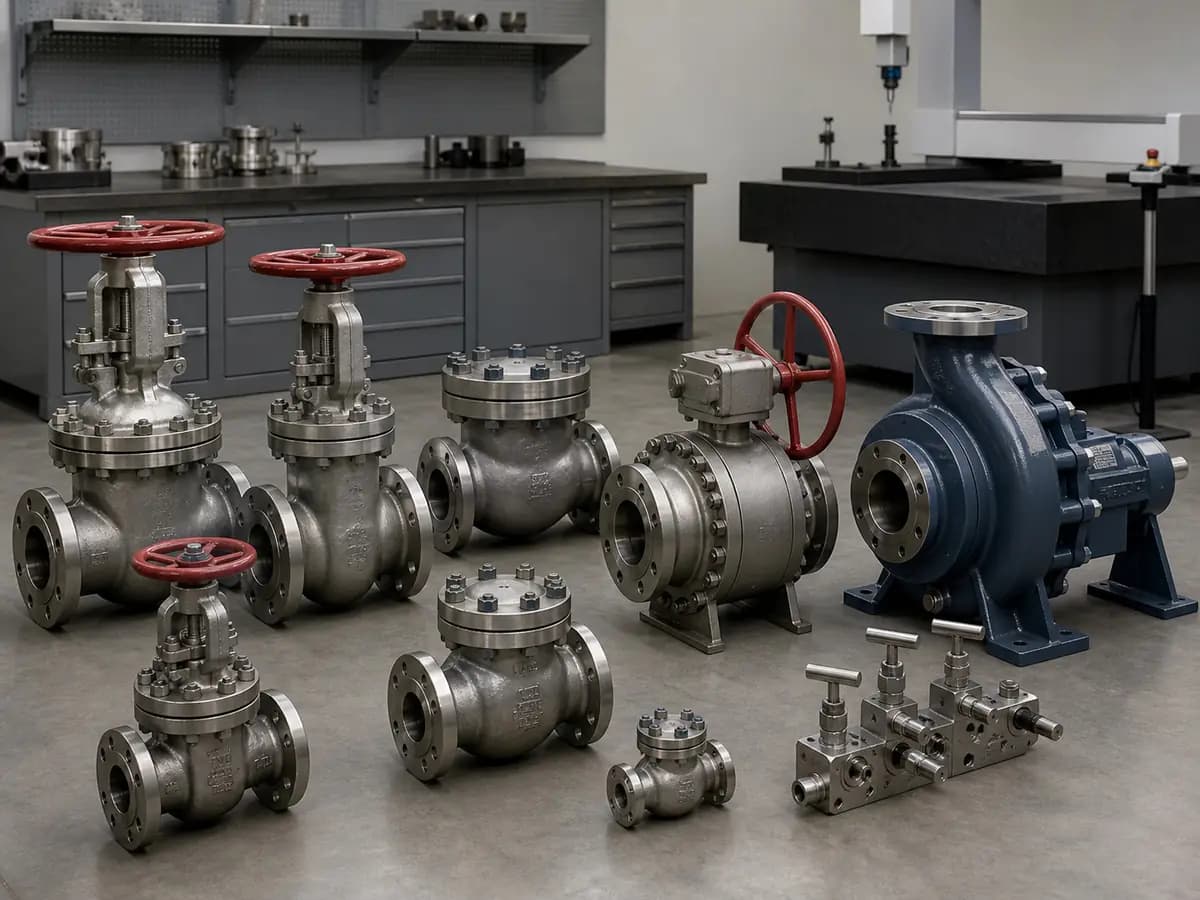
API 6D Pipeline Ball Valves for pipeline, gathering, station isolation and piggable full-bore oil and gas service, with RFQ fields covering nominal size, pressure class, full or reduced bore, end connection, body construction, material and trim, seat and seal system, fluid composition, design temperature, actuation, fire testing, fugitive-emission and sour-service requirements.
Needle Valves and Instrument Manifolds
Needle Valves and Instrument Manifolds for instrument isolation, equalization, bleed, calibration and impulse-line service around pressure and differential-pressure instruments, with RFQ fields covering valve or manifold arrangement, port size and thread, pressure and temperature, flow coefficient or orifice, body and trim material, stem tip, packing, mounting pattern, sour service, fire safety and cleanliness requirements.
Pipeline Bends, Fittings and Flanges
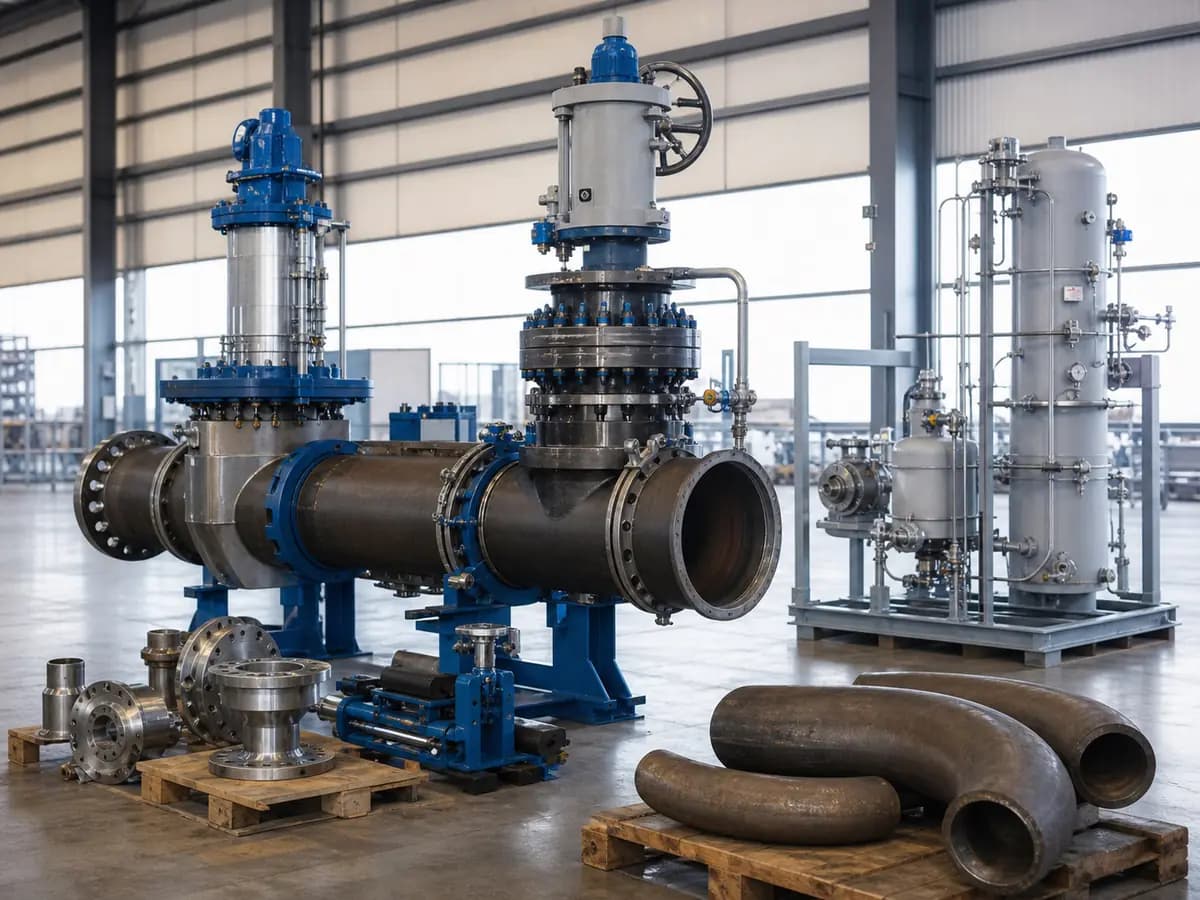
Pipeline Bends, Fittings and Flanges for pipeline tie-ins, stations, launchers, receivers, manifolds and above-ground pressure-piping assemblies, with RFQ fields covering component type, nominal size, schedule or wall thickness, pressure class, material grade, seamless or welded route, bend radius and angle, tangent length, dimensional standard, end preparation, corrosion allowance, sour service, impact testing, heat treatment, NDT, coating and matching pipe data.
Related Technical Articles
API Standard Edition and Document Checks Before an Oilfield Order
A pre-order checklist for confirming API standard editions, addenda, errata, supplier scope and required product records.
Material Certificates and Inspection Documents for Oilfield RFQs
Understand which material, test, inspection and traceability documents to request before comparing oilfield equipment quotations.
API 6A Wellhead Equipment Buying Guide
Key information buyers should prepare before requesting quotes for API 6A wellhead equipment, christmas trees, valves, and related parts.