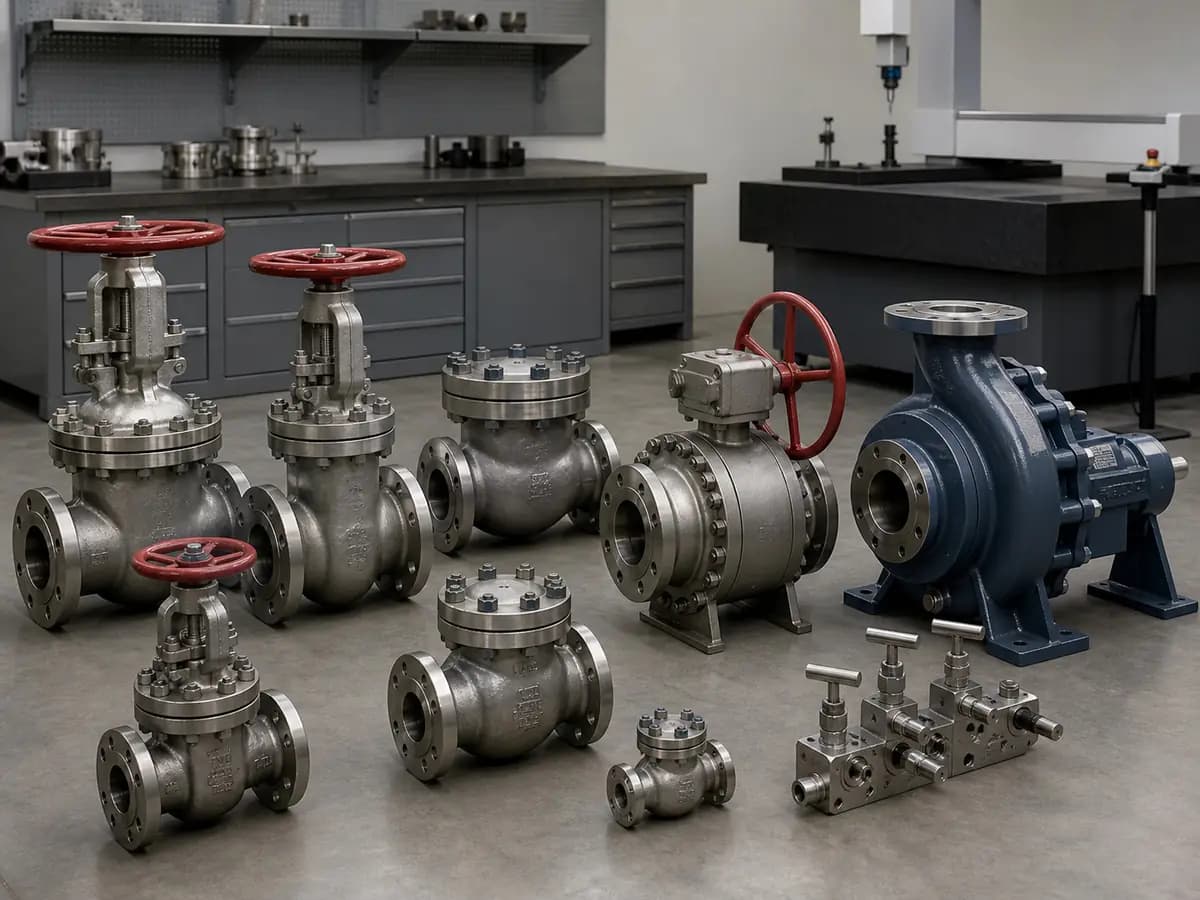
Process Valves, Pumps & Compression
Needle Valves and Instrument Manifolds
Needle Valves and Instrument Manifolds for instrument isolation, equalization, bleed, calibration and impulse-line service around pressure and differential-pressure instruments, with RFQ fields covering valve or manifold arrangement, port size and thread, pressure and temperature, flow coefficient or orifice, body and trim material, stem tip, packing, mounting pattern, sour service, fire safety and cleanliness requirements.
RFQ selection reference
Reference fields for quotation comparison. Final values must be confirmed in the signed manufacturer datasheet.
| Parameter | Reference value | Notes |
|---|---|---|
| Configuration | Needle valve or 2-, 3- or 5-valve manifoldInstrument and process port pattern | Attach transmitter mounting and impulse-line details |
| Pressure and temperature | Maximum allowable working pressureOperating temperature range | Apply material and packing derating |
| Wetted materials | Body, stem, seat and packingSour, oxygen-clean or general service | State NACE, cleanliness and emission requirements |
Product overview
Product scope
Needle Valves and Instrument Manifolds are presented as a quotation-ready product family for instrument isolation, equalization, bleed, calibration and impulse-line service around pressure and differential-pressure instruments. This page supports early technical comparison; it does not identify one guaranteed model, stocked unit or universal configuration. The final supplier and manufacturer must confirm the ordered design against the buyer's datasheet, project specification and signed quotation.
Selection basis
The main selection inputs are valve or manifold arrangement, port size and thread, pressure and temperature, flow coefficient or orifice, body and trim material, stem tip, packing, mounting pattern, sour service, fire safety and cleanliness requirements. These fields affect equipment fit, performance, safety, documentation and total package price. For replacement equipment, include the installed maker, model, serial number, original part number, clear nameplate photographs and interface drawings. For new projects, attach the governing project datasheet and the latest approved standard editions.
Configuration reference
The table above is a structured RFQ reference rather than a model list. It shows the information needed to compare technically responsive quotations. Published manufacturer examples and industry standards are used only to identify common equipment architecture and purchasing fields; they do not imply dealership, authorization, stock ownership or identical performance across manufacturers.
Documents and inspection
Define the document package before commercial evaluation. Depending on the product, request a signed datasheet, general arrangement and interface drawings, material certificates, pressure or performance test reports, NDT records, hazardous-area certificates, inspection and test plan, preservation procedure, packing list, marking photographs and certificate of conformity. When a standard or certification is mandatory, verify the exact edition, product scope, manufacturing facility and certificate status rather than relying on a website statement.
RFQ checklist
- Product family, service, quantity and required delivery date
- Operating cases, pressure or load, temperature, flow and process media
- Dimensions, connections, materials and approved standard edition
- Site utilities, ambient conditions and hazardous-area classification
- Required testing, third-party inspection, traceability and document language
- Destination, Incoterm, packing, lifting and transport restrictions
- Target unit price or budget range and acceptable technical alternatives
Upload the specification, drawing, equipment list or replacement photographs with the inquiry. Open technical points should be closed before price comparison and purchase-order release.
Technical reference trail
These public references support the equipment family and selection context. They do not imply dealership, authorization or a guaranteed order specification.
Frequently Asked Questions
What information is required to quote Needle Valves and Instrument Manifolds?
Provide valve or manifold arrangement, port size and thread, pressure and temperature, flow coefficient or orifice, body and trim material, stem tip, packing, mounting pattern, sour service, fire safety and cleanliness requirements, quantity, destination, delivery target and the required document package. Attach the project datasheet or matching equipment drawing whenever available.
Are the displayed specifications guaranteed values?
No. They are RFQ reference fields. The final manufacturer datasheet, approved drawings, test procedure and purchase specification control the ordered equipment.
Can an equivalent configuration be quoted?
Yes, when the buyer permits alternatives. Every deviation in standard, rating, material, interface, certification, testing or delivery scope should be listed clearly for technical review.
Submit RFQ for Needle Valves and Instrument Manifolds
Send product, quantity, specification and destination details so the requirements can be reviewed with potential suppliers.
Technical and RFQ References
Check common units, standards and purchasing terminology, then build a structured request for this equipment.
Related Products
API 6D Pipeline Ball Valves
API 6D Pipeline Ball Valves for pipeline, gathering, station isolation and piggable full-bore oil and gas service, with RFQ fields covering nominal size, pressure class, full or reduced bore, end connection, body construction, material and trim, seat and seal system, fluid composition, design temperature, actuation, fire testing, fugitive-emission and sour-service requirements.
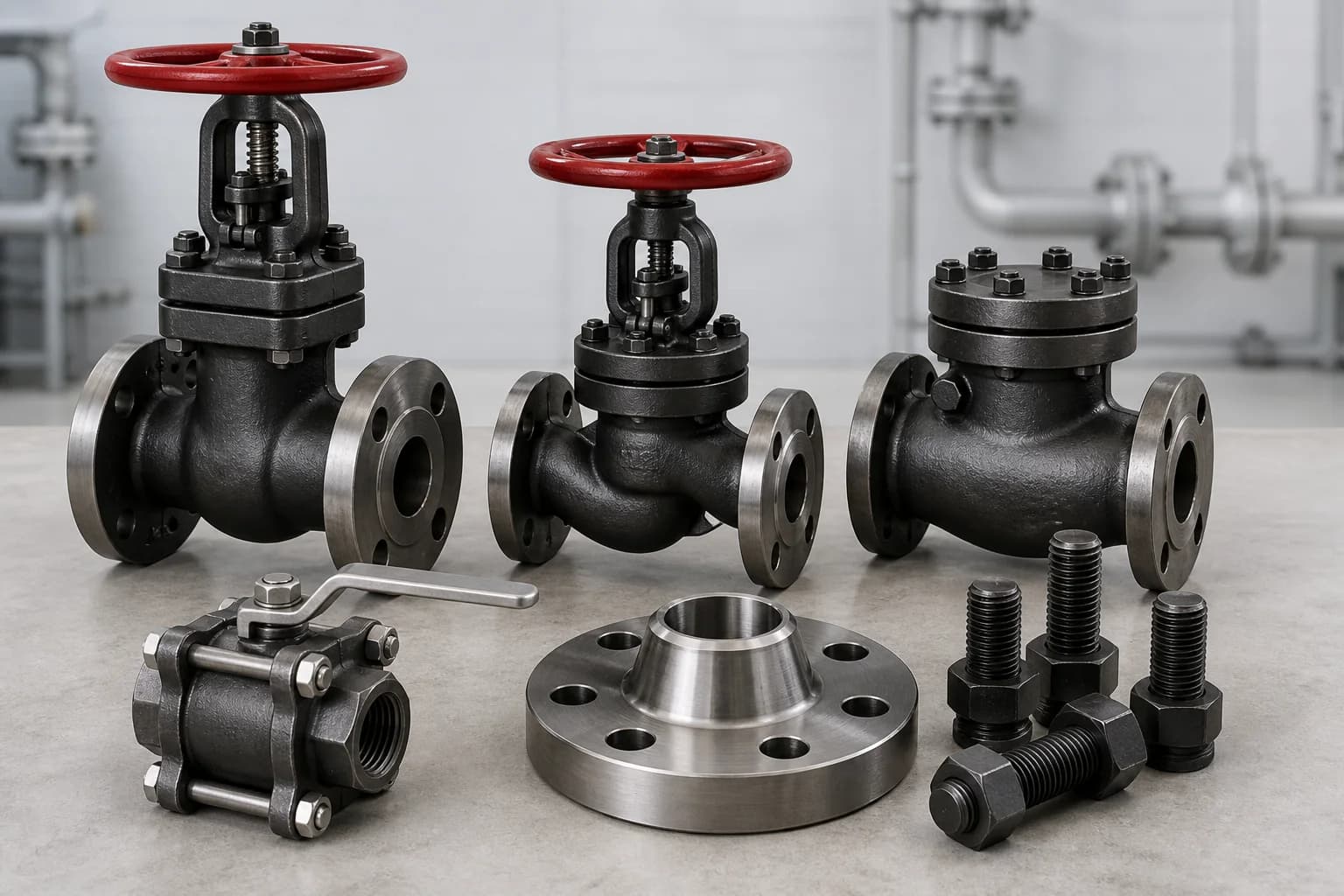
Forged-Steel Gate, Globe and Check Valves
Small-bore forged valves for oil, gas and process piping, with published manufacturing ranges of DN10-DN80, Class 150-2500 and -196 to 800 degrees C.
API 610 Centrifugal Process Pumps
API 610 Centrifugal Process Pumps for crude, hydrocarbon, produced-water and utility pumping in upstream and process facilities, with RFQ fields covering rated and normal flow, differential head, suction pressure, NPSH available, fluid properties, solids, vapor pressure, operating temperature, pump arrangement, metallurgy, mechanical seal plan, driver, utilities and site conditions.
Progressive Cavity Pumps for Oilfield Service
Progressive Cavity Pumps for Oilfield Service for viscous crude, produced fluids, sludge, polymers and multiphase liquids where a low-shear positive-displacement pump is suitable, with RFQ fields covering required flow, differential pressure, viscosity curve, solids size and concentration, gas content, inlet pressure, temperature, stator elastomer compatibility, rotor material, speed, drive, seal, connections and installation orientation.