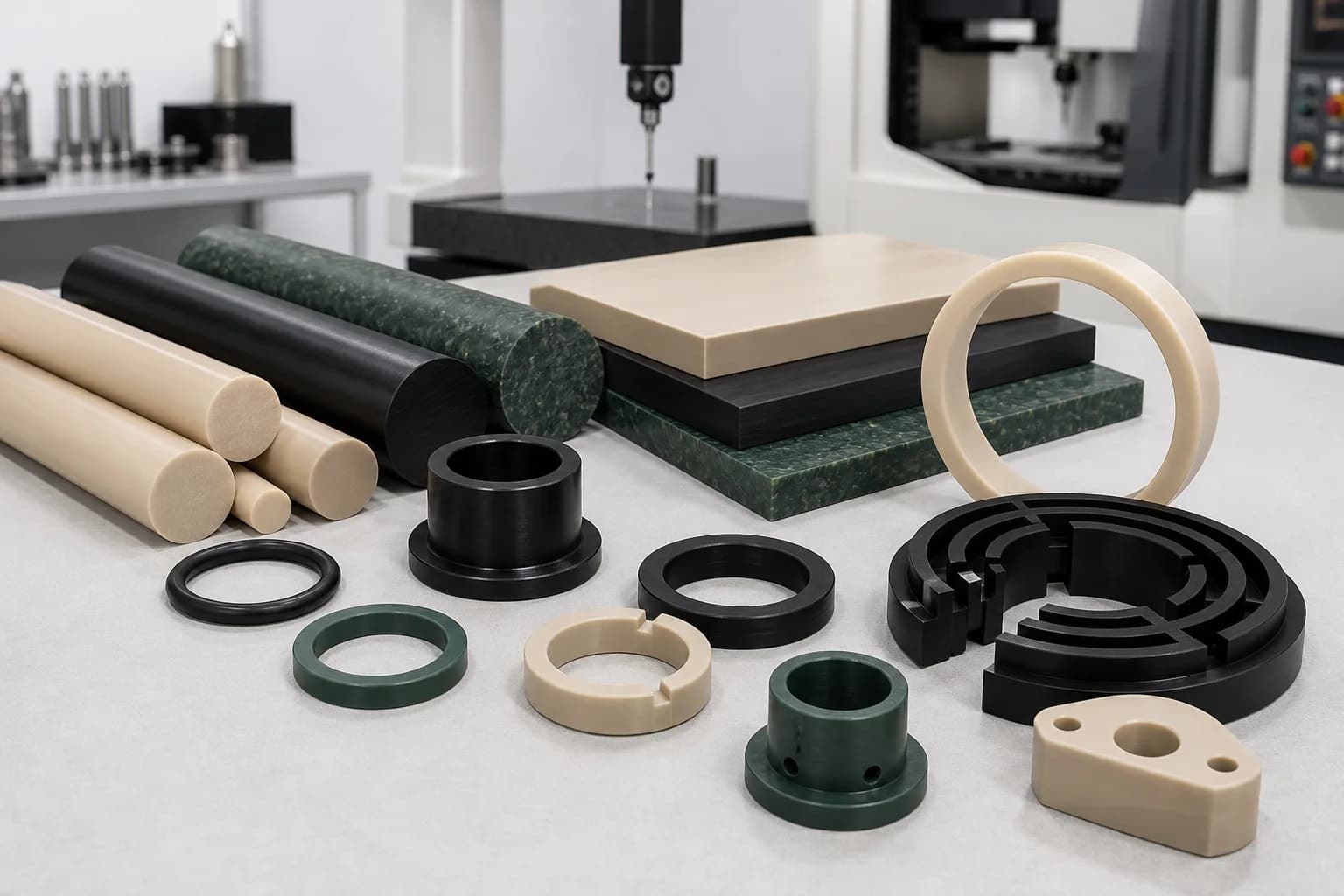
AI-generated category reference. It is not a photograph of a specific manufacturer or exact product model.
Completion & Well Service
PEEK and PAI Components for Oil and Gas Service
PEEK and PAI stock shapes and machined components for seals, backup rings, valve seats and electrical connectors, with published PEEK service data to 300 degrees C.
Published material property references
Reference fields for quotation comparison. Final values must be confirmed in the signed manufacturer datasheet.
| Parameter | Reference value | Notes |
|---|---|---|
| Natural PEEK temperature | 260 degrees C long term300 degrees C short term | Part design and environment may reduce these limits |
| Natural PEEK tensile strength | 116 MPa | Use the stated test method and orientation |
| PEEK GF30 composition | 30% glass fiber1.53 g/cm3 density | Check wear against mating surfaces |
| PEEK GF30 mechanical data | 6300 MPa tensile modulus113 MPa tensile strength | Grade-specific published values |
Product overview
Oil and gas component uses
High-performance thermoplastics are used where metal weight, corrosion or electrical behavior is unsuitable and ordinary polymers lose strength. Oil and gas application references identify PEEK in sealing rings, backup rings, valve seats and electrical connector components. The finished-part rating depends on geometry, pressure, temperature, chemical exposure and manufacturing quality, so material-property data must not be presented as a universal component rating.
Natural PEEK reference properties
A published natural PEEK stock-shape page lists 260 degrees C long-term service, 300 degrees C short-term service and 116 MPa tensile strength. Rod, plate and tube forms are available for machining. An RFQ should state stock shape or finished drawing, dimensional tolerance, surface finish, inspection method and whether molding or machining history affects the qualification plan.
Glass-filled PEEK boundaries
A 30% glass-fiber PEEK grade is listed at 1.53 g/cm3 density, 6300 MPa tensile modulus and 113 MPa tensile strength, with 300/260 degrees C short- and long-term temperature references. Glass reinforcement increases stiffness but may abrade mating surfaces, which matters for dynamic seals and sliding parts. The exact grade should therefore be approved against load direction, motion and counterface material.
RFQ checklist
Provide operating and transient pressure, temperature, fluid composition, decompression rate, extrusion gap and expected cycles for a seal or backup ring. Request the grade datasheet, batch certificate, dimensional report and any required rapid-gas-decompression or sour-service test evidence. NORSOK M-710 references must be tied to the exact material grade and test report, not inferred from a brand-level oil and gas page.
Technical reference trail
These public references support the equipment family and selection context. They do not imply dealership, authorization or a guaranteed order specification.
Frequently Asked Questions
Does a PEEK material temperature limit equal the finished-part rating?
No. Geometry, stress, pressure, chemicals, duration and manufacturing history can reduce the allowable component conditions.
When is glass-filled PEEK unsuitable?
It needs special review in sliding or sealing contact because glass fibers can increase wear on the mating surface.
What data is needed for a PEEK backup ring?
Provide groove and extrusion-gap dimensions, pressure, temperature, fluid composition, decompression rate, cycles, tolerances and the required material qualification.
Submit RFQ for PEEK and PAI Components for Oil and Gas Service
Send product, quantity, specification and destination details so the requirements can be reviewed with potential suppliers.
Technical and RFQ References
Check common units, standards and purchasing terminology, then build a structured request for this equipment.
Related Products
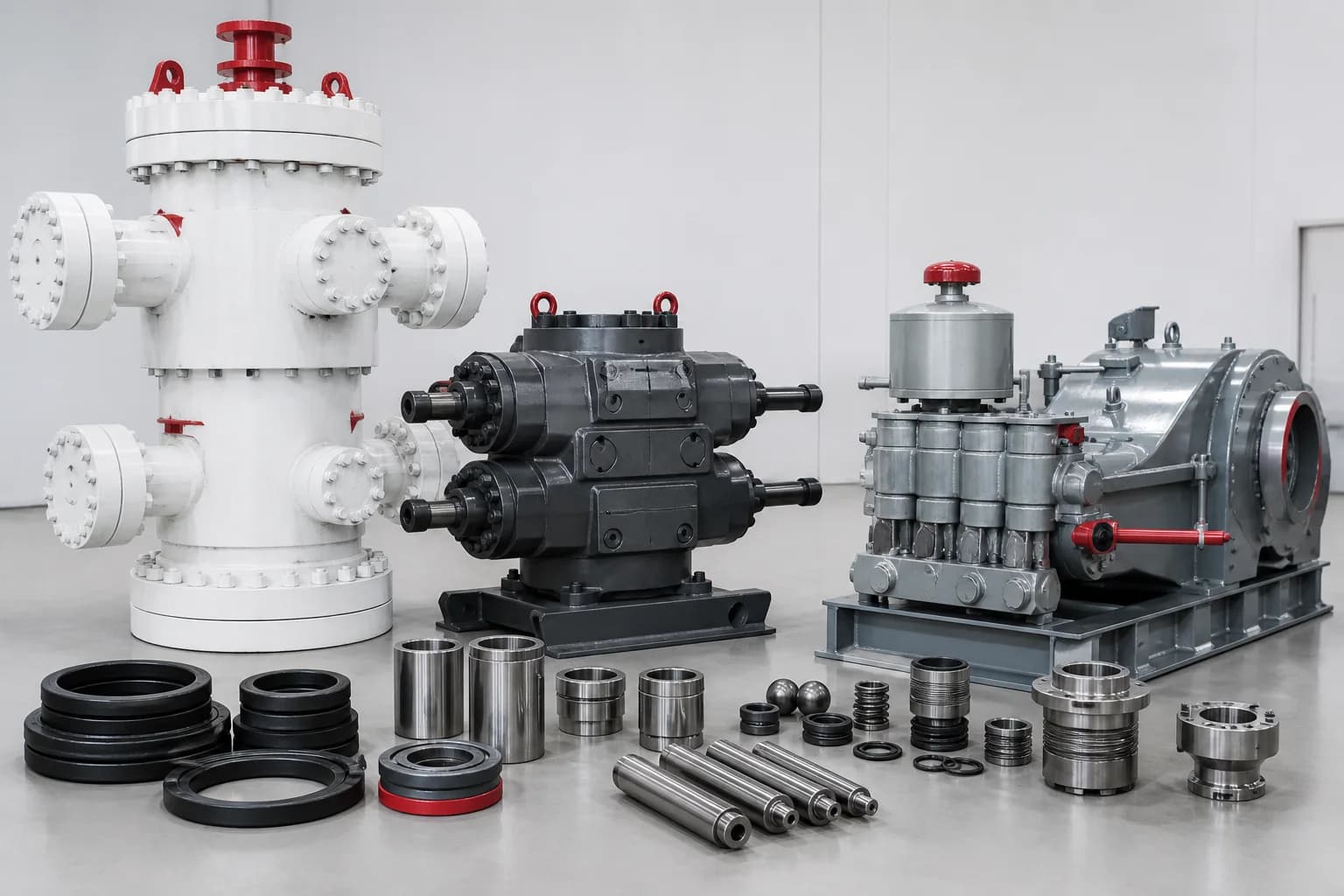
BOP Rubber Elements and Seals
Annular elements, ram packers and well-control seals selected by BOP model, 120-760 mm bore references, 21-105 MPa pressure class and verified elastomer compatibility.
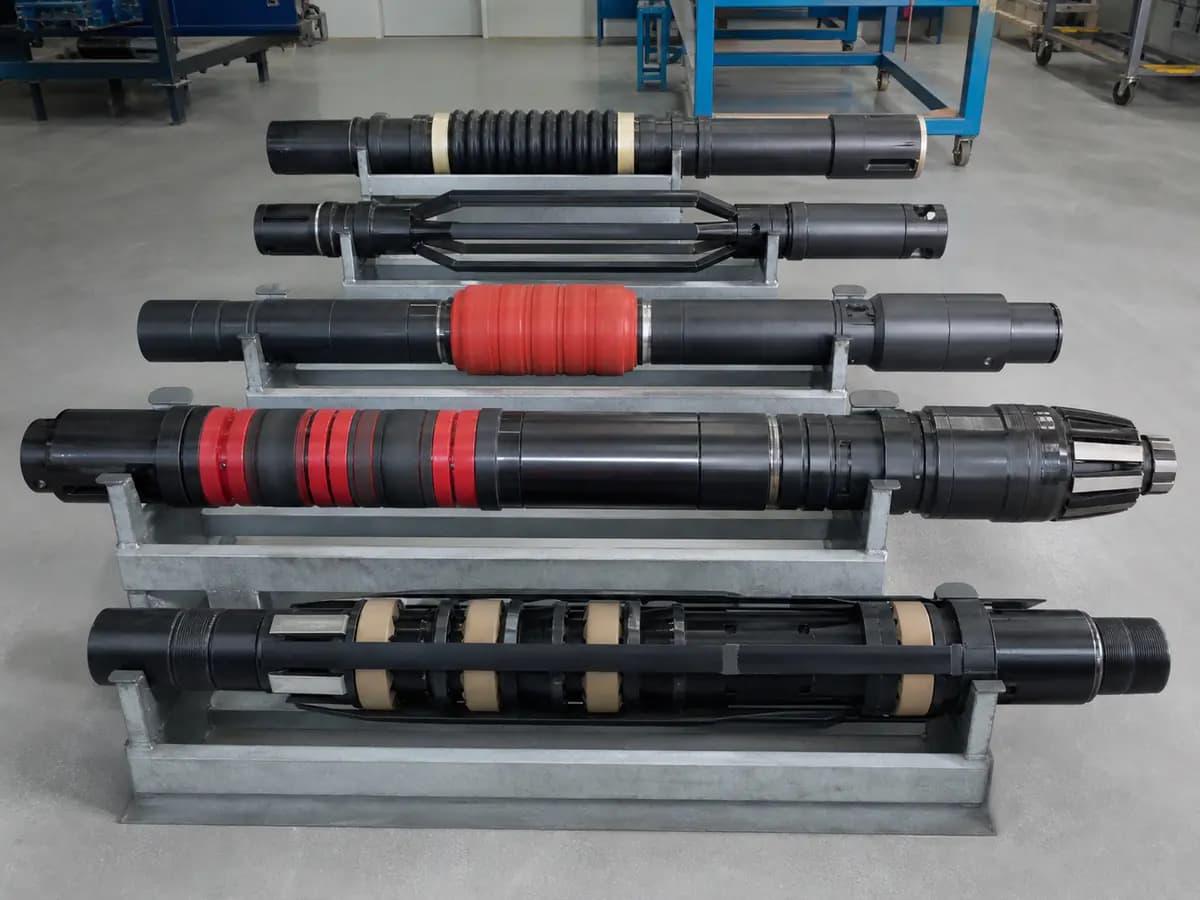
Surface-Controlled Subsurface Safety Valves
Surface-Controlled Subsurface Safety Valves for fail-safe downhole isolation in oil, gas, injection and selected carbon-storage completion strings, with RFQ fields covering tubing size and connection, valve bore, working pressure, operating and survival temperature, setting depth, hydraulic control-line pressure, closure mechanism, well fluid, material service and validation grade.
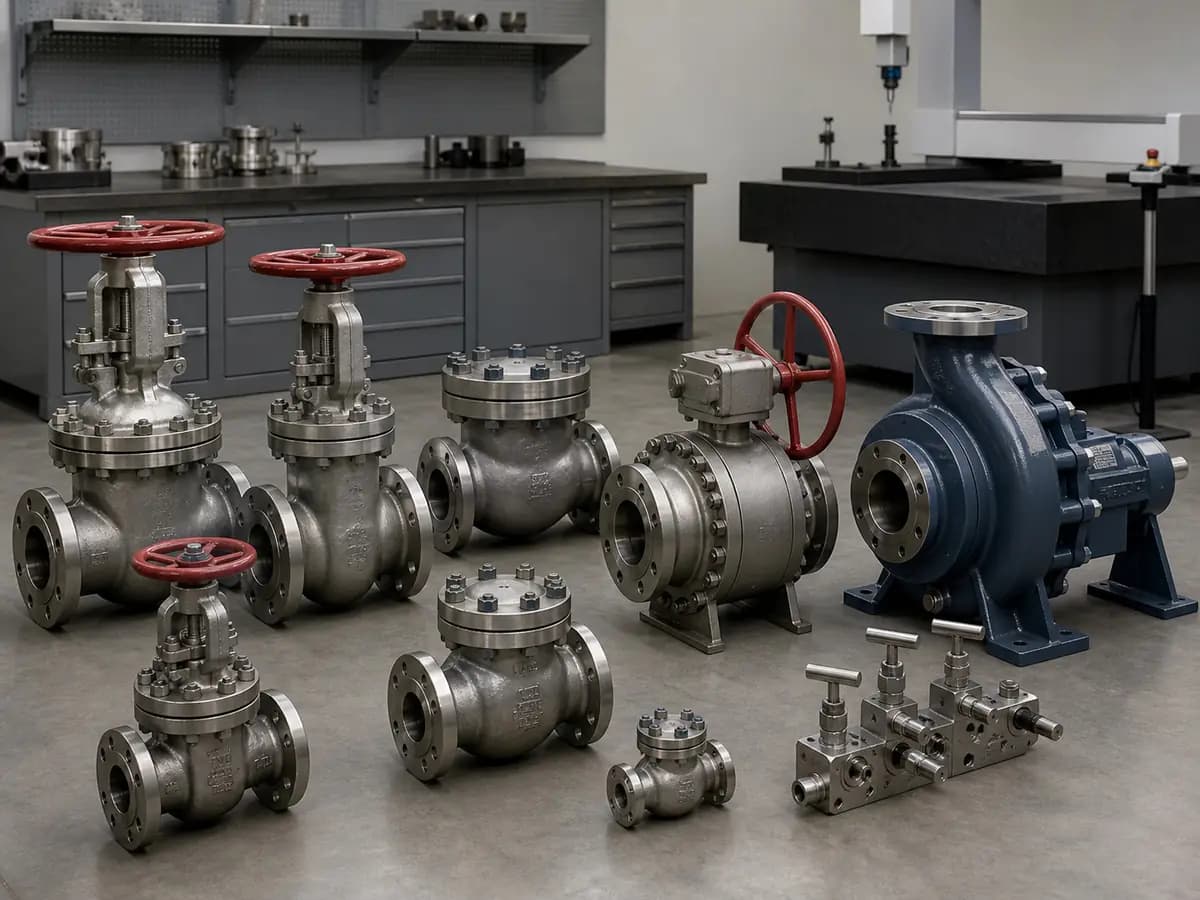
Needle Valves and Instrument Manifolds
Choose an instrument manifold by pressure measurement duty, valve arrangement, transmitter interface and temperature-dependent rating. Swagelok V/VB/VL references illustrate the checks, not a stocked configuration.
Related Technical Articles
Material Certificates and Inspection Documents for Oilfield RFQs
Understand which material, test, inspection and traceability documents to request before comparing oilfield equipment quotations.
API Standard Edition and Document Checks Before an Oilfield Order
A pre-order checklist for confirming API standard editions, addenda, errata, supplier scope and required product records.