Selection & Specification
Completion Flow-Control Selection: Profiles, Bores and Sleeves
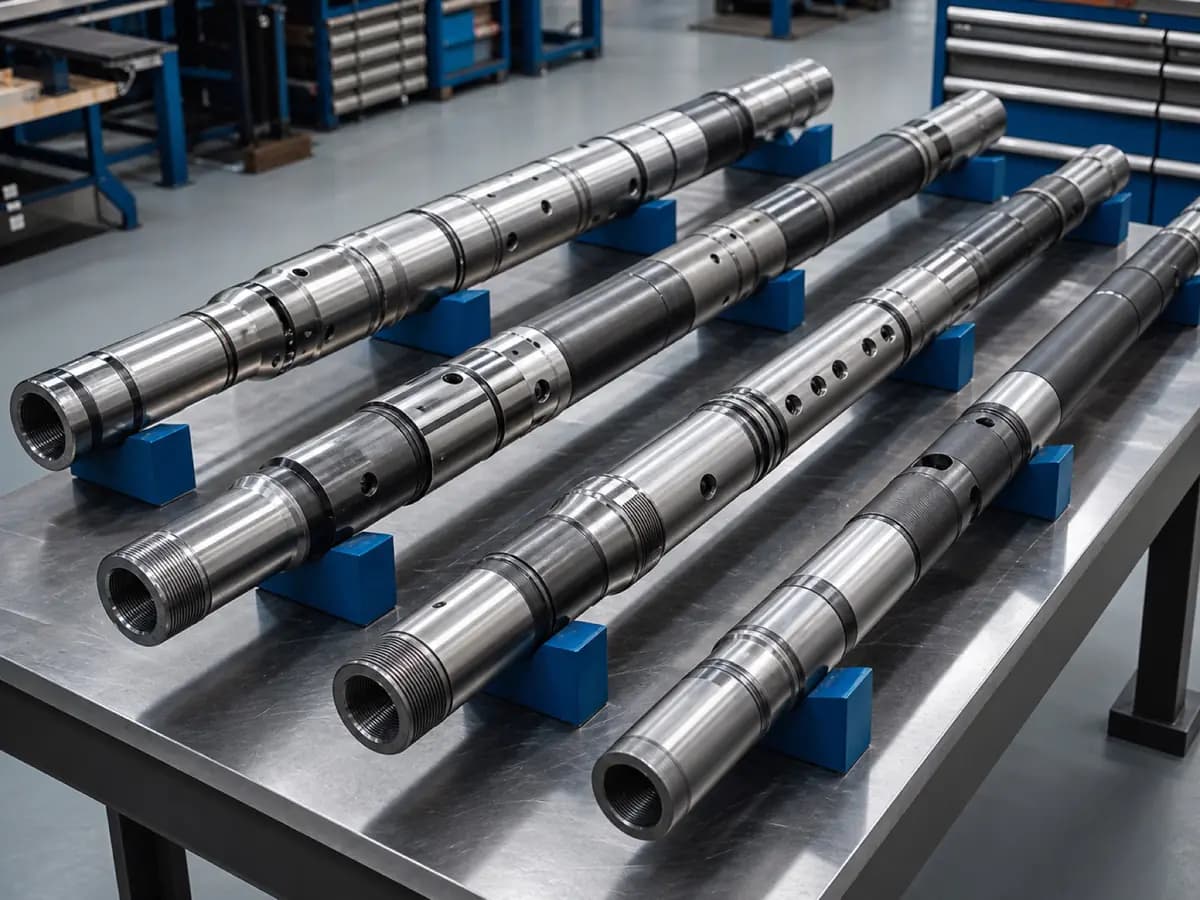
Start with the installed interface
A request for a "completion flow-control tool" can mean a new tubing component, a retrievable lock assembly, an attached device or a shifting accessory. Combining those into one price line hides the most important question: which interfaces already exist in the well, and which are part of the new supply?
This guide is an editorial purchasing framework, not a wireline procedure or a well-barrier assessment. The linked manufacturer examples explain why interface evidence matters; they do not establish that a substitute fits or that this site stocks the named equipment.
Separate the four scopes
| Line item | Establish before comparing offers | Incomplete response to query |
|---|---|---|
| Landing nipple | Installed maker/profile, tubing case, drawing revision and measured condition | Nominal tubing size without the internal profile |
| Lock and attached device | Lock model, sealing interface, actual internal passage and accessory connection | A lock price with the blanking or other device unspecified |
| Circulation/production sleeve | Function, assembly envelope, sealing system and operating-condition basis | A pressure number with no named model or paired temperature |
| Intervention accessories | Exact approved running, pulling or shifting tools and redress scope | "Compatible tools" with no tool codes or pairing evidence |
Use separate required and optional lines. That makes a cheaper offer with missing tools visible before commercial comparison rather than after delivery.
A profile name is a starting point, not acceptance
Halliburton's Otis X/R reference describes selective systems; the XN/RN reference describes bottom no-go arrangements. These examples distinguish locating concepts. They do not establish that a similarly named third-party lock has the same critical geometry.
Our landing-nipple reference retains selected PARVEEN dimensions with their tubing-weight cases. Check the drawing's terminology before transcribing data: packing bore, no-go ID and lock-mandrel internal passage are different entries. A bid that supplies only one "bore" has not answered all three questions.
Review sleeve function separately from its rating
The sliding-sleeve reference places a named catalog pressure beside its stated temperature. Keep that condition with the value when copying it into a bid tab.
Halliburton's DuraSleeve description identifies separate closed, equalizing and open positions and a non-elastomeric seal design. These features prompt useful questions about the selected model's movement and sealing arrangement; they do not replace its configuration-specific limits. Require the bidder to explain how the proposed sleeve and accessories meet the requested duty. Do not treat that answer as authorization to carry out an operation.
Worked purchasing example: two quotes with missing evidence
Assume an existing completion schematic names a nipple profile but the purchase request says only "replacement lock, same tubing size." Bid A includes a lock and a generic compliance sentence. Bid B names the lock, attached device and tooling but identifies a missing drawing revision.
Neither response is ready for technical acceptance. Ask both bidders for an interface comparison against the installed assembly and resolution of the missing revision. A bidder that states an uncertainty has not necessarily offered the worse product; an unqualified compliance sentence has not resolved it.
This is an assumed document-review scenario, not evidence of a field installation, a customer order or a successful substitution.
Record the decision, including what remains unknown
Use a bid tab with columns for requirement, offered configuration, source document/revision, deviation and disposition. Our recommended dispositions are "documented match," "clarification required" and "not accepted"; they are review labels, not an industry certification scheme.
For each material or seal change, retain the manufacturer's service-compatibility rationale. For each interface change, retain the controlled drawing comparison. Keep pressure/temperature evidence, dimensional evidence and certificate scope separate: one brochure rarely resolves all three.
Send the evidence with the inquiry
Attach the completion schematic, original model or part number, legible photos and any current inspection or redress information. Mark unknown fields rather than filling them with assumed dimensions. Add quantity, destination, desired delivery and optional target price.
Use the RFQ Builder to organize the request and the private attachment form for drawings or specifications. The nameplate and spare-part identification guide helps when the original identification is incomplete. Final selection remains subject to the responsible engineer's review and the manufacturer's confirmed documents.
Authoritative references
- Halliburton Otis X/R: selective profiles and tubing-weight contextchecked 2026-10-23
- Halliburton Otis XN/RN: bottom no-go locationchecked 2026-10-23
- PARVEEN landing nipples and lock mandrels, printed p.91 (PDF p.2)checked 2026-10-23
- Halliburton DuraSleeve: sleeve positions, shifting profile and non-elastomeric sealschecked 2026-10-23