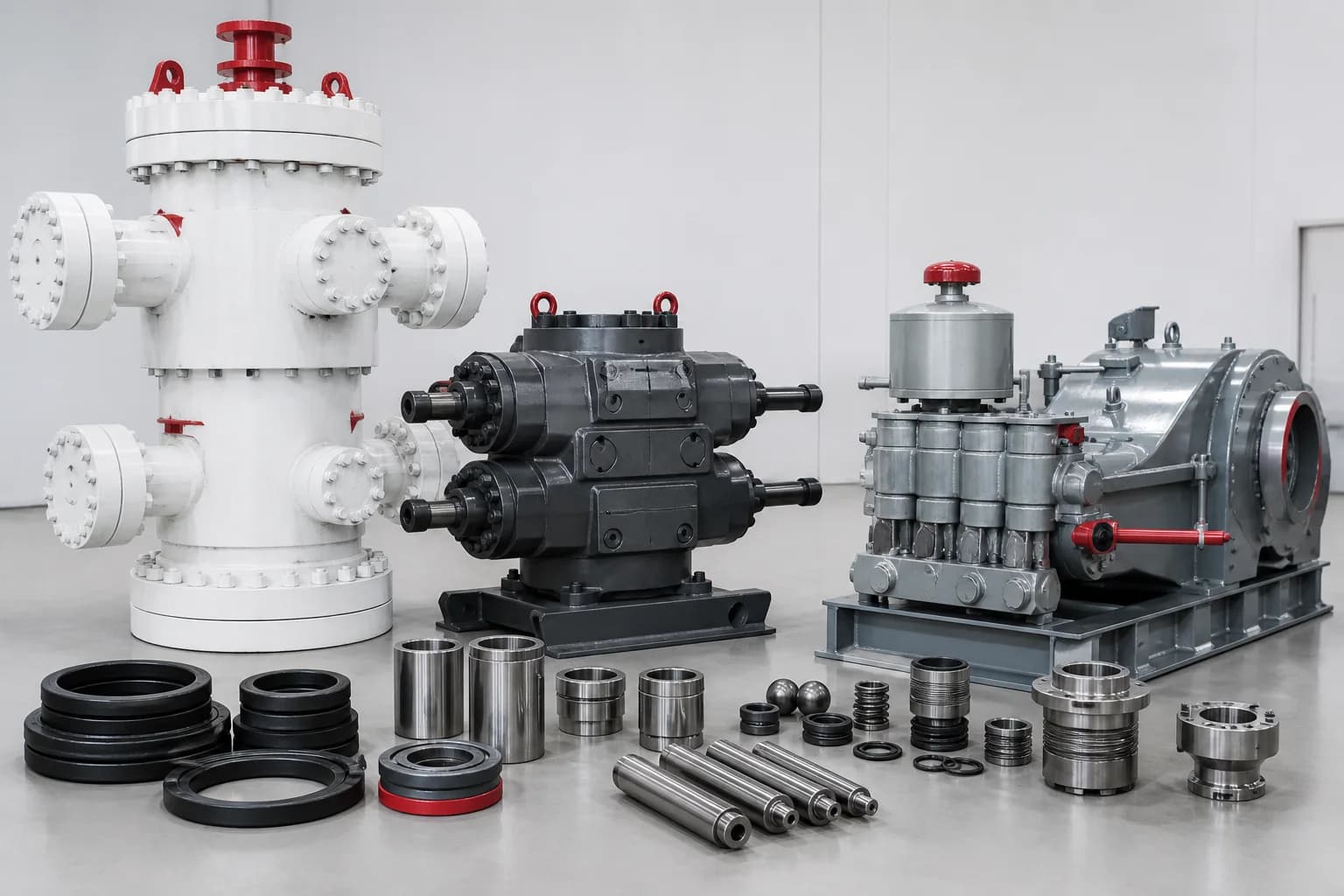
AI-generated category reference. It is not a photograph of a specific manufacturer or exact product model.
Wellhead & Pressure Control
BOP Accumulator and Control Units
Surface BOP control units with FKQ, FKDQ and FKD configurations, dual pump systems, defined accumulator sizing rules and ambient options from -40 to 60 degrees C.
Published sizing and ambient guidance
Reference fields for quotation comparison. Final values must be confirmed in the signed manufacturer datasheet.
| Parameter | Reference value | Notes |
|---|---|---|
| Standard ambient range | -13 to 50 degrees C | Protective housing is needed outside this range |
| Protected ambient options | -40 to 60 degrees C | Heating or cooling configuration depends on the site |
| Pump charging target | 15-30 minute accumulator charging | Both pumps versus one pump in published guidance |
| Accumulator reserve | More than 2 times calculated closing-fluid demand | Confirm with the complete BOP stack calculation |
Product overview
Control-unit architecture
A surface BOP control unit stores and pumps hydraulic fluid to operate ram and annular preventers plus selected hydraulic valves. The reviewed FKQ family is used here as a configuration reference: FKQ uses pneumatic control, FKDQ combines electric and pneumatic control, and FKD uses electric PLC control with solenoid-driven valves. Typical systems include nitrogen-precharged bladder accumulators, a hydraulic reservoir, electric pumps and pneumatic pumps, with local and driller control interfaces selected for the rig.
Stored energy and pump sizing
The published selection guidance calls for usable accumulator liquid greater than twice the calculated closing-fluid demand of the BOP stack. It also states that two pump systems together should charge the accumulators within 15 minutes, one pump system within 30 minutes, and the remaining pump should provide enough two-minute flow to close the annular preventer when the accumulator is unavailable. These are sizing inputs, not a substitute for the project's hydraulic calculation.
Ambient and remote-control options
A standard surface unit is described for -13 to 50 degrees C. Protected houses with heating may be selected for temperatures down to -40 degrees C, while cooling configurations are described for ambient conditions up to 60 degrees C. Remote pneumatic lines are listed for -40 to 50 degrees C, with dry air and heat tracing considerations below freezing.
RFQ checklist
Provide every controlled function, BOP closing volume, valve actuator volume, required closing sequence, maximum control pressure and reserve philosophy. Add utility voltage and frequency, air quality, alarm points, local and remote panel arrangement, cable or hose distance and offshore requirements. API 16D or Monogram requirements must be stated explicitly and verified against the proposed facility and model before order placement.
Technical reference trail
These public references support the equipment family and selection context. They do not imply dealership, authorization or a guaranteed order specification.
Frequently Asked Questions
How is accumulator capacity selected?
Calculate the fluid needed for the specified closing sequence and reserve, then verify usable volume at the required pressure rather than using bottle count alone.
What changes for cold-weather operation?
Below the standard ambient range, evaluate heated housing, oil viscosity, air drying, heat-traced pneumatic lines or an electric-control configuration.
Which controlled functions must be listed?
Include each ram, annular preventer, hydraulic choke or kill valve, diverter and auxiliary function with actuator volume and control pressure.
Submit RFQ for BOP Accumulator and Control Units
Send product, quantity, specification and destination details so the requirements can be reviewed with potential suppliers.
Technical and RFQ References
Check common units, standards and purchasing terminology, then build a structured request for this equipment.
Related Products
Ram and Annular Blowout Preventers
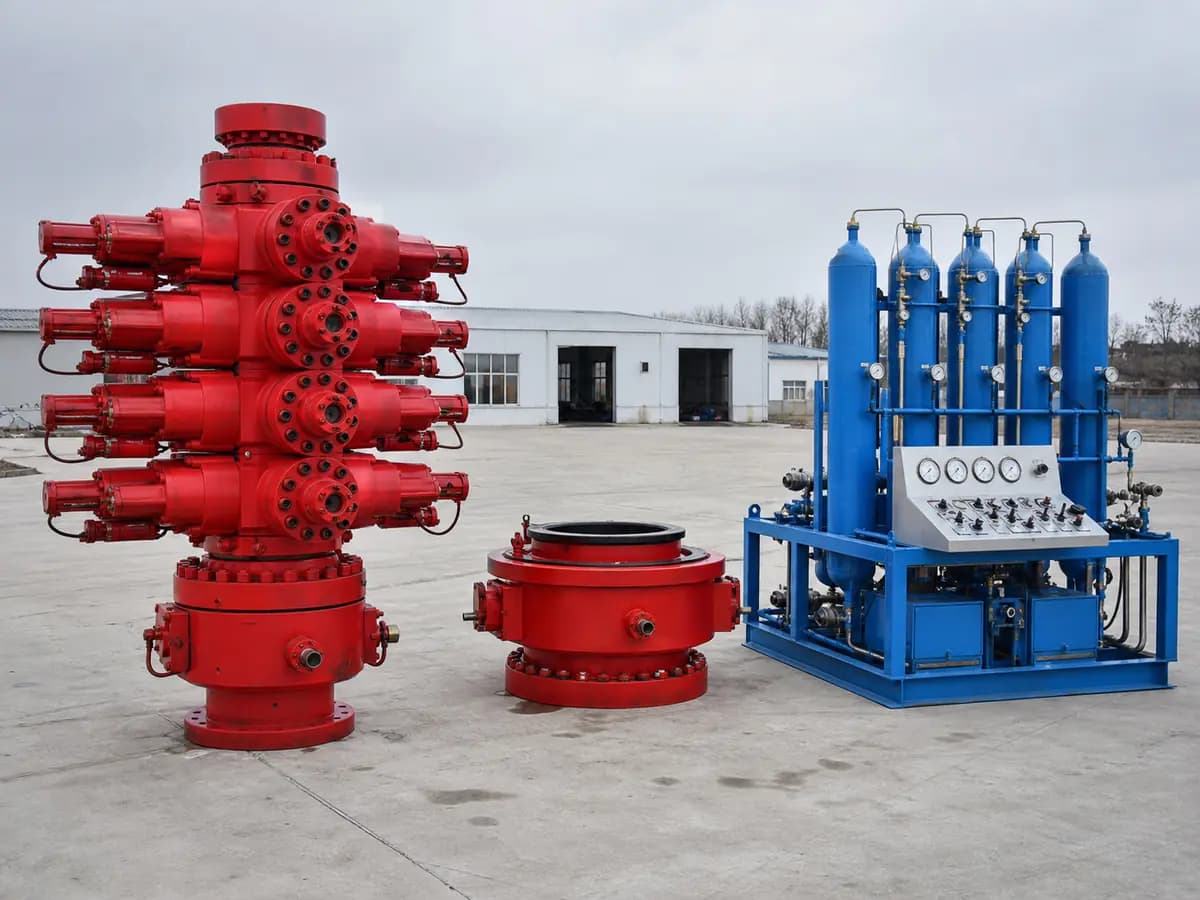
Ram and Annular Blowout Preventers for surface or land-rig well-control stacks requiring pipe, blind, shear or variable-bore ram functions and annular sealing, with RFQ fields covering BOP type, nominal bore, rated working pressure, ram configuration, closing ratio, flange or hub interface, temperature class, material service and required validation level.
BOP Rubber Elements and Seals
Annular elements, ram packers and well-control seals selected by BOP model, 120-760 mm bore references, 21-105 MPa pressure class and verified elastomer compatibility.
BOP Spare Parts
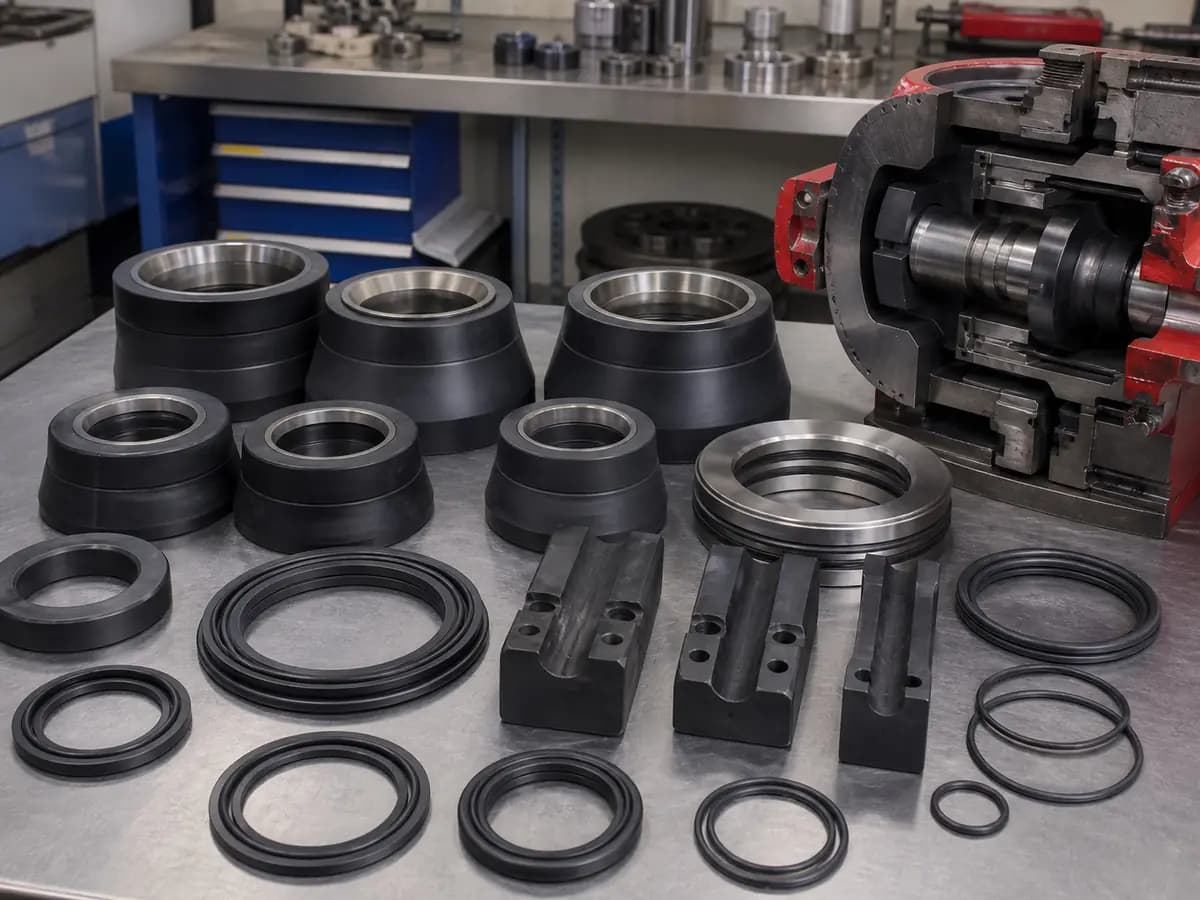
BOP Spare Parts for blowout-preventer maintenance, ram or annular sealing and well-control spare replacement, with quotation fields for BOP manufacturer and model, bore, working pressure, ram type, elastomer compound, service temperature and serial or drawing reference.
Related Technical Articles
BOP Spare Parts Supplier Checklist
A practical checklist for requesting quotes for BOP spare parts, annular BOP parts, ram BOP parts, seals, packers, and replacement components.
API Standard Edition and Document Checks Before an Oilfield Order
A pre-order checklist for confirming API standard editions, addenda, errata, supplier scope and required product records.
Choke and Kill Manifold Buying Guide
What buyers should specify when requesting quotes for API 16C choke manifolds, kill manifolds, valves, and high-pressure skids.