Wellhead & Pressure Control
Ram and Annular Blowout Preventers
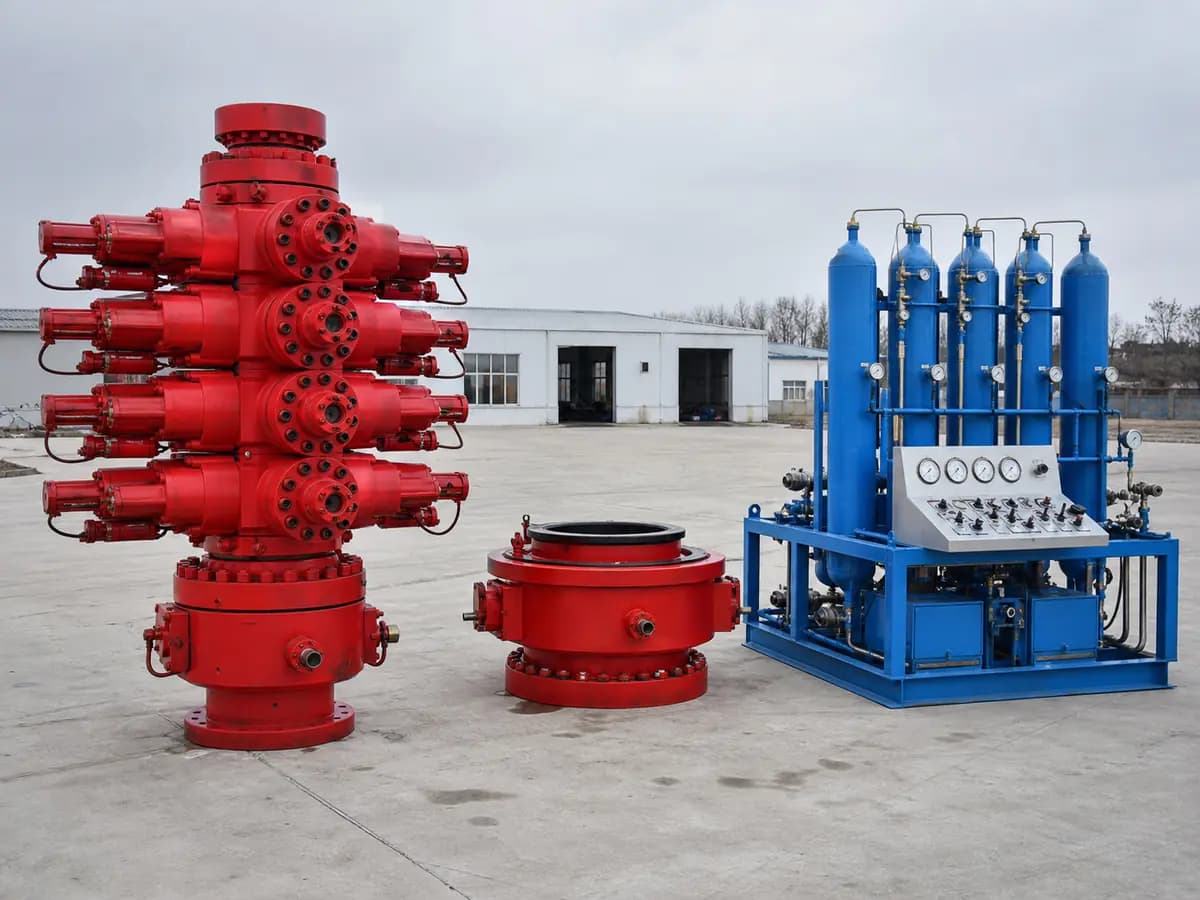
Ram and Annular Blowout Preventers for surface or land-rig well-control stacks requiring pipe, blind, shear or variable-bore ram functions and annular sealing, with RFQ fields covering BOP type, nominal bore, rated working pressure, ram configuration, closing ratio, flange or hub interface, temperature class, material service and required validation level.
RFQ selection reference
Reference fields for quotation comparison. Final values must be confirmed in the signed manufacturer datasheet.
| Parameter | Reference value | Notes |
|---|---|---|
| Bore and pressure | Project-defined working and test pressureNominal bore and mating flange or hub | Match the approved well-control stack drawing |
| Closing element | Pipe, blind, shear, variable-bore or annularState tubular range and shear requirement | Provide the drilling program and maximum tubular data |
| Service and controls | Temperature and material classHydraulic control pressure and connection | State H2S, mud type and low-temperature exposure |
Product overview
Product scope
Ram and Annular Blowout Preventers are presented as a quotation-ready product family for surface or land-rig well-control stacks requiring pipe, blind, shear or variable-bore ram functions and annular sealing. This page supports early technical comparison; it does not identify one guaranteed model, stocked unit or universal configuration. The final supplier and manufacturer must confirm the ordered design against the buyer's datasheet, project specification and signed quotation.
Selection basis
The main selection inputs are BOP type, nominal bore, rated working pressure, ram configuration, closing ratio, flange or hub interface, temperature class, material service and required validation level. These fields affect equipment fit, performance, safety, documentation and total package price. For replacement equipment, include the installed maker, model, serial number, original part number, clear nameplate photographs and interface drawings. For new projects, attach the governing project datasheet and the latest approved standard editions.
Configuration reference
The table above is a structured RFQ reference rather than a model list. It shows the information needed to compare technically responsive quotations. Published manufacturer examples and industry standards are used only to identify common equipment architecture and purchasing fields; they do not imply dealership, authorization, stock ownership or identical performance across manufacturers.
Documents and inspection
Define the document package before commercial evaluation. Depending on the product, request a signed datasheet, general arrangement and interface drawings, material certificates, pressure or performance test reports, NDT records, hazardous-area certificates, inspection and test plan, preservation procedure, packing list, marking photographs and certificate of conformity. When a standard or certification is mandatory, verify the exact edition, product scope, manufacturing facility and certificate status rather than relying on a website statement.
RFQ checklist
- Product family, service, quantity and required delivery date
- Operating cases, pressure or load, temperature, flow and process media
- Dimensions, connections, materials and approved standard edition
- Site utilities, ambient conditions and hazardous-area classification
- Required testing, third-party inspection, traceability and document language
- Destination, Incoterm, packing, lifting and transport restrictions
- Target unit price or budget range and acceptable technical alternatives
Upload the specification, drawing, equipment list or replacement photographs with the inquiry. Open technical points should be closed before price comparison and purchase-order release.
Technical reference trail
These public references support the equipment family and selection context. They do not imply dealership, authorization or a guaranteed order specification.
Frequently Asked Questions
What information is required to quote Ram and Annular Blowout Preventers?
Provide BOP type, nominal bore, rated working pressure, ram configuration, closing ratio, flange or hub interface, temperature class, material service and required validation level, quantity, destination, delivery target and the required document package. Attach the project datasheet or matching equipment drawing whenever available.
Are the displayed specifications guaranteed values?
No. They are RFQ reference fields. The final manufacturer datasheet, approved drawings, test procedure and purchase specification control the ordered equipment.
Can an equivalent configuration be quoted?
Yes, when the buyer permits alternatives. Every deviation in standard, rating, material, interface, certification, testing or delivery scope should be listed clearly for technical review.
Submit RFQ for Ram and Annular Blowout Preventers
Send product, quantity, specification and destination details so the requirements can be reviewed with potential suppliers.
Technical and RFQ References
Check common units, standards and purchasing terminology, then build a structured request for this equipment.
Related Technical Articles
Choke and Kill Manifold Buying Guide
What buyers should specify when requesting quotes for API 16C choke manifolds, kill manifolds, valves, and high-pressure skids.
API 6A Wellhead Equipment Buying Guide
Key information buyers should prepare before requesting quotes for API 6A wellhead equipment, christmas trees, valves, and related parts.
How to Specify Industrial Control Systems and Automation Solutions for an Oilfield RFQ
Prepare an automation RFQ around I/O count, control functions, communications, hazardous-area scope, cabinets, testing and documentation.