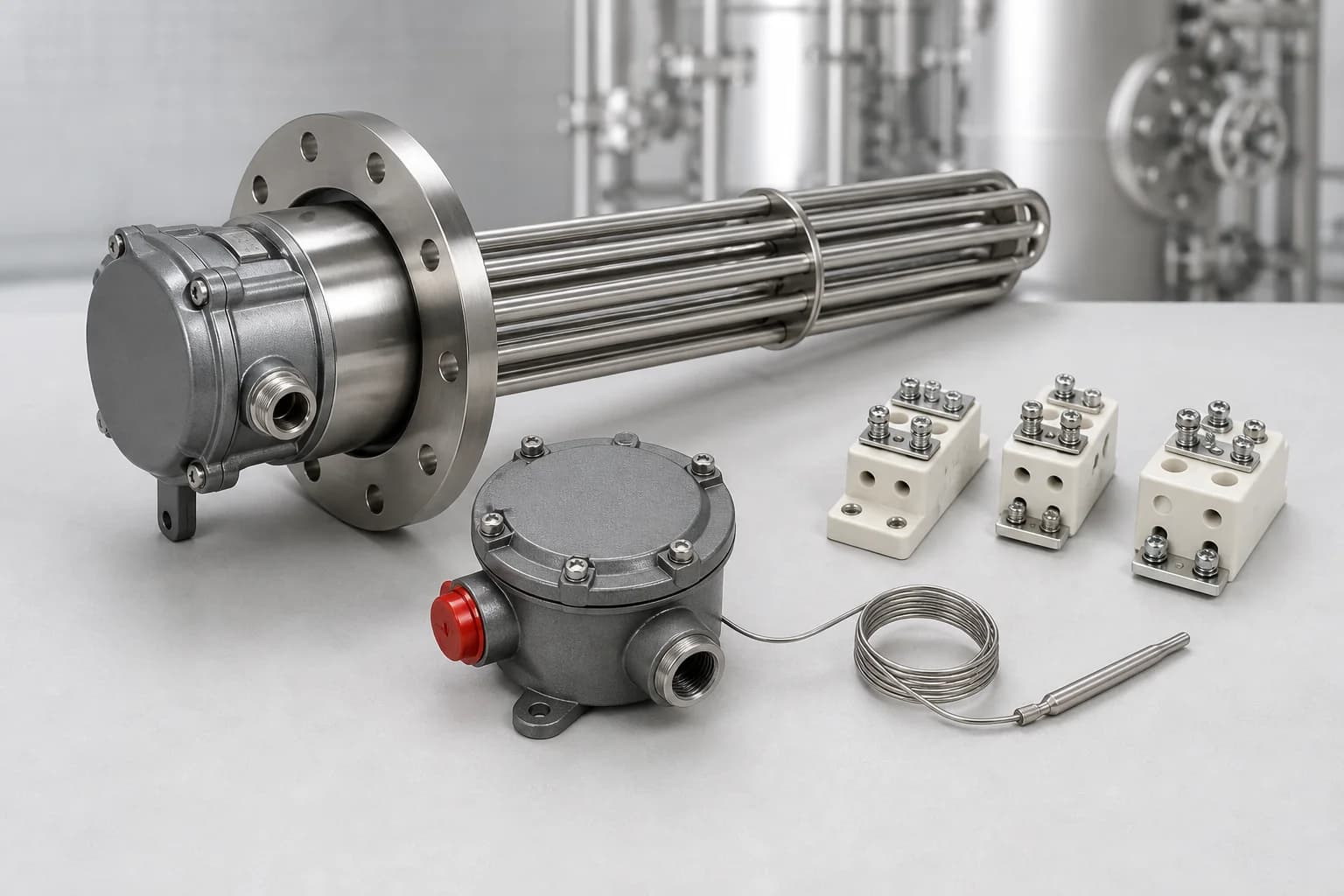
AI-generated category reference. It is not a photograph of a specific manufacturer or exact product model.
Rig Power & Hazardous-Area Electrical
Hazardous-Area Thermostats and Heating Elements
Thermostats, temperature limiters and industrial heating components for oil and gas processing, including 20-125 degrees C controls and terminals rated to 650 degrees C.
Published control and component references
Reference fields for quotation comparison. Final values must be confirmed in the signed manufacturer datasheet.
| Parameter | Reference value | Notes |
|---|---|---|
| Electronic thermostat range | 20-125 degrees C | 9VJAE published adjustable range |
| Ceramic terminal rating | 450 voltsUp to 650 degrees C | BJ model reference |
| Accessory protection options | Up to IP69KUp to IK10 | Verify the complete ordered assembly |
| Heater sheath materials | AISI 304/316/321 and Incoloy 800/825 | Select by corrosion and element temperature |
Product overview
Temperature control in oil and gas facilities
Thermostats and limiters switch heaters or alarms to maintain process, enclosure or vessel temperature. Petrochemical application information reviewed for this page includes control products intended for locations with gas or dust explosion risks, plus heating elements and high-temperature connection components. A complete system still requires area classification, heater load, control philosophy and protective-device coordination.
Control and terminal references
The 9VJAE electronic thermostat is listed with a 20-125 degrees C adjustable range for metal containers. A BJ ceramic terminal block is listed at 450 volts and temperatures up to 650 degrees C. Accessory information also states protection options up to IP69K and impact resistance up to IK10, but those markings must be verified for the complete selected assembly.
Heater sheath and process compatibility
Heating-element references include AISI 304 and Incoloy 800, with AISI 316, AISI 321 and Incoloy 825 among optional materials. Select sheath material by fluid, corrosion, surface watt density and maximum element temperature. The RFQ should also define supply voltage, phase, heater power, mounting, sensor position, control deadband and independent over-temperature protection.
RFQ checklist
State zone or division, gas or dust group, temperature class and installation jurisdiction. Request the exact product certificate, holder, model coverage, cable entry and installation conditions before technical acceptance. Include wiring diagrams, enclosure details, sensor range, switching rating and required factory tests with the inquiry instead of requesting a generic explosion-proof heater.
Technical reference trail
These public references support the equipment family and selection context. They do not imply dealership, authorization or a guaranteed order specification.
Frequently Asked Questions
Is an ATEX product automatically accepted for every destination?
No. Verify protection concept, certificate holder, model scope, gas or dust group, temperature class and local acceptance rules.
What determines heater sheath material?
Process fluid, corrosion, sheath temperature, watt density, cleaning method and mechanical environment determine the suitable alloy.
Why is a separate temperature limiter needed?
Many heating systems require an independent high-temperature cutout so a control thermostat failure cannot overheat the process or surface.
Submit RFQ for Hazardous-Area Thermostats and Heating Elements
Send product, quantity, specification and destination details so the requirements can be reviewed with potential suppliers.
Technical and RFQ References
Check common units, standards and purchasing terminology, then build a structured request for this equipment.
Related Products
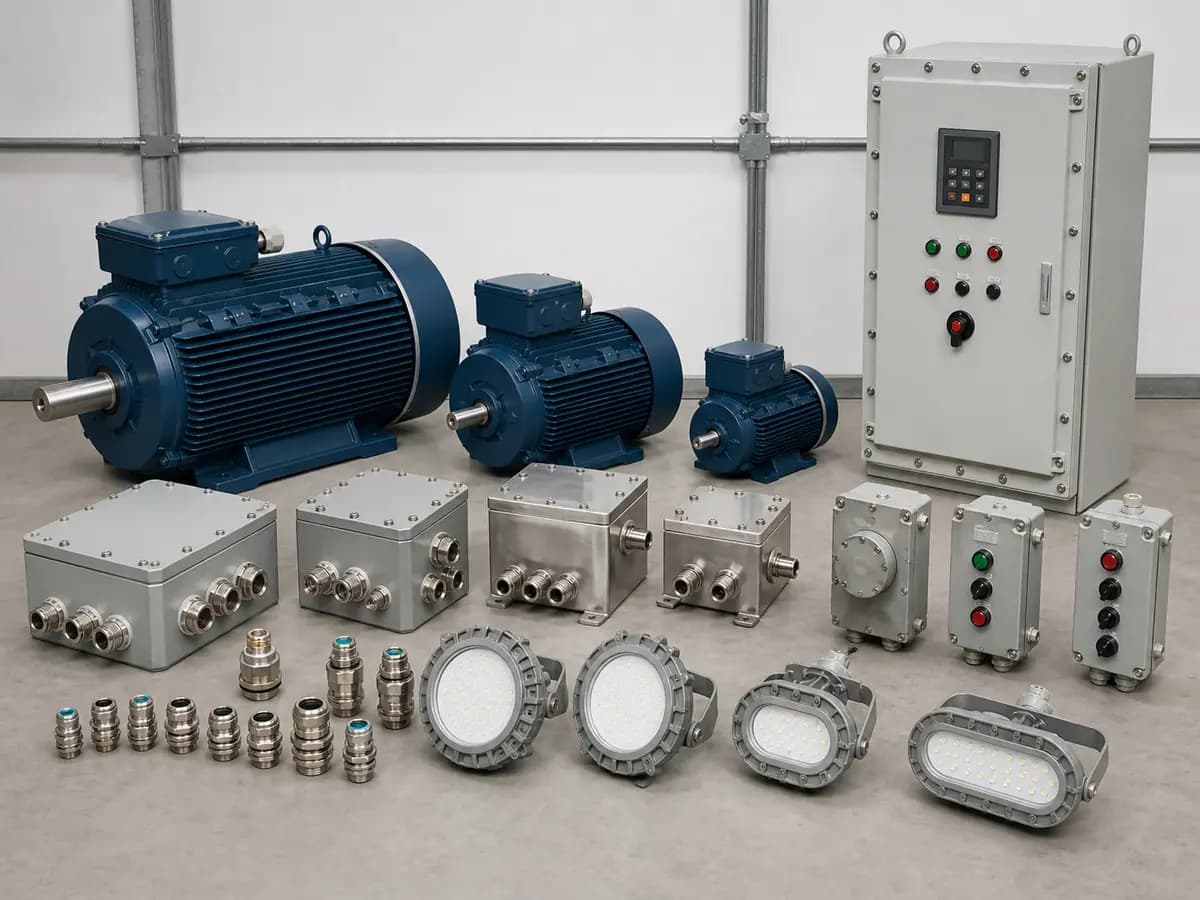
Explosion-Proof Motors and Electrical Equipment
Explosion-Proof Motors and Electrical Equipment for motors, junction boxes, local control stations, cable glands, lighting and electrical distribution in classified drilling and production areas, with RFQ fields covering zone or class and division, gas or dust group, temperature class, equipment protection level, Ex protection concept, certificate scheme, ambient range, IP or NEMA rating, voltage, frequency, motor duty, enclosure material, cable entries and destination-country approval.
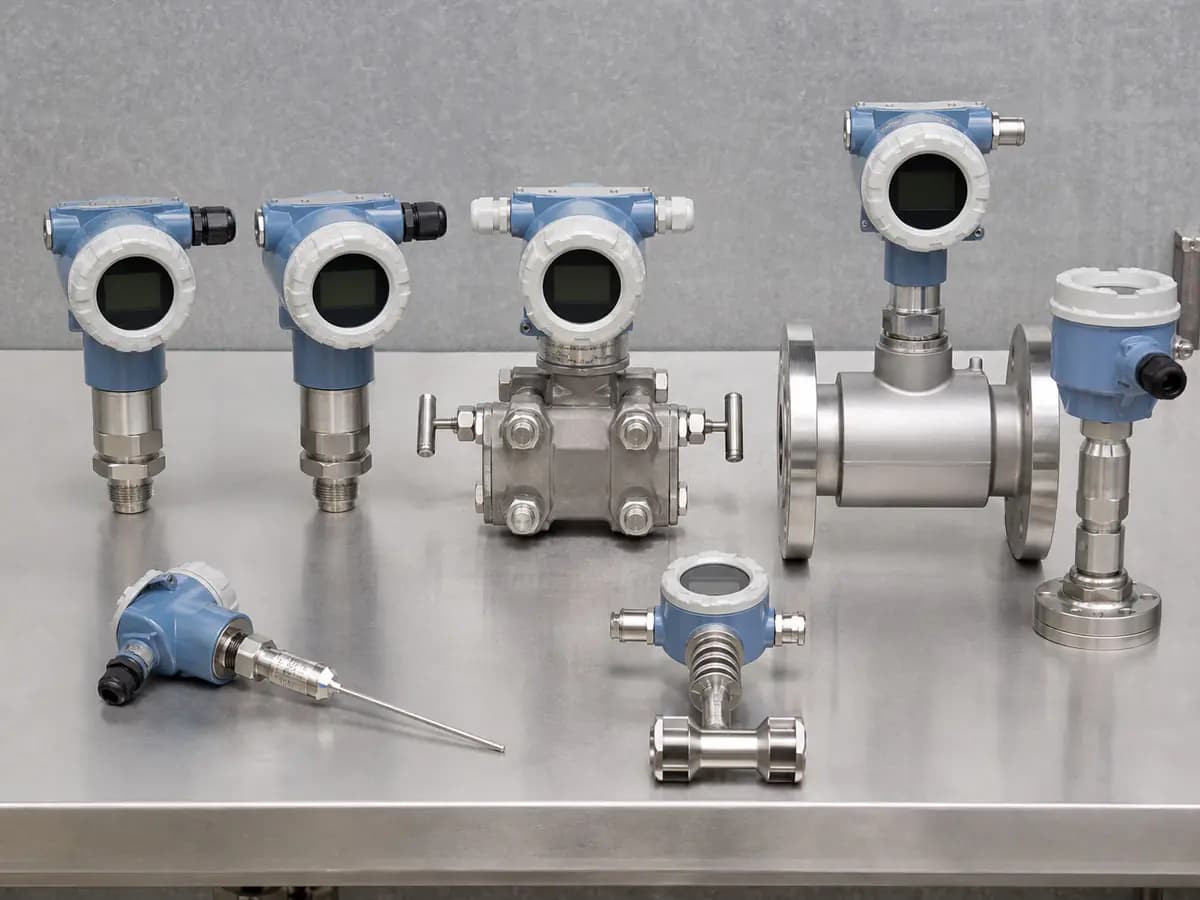
Temperature Transmitters, Thermocouples and RTDs
Compare temperature instruments using published FDWB integrated and compact transmitter examples. Specify the sensor type, calibrated span, probe construction and control-system input separately.
Oilfield Process Control Systems
Oilfield Process Control Systems for wellsite, production-facility and process-skid pressure, differential pressure, temperature, flow and level measurement, with quotation fields for measured variable, calibrated range, accuracy, process connection, wetted materials, temperature, output protocol, power supply, enclosure rating and hazardous-area certification required by the project.
Related Technical Articles
How to Specify Temperature Transmitters, Thermocouples and RTDs for an Oilfield RFQ
Compare FDWB variant limits, resolve conflicting supply data, and specify RTD wiring, thermocouple inputs and thermowell checks for a usable temperature RFQ.
API Standard Edition and Document Checks Before an Oilfield Order
A pre-order checklist for confirming API standard editions, addenda, errata, supplier scope and required product records.