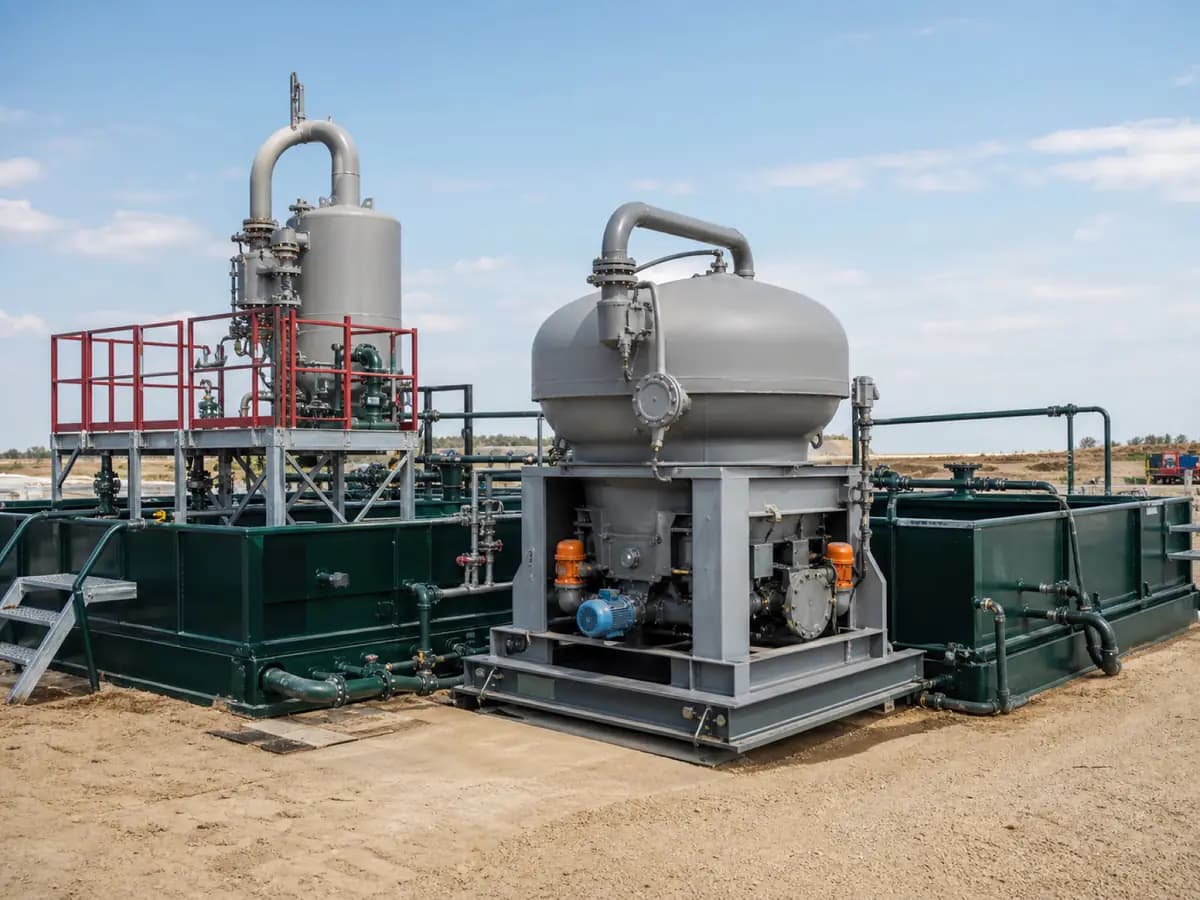
Drilling Fluid Handling Equipment
Drilling Rig Trip Tanks
Drilling Rig Trip Tanks for accurate monitoring of drilling-fluid gains and losses while tripping pipe or conducting well-control observations. Review process duty, fluid properties, package interfaces, controls, testing and documentation before requesting a comparable quotation.
RFQ selection reference
Reference fields for quotation comparison. Final values must be confirmed in the signed manufacturer datasheet.
| Parameter | Reference value | Notes |
|---|---|---|
| Volume monitoring | Usable volume and required resolutionTank geometry and calibrated increments | Define kick/loss detection objective |
| Circulation | Pump flow and headFill, return, overflow and drain routing | Attach rig mud-system schematic |
| Instrumentation | Level range, accuracy and local indicationAlarms, data output and hazardous area | Specify calibration and test records |
Product overview
Product scope
Drilling Rig Trip Tanks are presented as a quotation-ready equipment family for accurate monitoring of drilling-fluid gains and losses while tripping pipe or conducting well-control observations. This page supports technical offer comparison; it does not promise one model, inventory position, process performance or certification. The selected manufacturer must confirm the complete duty against the drilling program, process data, interface drawings, governing standard editions and signed datasheet.
Selection basis
The main RFQ inputs are usable and total volume, required volume resolution, tank geometry and calibration table, minimum and maximum level, pump circulation rate and head, mud density and temperature, level technology and accuracy, local gauge, alarms and data output, fill/return/overflow/drain piping, valves, agitation, cleaning access, skid or structural mounting, hazardous area, power, lighting, lifting and cold-weather insulation or heating. Fluid-handling equipment cannot be selected from a catalog photo or nominal connection alone. Provide normal, minimum, maximum and upset conditions, the fluid composition and solids data, operating schedule, utilities, control philosophy, available space and tie-in drawings. For replacement equipment, include maker, model, serial number, nameplate, performance history and measured interfaces.
Trade and industry context
The cited UN Comtrade record is a broad pump or processing-equipment export proxy used only to prioritize internationally traded product families. It is not an oilfield-only market size, a search-volume estimate or a shipment claim for this equipment. API references identify relevant system and documentation boundaries; they do not prove that an unnamed supplier is licensed, certified, authorized or holding stock.
Documents and inspection
Define signed datasheets, process calculations or performance curves, general arrangement and interface drawings, motor and hazardous-area data, material certificates, welding and NDE records where applicable, dimensional inspection, hydrostatic or functional testing, balancing and vibration records for rotating equipment, calibration certificates for instruments, certificate of conformity, manuals and recommended spares. Verify the actual manufacturer, facility, certificate scope and standard edition before order release.
RFQ checklist
- Equipment family, quantity, operating mode and delivery target
- Normal, rated and upset flow, pressure, head, vacuum or capacity
- Fluid density, viscosity, solids, particle size, gas and temperature
- Tank, pipe, skid, power, control and hazardous-area interfaces
- Materials, corrosion, wear, inspection, testing and documentation
- Destination, Incoterm, lifting, packing and transport constraints
- Target unit or package price and acceptable technical alternatives
Upload the mud program, process datasheet, layout, piping schematic, utility schedule and project specification with the inquiry. Close every process, mechanical, electrical and certification deviation before comparing price or releasing the order.
Technical reference trail
These public references support the equipment family and selection context. They do not imply dealership, authorization or a guaranteed order specification.
Frequently Asked Questions
What information is required to quote Drilling Rig Trip Tanks?
Provide usable and total volume, required volume resolution, tank geometry and calibration table, minimum and maximum level, pump circulation rate and head, mud density and temperature, level technology and accuracy, local gauge, alarms and data output, fill/return/overflow/drain piping, valves, agitation, cleaning access, skid or structural mounting, hazardous area, power, lighting, lifting and cold-weather insulation or heating, quantity, destination, delivery target and required records. Attach the process datasheet, layout and existing-equipment details for replacement scope.
Are the displayed capacities or ratings guaranteed?
No. They are RFQ selection fields. The final signed datasheet, approved calculations, curves, interface drawings and test records control the ordered equipment.
How should equivalent equipment be compared?
Compare the same normal and upset duty, fluid properties, materials, interfaces, motor and hazardous-area data, controls, tests, documents, spares and all stated deviations before comparing price.
Submit RFQ for Drilling Rig Trip Tanks
Send product, quantity, specification and destination details so the requirements can be reviewed with potential suppliers.
Technical and RFQ References
Check common units, standards and purchasing terminology, then build a structured request for this equipment.
Related Products
Drilling Fluid Vacuum Degassers
Drilling Fluid Vacuum Degassers for removal of entrained gas from drilling fluid downstream of primary solids-control equipment. Review process duty, fluid properties, package interfaces, controls, testing and documentation before requesting a comparable quotation.
Mud-Gas Separators (Poor Boy Degassers)
Mud-Gas Separators (Poor Boy Degassers) for separation and controlled routing of large gas volumes from returned drilling fluid during well-control circulation. Review process duty, fluid properties, package interfaces, controls, testing and documentation before requesting a comparable quotation.
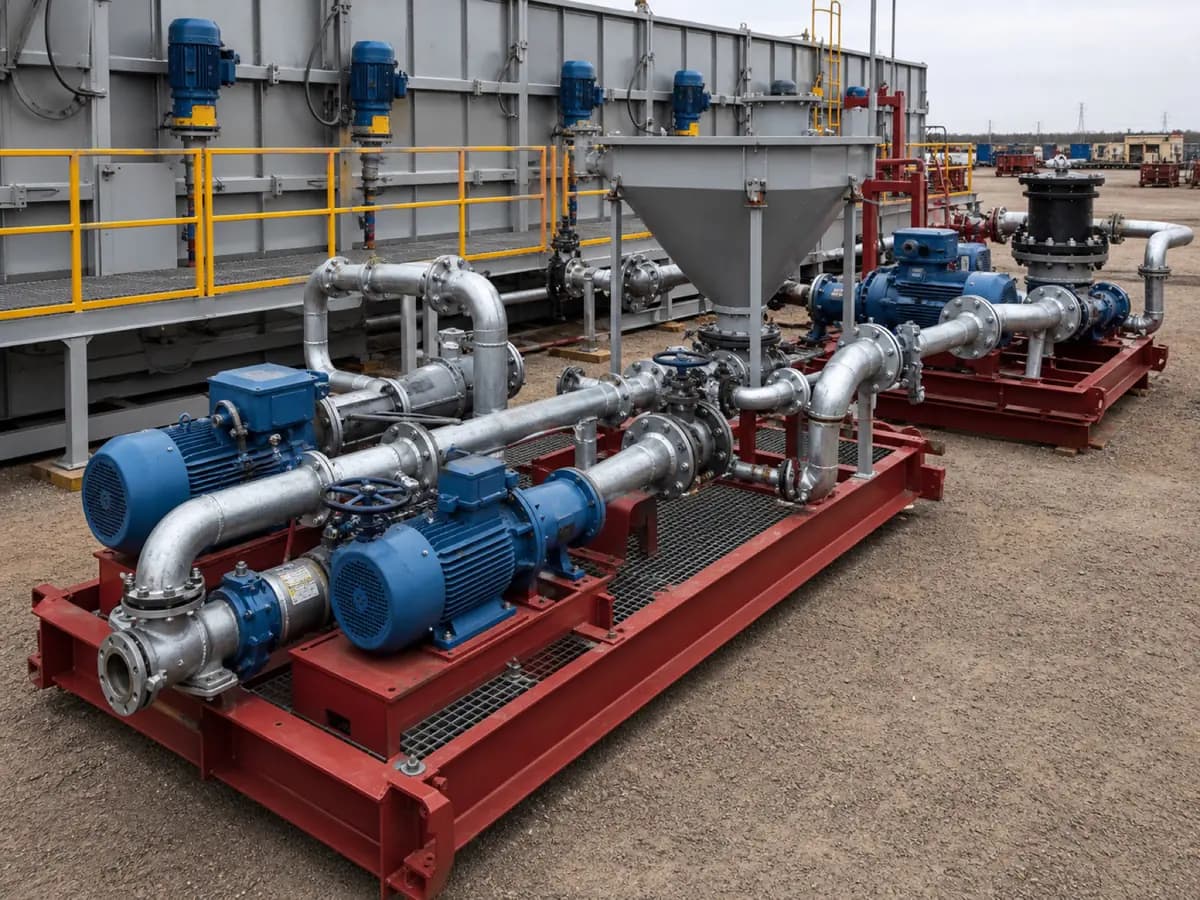
Centrifugal Mud Pumps
Compare centrifugal mud-pump interfaces and duty points using NOV Mission references. Select flow and head together, then check mud density, shaft power, suction conditions and the actual impeller.
Drilling Fluid Shear Pumps
Drilling Fluid Shear Pumps for high-shear hydration and dispersion of polymers, clays and additives during drilling-fluid preparation. Review process duty, fluid properties, package interfaces, controls, testing and documentation before requesting a comparable quotation.
Related Technical Articles
Drilling Tools Supplier Selection Guide
A compact guide to sourcing drilling stabilizers, drilling jars, drill collars, subs, reamers, and downhole tools.
API Standard Edition and Document Checks Before an Oilfield Order
A pre-order checklist for confirming API standard editions, addenda, errata, supplier scope and required product records.
API 6A Wellhead Equipment Buying Guide
Key information buyers should prepare before requesting quotes for API 6A wellhead equipment, christmas trees, valves, and related parts.