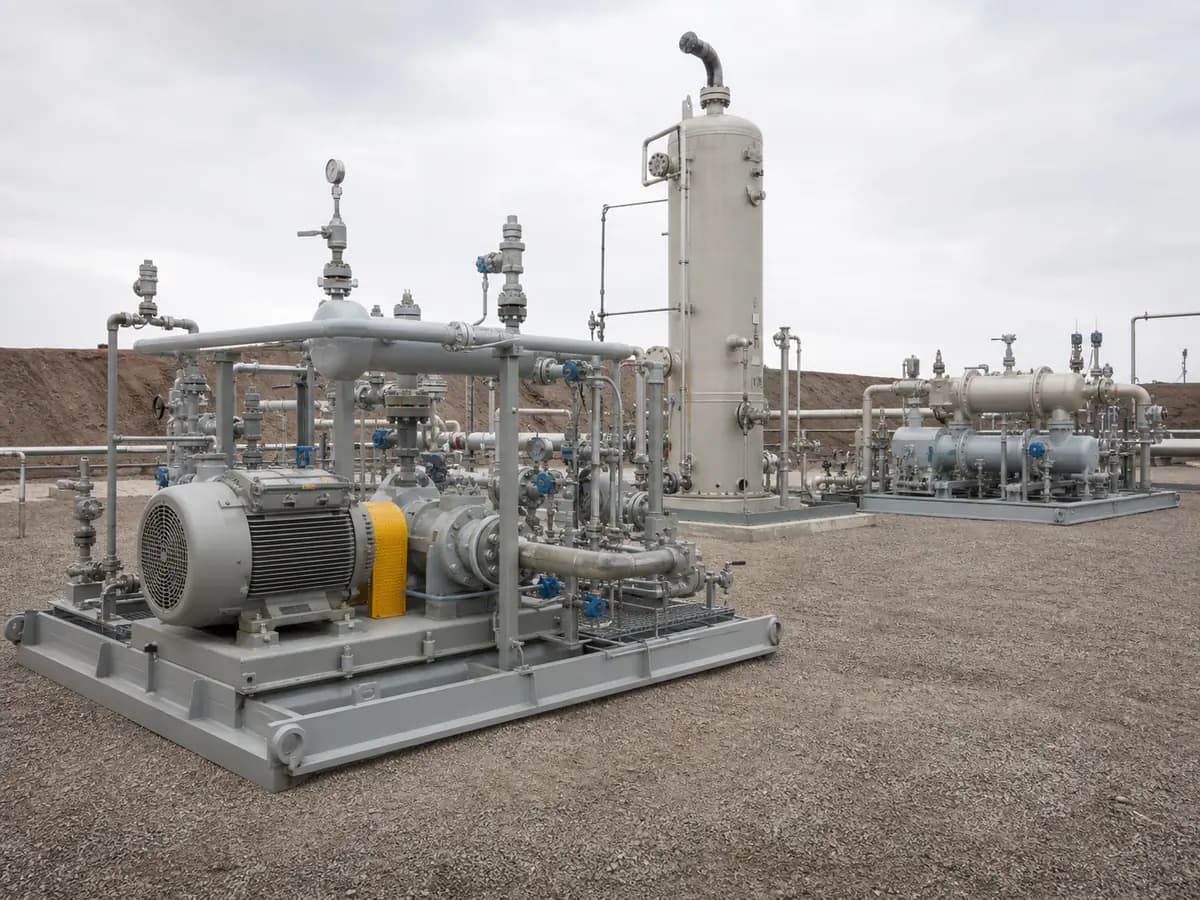
Produced Water & Gas Treatment
Vapor Recovery Compressor Units
Vapor Recovery Compressor Units for capture and compression of low-pressure hydrocarbon vapors from tanks, separators and production facilities for recovery or controlled disposal, with RFQ fields covering vapor composition and molecular weight, minimum normal and maximum flow, suction pressure and temperature, discharge pressure, liquid carryover and suction scrubber, compressor type, turndown, recycle, stages and cooling, driver, seals, materials, sour service, pulsation and vibration, noise, hazardous area, emissions target, control philosophy and package performance test.
RFQ selection reference
Reference fields for quotation comparison. Final values must be confirmed in the signed manufacturer datasheet.
| Parameter | Reference value | Notes |
|---|---|---|
| Compression cases | Suction and discharge pressureFlow, composition and temperature range | Include startup and low-flow cases |
| Compressor train | Reciprocating, rotary or screw selectionStages, cooling, seals and driver | Define turndown and recycle philosophy |
| Package controls | Power, vibration and noise limitsScrubber, instruments and shutdowns | State emissions accounting and test basis |
Product overview
Product scope
Vapor Recovery Compressor Units are presented as a quotation-ready product family for capture and compression of low-pressure hydrocarbon vapors from tanks, separators and production facilities for recovery or controlled disposal. The page supports process-package screening and technical RFQs; it does not promise one fixed model, treatment result or stocked unit. The final supplier must confirm performance against representative feed data, the buyer's approved process cases, governing code editions and signed datasheet.
Selection basis
The main inputs are vapor composition and molecular weight, minimum normal and maximum flow, suction pressure and temperature, discharge pressure, liquid carryover and suction scrubber, compressor type, turndown, recycle, stages and cooling, driver, seals, materials, sour service, pulsation and vibration, noise, hazardous area, emissions target, control philosophy and package performance test. Package performance depends on feed variability, upstream equipment and utility conditions, so minimum, normal, maximum and upset cases should be separated. Attach laboratory analyses, fluid or gas composition, process simulation data, required outlet limits, site utilities, hazardous-area classification, ambient conditions and plot constraints.
Trade and industry context
The cited UN Comtrade record is a broad HS-category export proxy used only to prioritize internationally traded machinery families. It is not an oilfield-only market value, shipment record or product demand forecast. API and ASME references identify common code boundaries and RFQ fields; they do not prove certification, stock, dealership or performance for an unnamed supplier.
Documents and acceptance
Define signed datasheets, process flow and instrumentation diagrams, heat and material balance, equipment and line lists, general arrangement, calculations, material certificates, welding and NDT records, pressure tests, factory acceptance test, control narrative, cause-and-effect, hazardous-area certificates, operating manual, spare-parts list, preservation and packing. State the guarantee test conditions, sampling method, instrument accuracy and treatment-performance acceptance criteria before commercial comparison.
RFQ checklist
- Process objective, quantity and delivery schedule
- Minimum, normal, maximum and upset feed cases
- Inlet composition, contaminants and required outlet specification
- Pressure, temperature, materials, corrosion and code editions
- Utilities, controls, hazardous area, emissions and waste interfaces
- Inspection, performance testing and final document requirements
- Destination, Incoterm, packing and transport limits
- Target package price or budget range and permitted alternatives
Upload the process datasheet, analysis, plot plan and project specification with the inquiry. Assumptions and supplier deviations should be resolved before price evaluation and order release.
Technical reference trail
These public references support the equipment family and selection context. They do not imply dealership, authorization or a guaranteed order specification.
Frequently Asked Questions
What information is required to quote Vapor Recovery Compressor Units?
Provide vapor composition and molecular weight, minimum normal and maximum flow, suction pressure and temperature, discharge pressure, liquid carryover and suction scrubber, compressor type, turndown, recycle, stages and cooling, driver, seals, materials, sour service, pulsation and vibration, noise, hazardous area, emissions target, control philosophy and package performance test, quantity, destination, delivery target and required documents. Attach representative feed analyses and the project process datasheet.
Are the displayed performance fields guaranteed?
No. They are RFQ inputs. Final performance is controlled by agreed feed cases, signed datasheets, guarantee conditions and the approved factory or site acceptance procedure.
Can an equivalent process configuration be proposed?
Yes, when alternatives are permitted. The supplier must list assumptions and deviations in process performance, utilities, materials, code, footprint, testing and delivery scope.
Submit RFQ for Vapor Recovery Compressor Units
Send product, quantity, specification and destination details so the requirements can be reviewed with potential suppliers.
Technical and RFQ References
Check common units, standards and purchasing terminology, then build a structured request for this equipment.
Related Products
Deoiling Hydrocyclone Packages
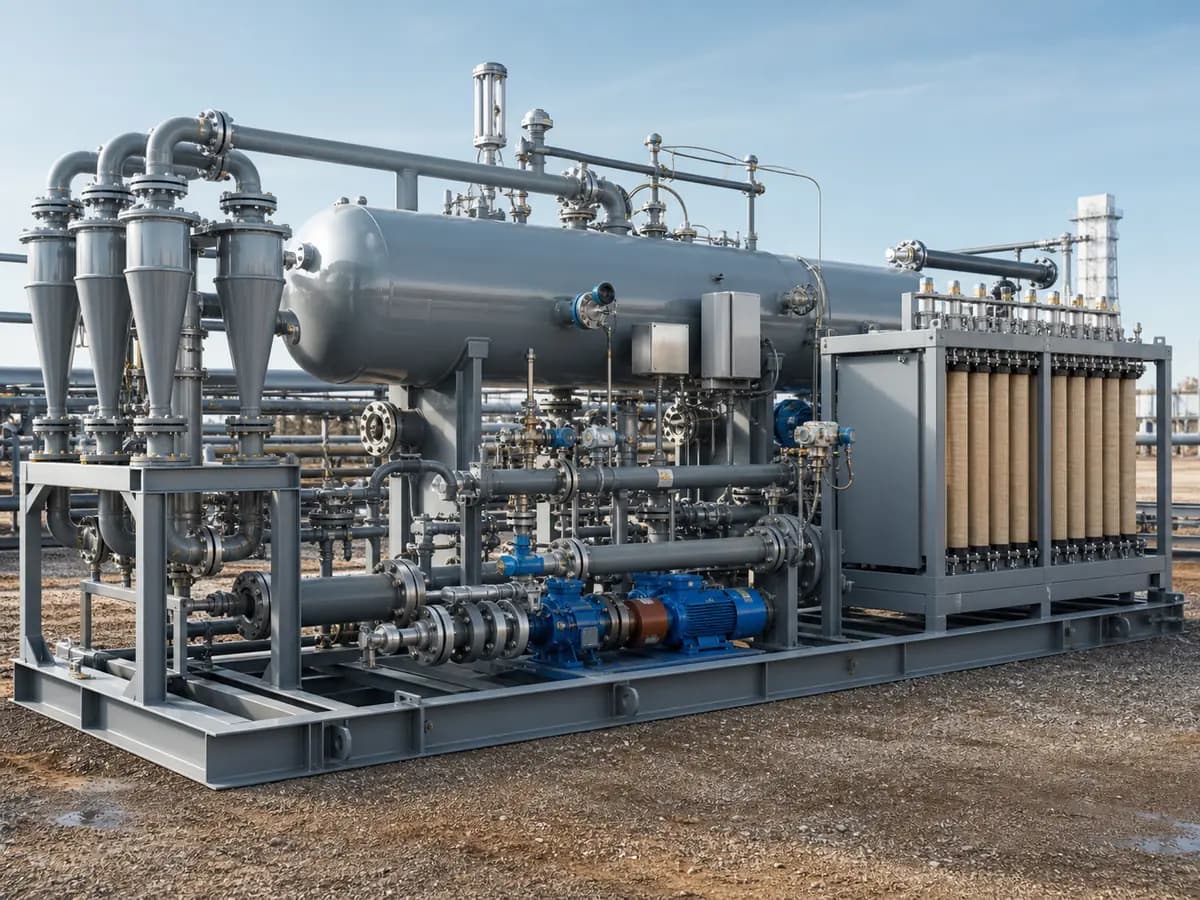
Deoiling Hydrocyclone Packages for bulk removal of dispersed oil from produced water using pressure-driven compact cyclonic separation, with RFQ fields covering minimum normal and maximum water rate, inlet oil concentration and droplet distribution, target outlet oil, pressure and temperature, available differential pressure, gas and solids content, water chemistry, turndown, liner quantity and material, erosion and corrosion basis, reject ratio, reject handling, instrumentation, sampling and performance test method.
Induced Gas Flotation Units
Induced Gas Flotation Units for polishing produced water by attaching fine gas bubbles to dispersed oil and suspended solids for surface removal, with RFQ fields covering water rate and composition, inlet and target oil-in-water, suspended solids, salinity, temperature, pressure, gas source and composition, flotation-cell arrangement, recycle ratio, chemical dosing, residence time, skimming and sludge handling, vessel code, metallurgy, hazardous area, instruments, control philosophy and test protocol.
Walnut Shell Media Filters
Walnut Shell Media Filters for tertiary removal of residual free oil and suspended solids before discharge, reuse or injection, with RFQ fields covering design water rate, inlet and outlet oil and solids limits, particle distribution, water chemistry, media grade and volume, filtration flux, pressure drop, run length, backwash sequence and source, waste volume, vessel count and redundancy, internal coating, corrosion allowance, controls, sampling and performance guarantee conditions.
Produced Water Injection Pump Skids
Produced Water Injection Pump Skids for pressurization of treated produced water for reservoir injection, disposal or pressure-support service, with RFQ fields covering minimum normal and maximum flow, suction conditions, required discharge pressure, water composition and solids, temperature, vapor pressure, pump type, stages, NPSH margin, materials, corrosion and erosion allowance, seal or packing plan, driver power and voltage, variable speed, duty and standby philosophy, pulsation control, minimum-flow recycle, instruments and performance test.
Related Technical Articles
API Standard Edition and Document Checks Before an Oilfield Order
A pre-order checklist for confirming API standard editions, addenda, errata, supplier scope and required product records.
API 6A Wellhead Equipment Buying Guide
Key information buyers should prepare before requesting quotes for API 6A wellhead equipment, christmas trees, valves, and related parts.
Choke and Kill Manifold Buying Guide
What buyers should specify when requesting quotes for API 16C choke manifolds, kill manifolds, valves, and high-pressure skids.