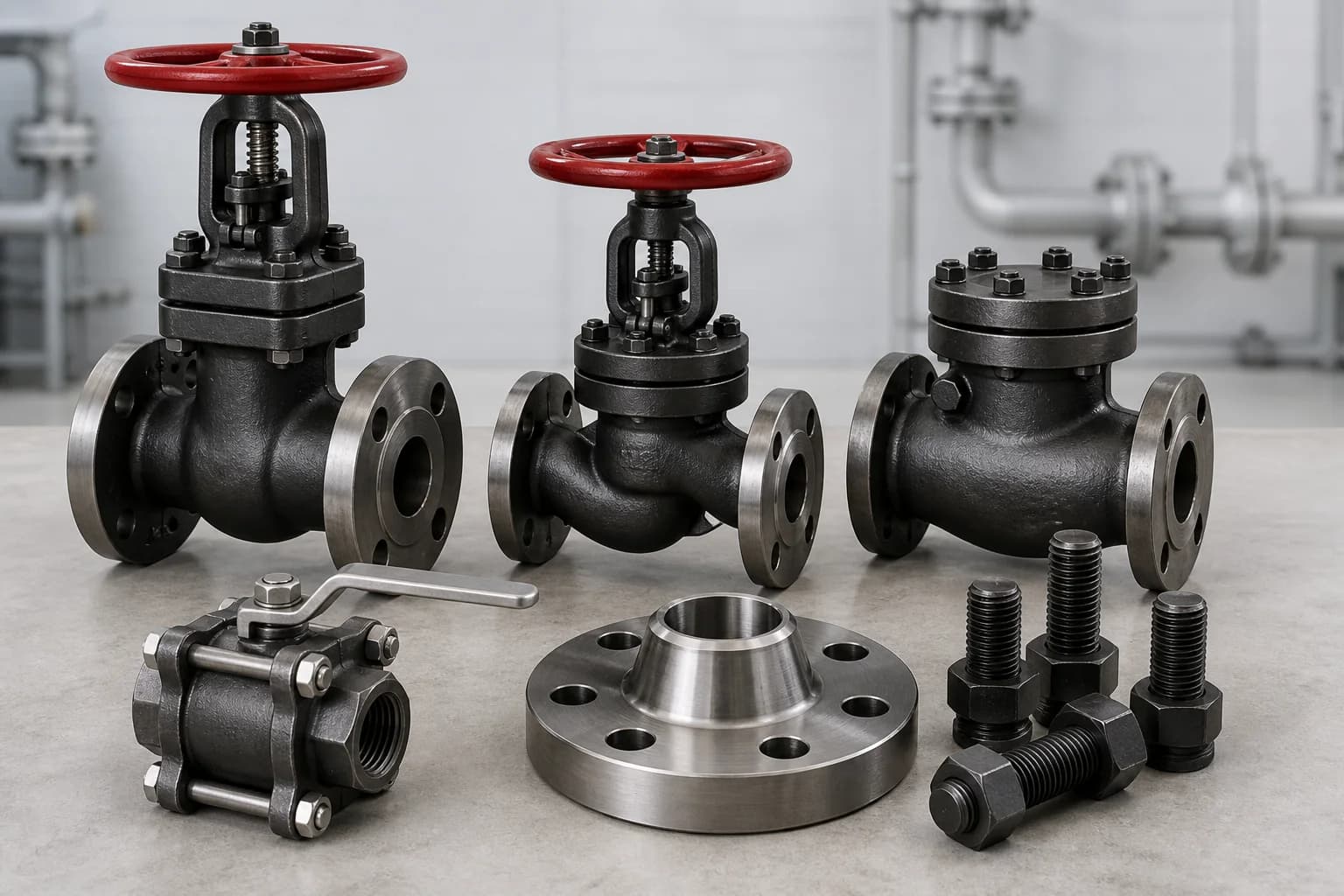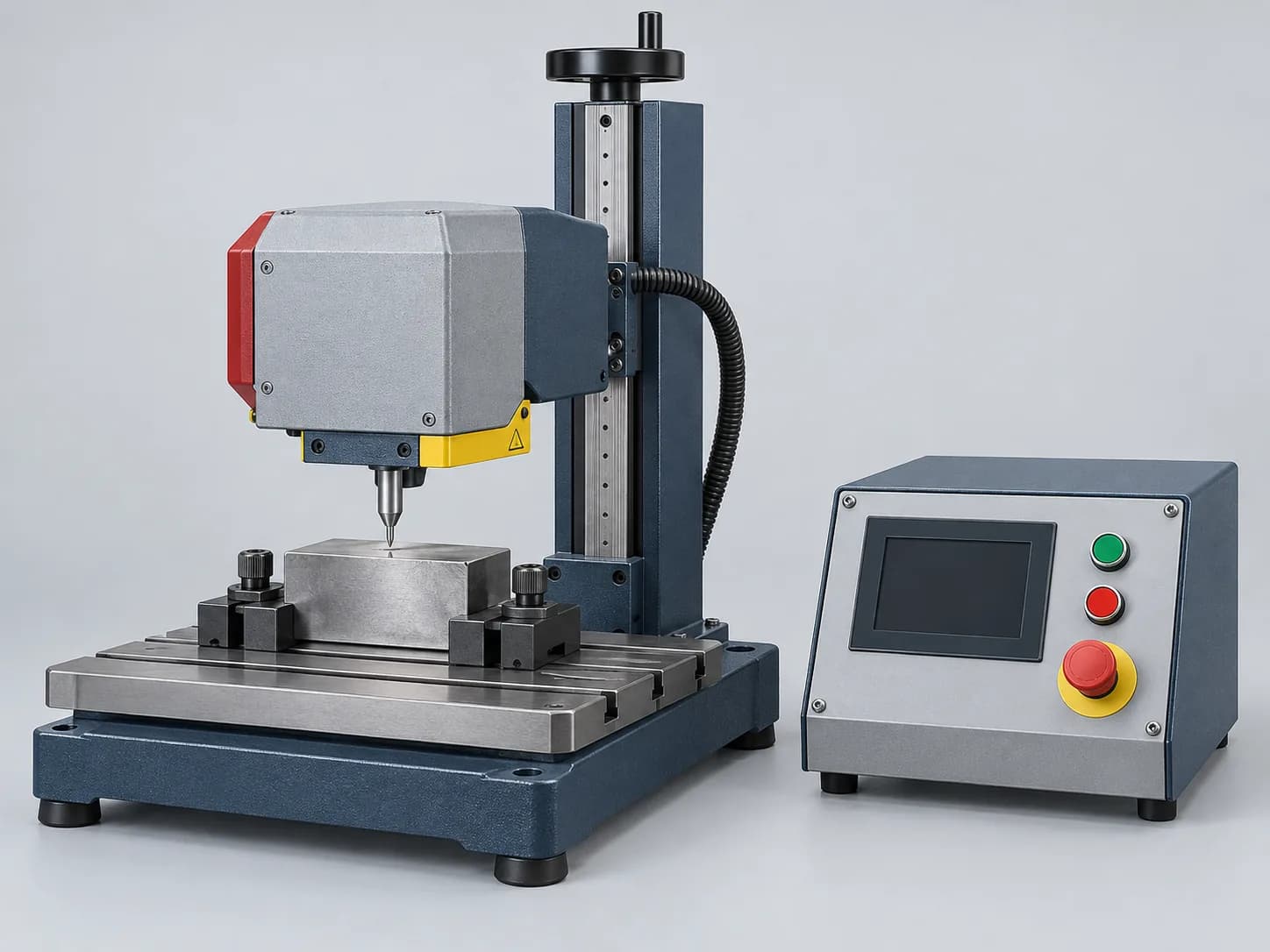
AI-generated category reference. It is not a photograph of a specific manufacturer or exact product model.
RFQ Sourcing & Export Support
Dot-peen Part Traceability Marking Equipment
Compare dot-peen marking equipment by named-model marking windows, utilities, fixtures and traceability interfaces, with source limitations retained.
- Documented model references
- e-TOUCH EVO · DBG-2-T1180
- Parameters, conditions and sources
Source-bound technical references
Reference fields for quotation comparison. Final values must be confirmed in the signed manufacturer datasheet.
| Model | Parameter | Reference value | Conditions and source |
|---|---|---|---|
| e-TOUCH EVO | Marking window | 60 x 25 mm | Exact EVO product page and PDF file page5 agree; not older E-touch or E-TOUCH XL. No guaranteed depth/cycle rate inferred. Technical specifications > Marking windowChecked 2026-10-23 |
| e-TOUCH EVO | Listed power | 100 W | Corded portable model; PDF table on file page5 agrees. Do not market this as a cordless e-MARK EVO. PDF file page5 > Technical datas tableChecked 2026-10-23 |
| e-TOUCH EVO | Power cable length | 5 m | Corded portable model; PDF table on file page5 agrees. Do not market this as a cordless e-MARK EVO. PDF file page5 > Technical datas tableChecked 2026-10-23 |
| e-TOUCH EVO | Stylus, formats and optional support | Tungsten-carbide stylus; text, logos and DataMatrix; optional front supports and column base | Options are not necessarily included; no code-grade, depth or part-integrity qualification is established. Description / AccessoriesChecked 2026-10-23 |
| DBG-2-T1180 | Standard marking area | 110 x 80 mm | Exact text in DBG-2-T series detail page; customization offered separately. Not a specification for every DBG-2-T variant. Technical parameters / standard marking areaChecked 2026-10-23 |
| DBG-2-T1180 | Marking speed | 1 to 3 characters/s | Only at stated4×4 mm character size. Not marks per second, not a complete code cycle time. Technical parameters / marking speedChecked 2026-10-23 |
| DBG-2-T1180 | Marking depth | <= 0.3 mm | Manufacturer explicitly says material-dependent. Not minimum assured depth and not an approved depth on a pressure-retaining oilfield component. Technical parameters / marking depthChecked 2026-10-23 |
| DBG-2-T1180 | Air pressure | 0.2 to 0.6 MPa | Pneumatic marker; source does not give air consumption or pressure-reference convention. No gauge suffix invented. Technical parameters / compressed airChecked 2026-10-23 |
| DBG-2-T1180 | Listed power | 400 W | Official detail technical block; power is listed consumption, not measured plant energy. No hazardous-area rating or air demand implied. Technical parameters / power consumption, power supply and temperatureChecked 2026-10-23 |
| DBG-2-T1180 | AC supply voltage | 100 to 240, +/-10% V AC | Official detail technical block; power is listed consumption, not measured plant energy. No hazardous-area rating or air demand implied. Technical parameters / power consumption, power supply and temperatureChecked 2026-10-23 |
| DBG-2-T1180 | Supply frequency | 50 to 60 Hz | Official detail technical block; power is listed consumption, not measured plant energy. No hazardous-area rating or air demand implied. Technical parameters / power consumption, power supply and temperatureChecked 2026-10-23 |
| DBG-2-T1180 | Listed ambient temperature | 0 to 40 degC | Official detail technical block; power is listed consumption, not measured plant energy. No hazardous-area rating or air demand implied. Technical parameters / power consumption, power supply and temperatureChecked 2026-10-23 |
| DBG-2-T1180 | Fixturing and data interfaces | Active fixture control; USB; database/serial marking; I/O and serial/network through a computer | Manufacturer functionality description; protocol, MES mapping and actual automation acceptance must be agreed. No universal plug-and-play compatibility. Performance features / DBG-2 controller / integration interfacesChecked 2026-10-23 |
| Dot-peen Part Traceability Marking Equipment (family reference; no model code)Family catalogue reference | Marking and reading workflow | Marking may be paired with a reading system and a database | SIC traceability-system explanation, not a standard included read/verify feature of every marker. Traceability implementation principleChecked 2026-10-23 |
| Dot-peen Part Traceability Marking Equipment (family reference; no model code)Family catalogue reference | Valve traceability example | Manufacturer case study uses both dot-peen and laser technology for different parts and connects marking to production data | Self-published H+ Valve case only. Not proof of oilfield standard compliance, customer authorization or suitability for any particular pressure part. Case study > Dot peen marking and laser marking... connected to ERPChecked 2026-10-23 |
| Dot-peen Part Traceability Marking Equipment (family reference; no model code)Family catalogue reference | Dot-peen principle and equipment forms | An impacting tungsten-carbide stylus creates dots; portable, bench and integrated forms are described | General manufacturer technology explanation, not a material-specific qualified process. Dot peen marking principle / SolutionsChecked 2026-10-23 |
Technical selection notes
Source-bound catalogue references are not an order-specific performance, certification or supply guarantee.
Published manufacturer data is a selection reference, not a quotation or evidence of supply availability.
Product overview
Buy a marking process, not only a marking head
Dot-peen equipment creates an identification pattern by moving an impacting stylus across a part. The procurement problem includes access to the marking location, support of the part, the required symbol and the record behind that symbol. It is therefore different from buying a finished drilling tool. A portable machine can be taken to the component; a bench arrangement can be organized around repeated parts and fixtures. The selected route should follow the part-handling and traceability problem, not a model-family name alone.
Portable reference: e-TOUCH EVO
SIC's e-TOUCH EVO is a corded portable dot-peen gun with a 60×25 mm marking window. The linked technical sheet lists 100 W power and a 5 m power cable. The manufacturer describes tungsten-carbide marking of text, logos and DataMatrix codes, with optional support faces and a column base. Confirm which supports and reader options are included. Do not call this a cordless e-MARK or transfer a larger XL window to it. The current webpage and linked sheet disagree on weight and overall dimensions; obtain the current configuration drawing before planning handling or access.
Bench-top pneumatic reference: DBG-2-T1180
Huapu's DBG-2-T series detail identifies DBG-2-T1180 and a standard 110×80 mm marking area. It lists 1–3 characters per second specifically for 4×4 mm characters, and a marking depth of no more than 0.3 mm, dependent on material. Its published pneumatic supply range is 0.2–0.6 MPa. These are conditional catalogue figures, not a guaranteed DataMatrix cycle time or a depth requirement suitable for every component. The same technical block lists 400 W, AC 100–240 V ±10%, 50–60 Hz and a 0–40°C environment; the available air consumption is not specified.
Define traceability beyond visible characters
The enquiry should state where serial numbers originate, which fields are fixed or variable, what prevents duplicate identifiers and how a failed or unreadable mark is handled. Ask whether the system only makes the mark or also reads and verifies it against an agreed rule. SIC describes mark/read/database workflows, while Huapu describes fixture control and data interfaces, including computer-mediated serial or network communication. Those statements do not prove that a particular MES can be connected without development. Specify the protocol, record structure, permissions and acceptance test as project deliverables.
Qualify the mark on the actual part
Provide a drawing or representative sample, material and hardness, surface condition, coating sequence, curvature, access and required character or code size. Ask the component owner to define the allowed marking location and any depth or integrity restrictions. Request trials showing readability after the relevant manufacturing steps and inspection method. A manufacturer's maximum-depth statement is not authorization to indent a pressure-retaining component. Include the agreed fixture, positioning and process settings in the representative-part acceptance documentation.
Evidence and delivery boundary
SIC's self-published safety-valve case illustrates why different parts can need different marking technologies and a shared data workflow; it is not oilfield process approval for these two models. The quotation should identify the machine, controller, software, supports, air/power requirements, reader and integration work separately. Agree a representative-part acceptance run and the documents to be delivered. This reference does not promise oilfield certification, a qualified marking procedure, stocked equipment or manufacturer authorization.
Build a representative-part marking and read-back acceptance trial in Dot-Peen Selection: A Representative-Part Traceability Trial.
Technical reference trail
These public references support the equipment family and selection context. They do not imply dealership, authorization or a guaranteed order specification.
- e-TOUCH EVO product pageChecked 2026-10-23
- e-TOUCH EVO English product sheetChecked 2026-10-23
- DBG-2-T1180 bench-top pneumatic dot-peen markerChecked 2026-10-23
- Marking, reading and database traceabilityChecked 2026-10-23
- Manufacturer case study: safety-valve traceabilityChecked 2026-10-23
- Dot-peen marking technologyChecked 2026-10-23
Frequently Asked Questions
Does the DBG-2-T1180 character-speed figure establish a DataMatrix cycle time?
No. The published speed is conditional on the stated character size and is not a guaranteed complete-code cycle time. Define the required symbol and data fields, fixture and read-back requirements, then agree a representative-part acceptance run for the proposed workflow.
Can the machine's maximum marking depth be used as the requirement for a pressure-retaining part?
No. A machine capability does not authorize indentation of the component. Ask the component owner to define the permitted marking location and depth or integrity restrictions. Supply the material, hardness, surface condition and coating sequence, and request readability trials after the relevant manufacturing steps.
Submit RFQ for Dot-peen Part Traceability Marking Equipment
Send product, quantity, specification and destination details so the requirements can be reviewed with potential suppliers.
Technical and RFQ References
Check common units, standards and purchasing terminology, then build a structured request for this equipment.