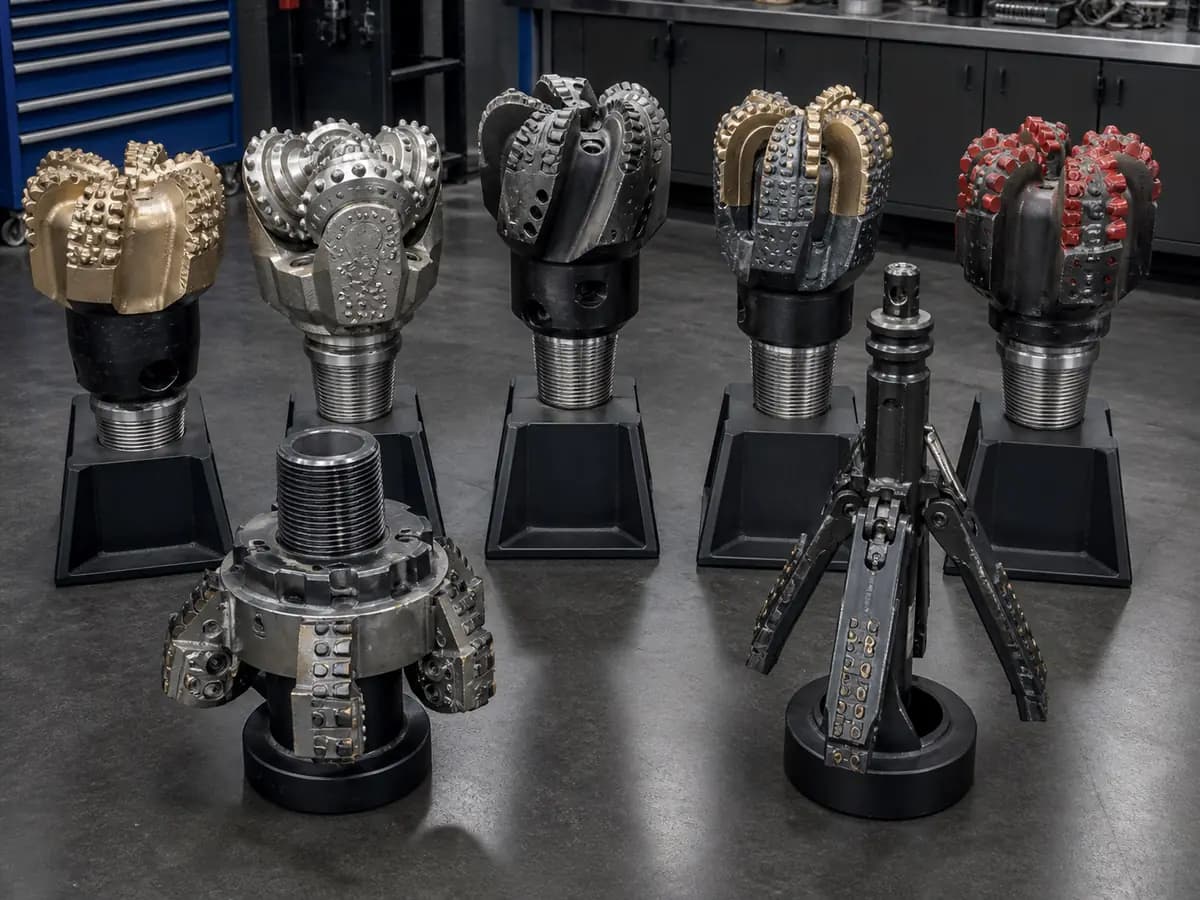
Drill Bits & Hole Enlargement
Tricone Roller-Cone Drill Bits
Tricone Roller-Cone Drill Bits for rotary drilling across soft through hard formations using steel-tooth or tungsten-carbide-insert rolling cutters, with RFQ fields covering hole size, IADC code, formation and abrasiveness, steel-tooth or TCI cutting structure, sealed or open bearing, gauge protection, jet configuration, expected rotary speed, weight on bit, flow, pressure drop, connection and directional requirement.
RFQ selection reference
Reference fields for quotation comparison. Final values must be confirmed in the signed manufacturer datasheet.
| Parameter | Reference value | Notes |
|---|---|---|
| Formation class | IADC code and hole sizeSteel tooth or TCI | Supply offset run and dull-condition records |
| Bearing and gauge | Open, sealed roller or journal bearingGauge protection and shirttail features | State temperature and abrasive-solids exposure |
| Operating window | WOB and rotary-speed rangeNozzles, flow and API pin | Confirm rig hydraulics and connection torque |
Product overview
Product scope
Tricone Roller-Cone Drill Bits are presented as a quotation-ready product family for rotary drilling across soft through hard formations using steel-tooth or tungsten-carbide-insert rolling cutters. This page supports early technical comparison; it does not identify one guaranteed model, stocked unit or universal configuration. The final supplier and manufacturer must confirm the ordered design against the buyer's datasheet, project specification, applicable code editions and signed quotation.
Selection basis
The main selection inputs are hole size, IADC code, formation and abrasiveness, steel-tooth or TCI cutting structure, sealed or open bearing, gauge protection, jet configuration, expected rotary speed, weight on bit, flow, pressure drop, connection and directional requirement. These fields affect equipment fit, performance, safety, documentation, transport and total package price. For replacement equipment, include the installed maker, model, serial number, original part number, clear nameplate photographs and interface drawings. For a new package, attach process cases, site data, governing specifications and the latest approved standard editions.
Configuration reference
The table above is a structured RFQ reference rather than a manufacturer model list. It shows the information required to compare technically responsive quotations. Public standards and manufacturer examples identify common architecture and purchasing fields only; they do not imply dealership, authorization, stock ownership or identical performance across suppliers.
Documents and inspection
Define the document package before commercial evaluation. Depending on the equipment, request signed datasheets, process and instrumentation diagrams, general arrangement and interface drawings, design calculations, material certificates, pressure or performance test reports, NDT records, hazardous-area certificates, inspection and test plan, preservation procedure, packing list, lifting plan, marking photographs and certificate of conformity. Verify the exact code edition, certificate scope, manufacturing facility and offered model before purchase-order release.
RFQ checklist
- Product family, service, quantity and required delivery date
- Operating cases, pressure or load, temperature, flow and process media
- Dimensions, connections, materials and approved standard edition
- Site utilities, ambient conditions and hazardous-area classification
- Required testing, third-party inspection, traceability and document language
- Destination, Incoterm, packing, lifting and transport restrictions
- Target unit price or budget range and acceptable technical alternatives
Upload the specification, drawing, equipment list, process data or replacement photographs with the inquiry. Open technical points and supplier deviations should be closed before price comparison and order release.
Technical reference trail
These public references support the equipment family and selection context. They do not imply dealership, authorization or a guaranteed order specification.
Frequently Asked Questions
What information is required to quote Tricone Roller-Cone Drill Bits?
Provide hole size, IADC code, formation and abrasiveness, steel-tooth or TCI cutting structure, sealed or open bearing, gauge protection, jet configuration, expected rotary speed, weight on bit, flow, pressure drop, connection and directional requirement, quantity, destination, delivery target and the required document package. Attach the project datasheet, process data or matching equipment drawing whenever available.
Are the displayed specifications guaranteed values?
No. They are RFQ reference fields. The final manufacturer datasheet, approved drawings, calculations, test procedure and purchase specification control the ordered equipment.
Can an equivalent configuration be quoted?
Yes, when the buyer permits alternatives. Every deviation in standard, rating, material, interface, certification, testing or delivery scope should be listed clearly for technical review.
Submit RFQ for Tricone Roller-Cone Drill Bits
Send product, quantity, specification and destination details so the requirements can be reviewed with potential suppliers.
Technical and RFQ References
Check common units, standards and purchasing terminology, then build a structured request for this equipment.
Related Products
Fixed-Cutter PDC Drill Bits
Fixed-Cutter PDC Drill Bits for rotary and directional drilling in application-matched formations using fixed synthetic-diamond cutting structures, with RFQ fields covering hole size, interval and formation, compressive strength and abrasiveness, interbeds, expected ROP, bit durability target, BHA and rotary-steerable compatibility, blade count, cutter size and layout, gauge length, nozzle configuration, connection and planned hydraulics.
Hybrid Drill Bits
Hybrid Drill Bits for challenging interbedded, transitional or vibration-prone formations where combined rolling and shearing action is evaluated, with RFQ fields covering hole size, lithology and transitions, vibration history, directional objectives, cutter and cone arrangement, gauge design, expected WOB and RPM, flow and nozzle program, connection, motor or rotary-steerable compatibility and offset performance.
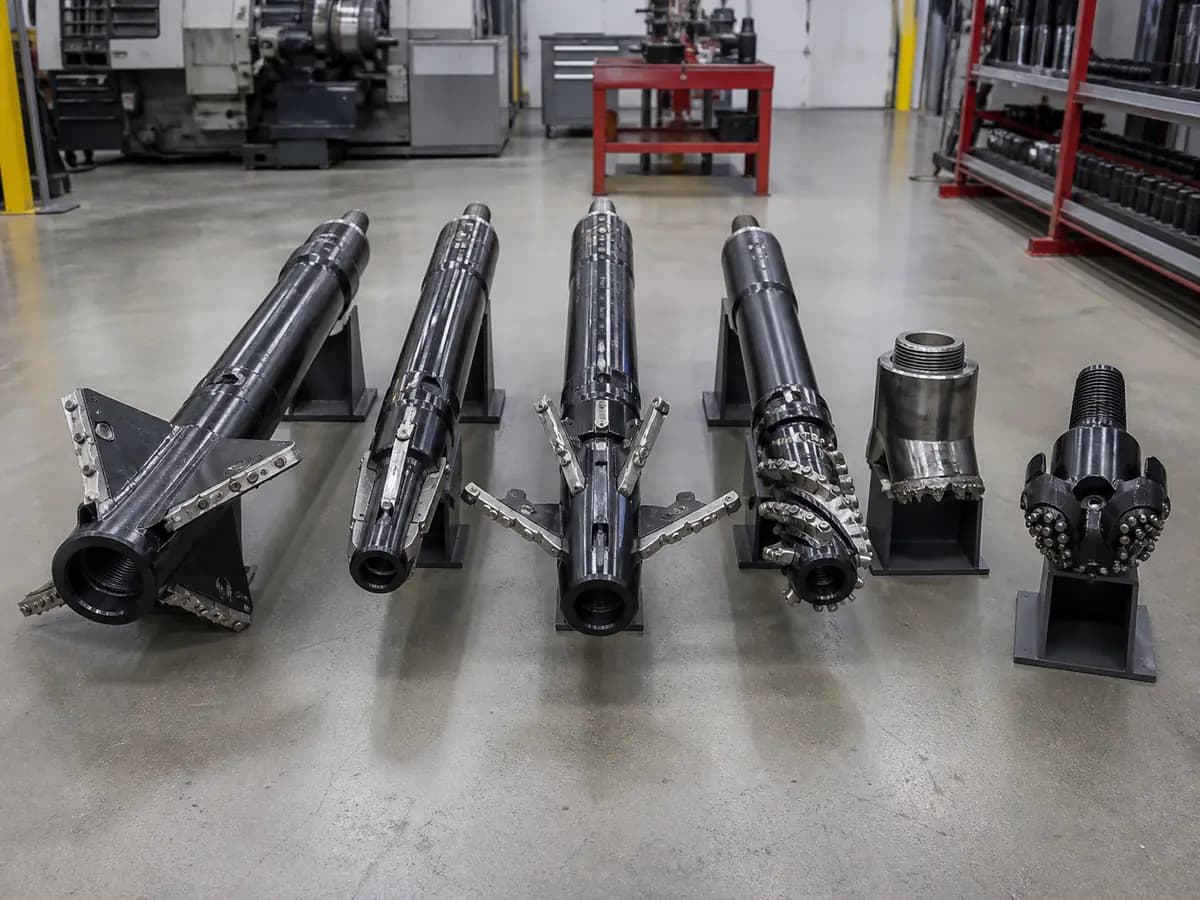
Hole Openers and Underreamers
Hole Openers and Underreamers for pilot-hole enlargement, casing-clearance creation and below-restriction underreaming in drilling and completion operations, with RFQ fields covering pilot and enlarged hole size, pass-through restriction, fixed or expandable design, activation method, cutter blocks, formation, gauge protection, flow and pressure drop, stabilizer arrangement, connection, BHA length, lost-circulation risk and retrieval contingency.
Reaming Shoes and Casing-Drilling Bits
Reaming Shoes and Casing-Drilling Bits for casing or liner deployment through unstable, ledged or restricted hole and selected drill-in or drill-out installation programs, with RFQ fields covering casing or liner size and weight, shoe OD and drift, connection, cutting structure, ream-ahead or drill-through requirement, formation, cement compatibility, internal profile, drill-out material, circulation ports, torque and pressure limits and float-equipment interface.
Related Technical Articles
API Standard Edition and Document Checks Before an Oilfield Order
A pre-order checklist for confirming API standard editions, addenda, errata, supplier scope and required product records.
API 6A Wellhead Equipment Buying Guide
Key information buyers should prepare before requesting quotes for API 6A wellhead equipment, christmas trees, valves, and related parts.
Choke and Kill Manifold Buying Guide
What buyers should specify when requesting quotes for API 16C choke manifolds, kill manifolds, valves, and high-pressure skids.