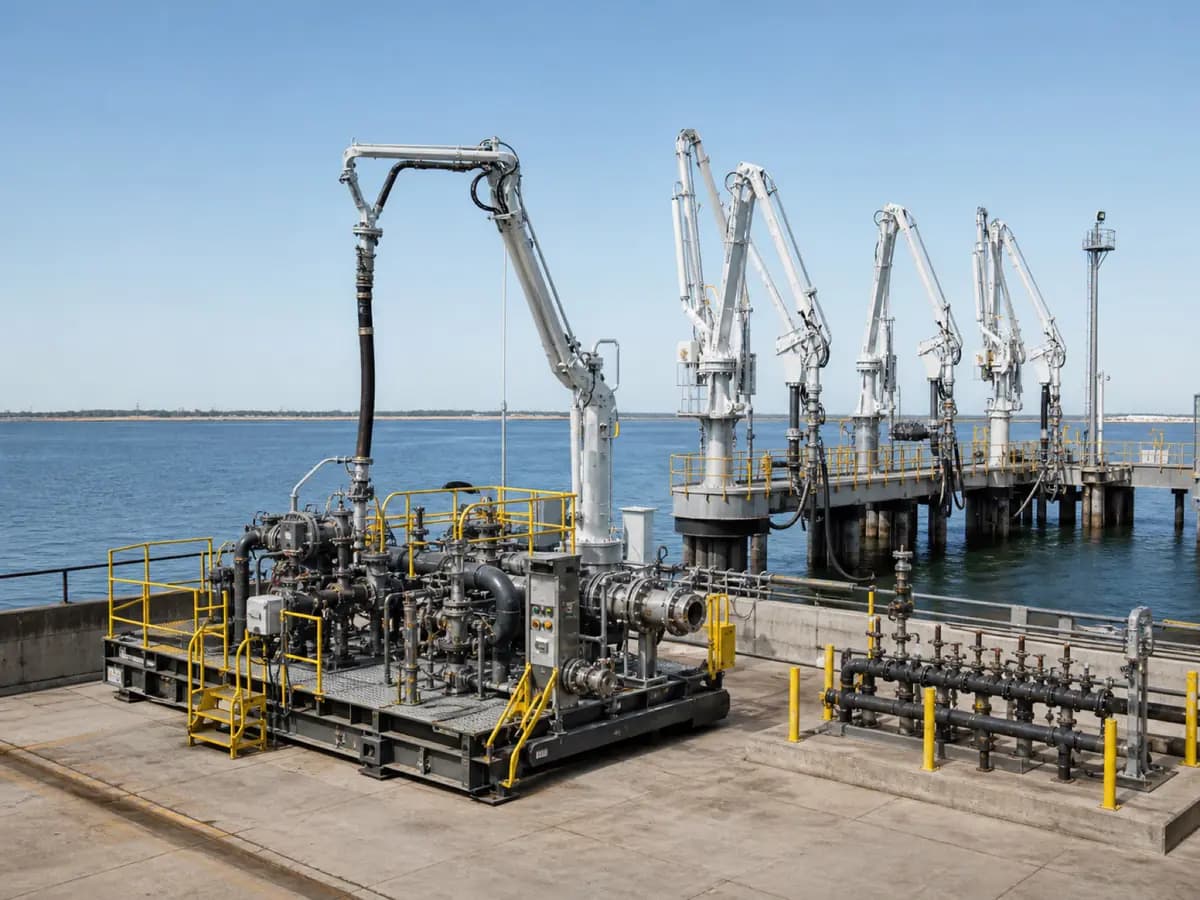
Oil Storage, Metering & Loading
Marine Loading Arms
Marine Loading Arms for articulated transfer of crude oil or hydrocarbon products between terminal piping and vessel manifolds. Review process cases, metering or storage basis, safety functions, interfaces, approvals and test records before requesting a comparable quotation.
RFQ selection reference
Reference fields for quotation comparison. Final values must be confirmed in the signed manufacturer datasheet.
| Parameter | Reference value | Notes |
|---|---|---|
| Transfer duty | Flow, pressure and emergency casesProduct, line size and piping class | Provide hydraulic and surge calculations |
| Operating envelope | Vessel manifold, tide, reach and articulationWind, wave and jetty geometry | Attach vessel matrix and jetty drawings |
| Safety and controls | Structural, swivel and emergency-release loadsQCDC/ERS, ESD, drain, purge and monitoring | Define terminal cause-and-effect and testing |
Product overview
Product scope
Marine Loading Arms are presented as a quotation-ready equipment family for articulated transfer of crude oil or hydrocarbon products between terminal piping and vessel manifolds. This page supports technical offer comparison; it does not promise one model, inventory position, measurement performance, regulatory approval or certification. The selected manufacturer and system integrator must confirm the equipment against the process duty, custody contract, site regulations, interface drawings, governing standard editions and signed datasheet.
Selection basis
The main RFQ inputs are product and temperature, loading/unloading rate, design pressure, line size and piping class, vessel range and manifold envelope, tidal range, jetty elevation, operating wind and wave limits, reach and articulation, swivel-joint design, balancing method, hydraulic or electric drive, connection or QCDC type, emergency release system and breakaway philosophy, drain and purge, vapor return, position monitoring, ESD integration, hazardous area, corrosion protection, structural loads, maintenance access and factory/site testing. Storage, metering and loading equipment cannot be selected from nominal line size or capacity alone. Provide normal, minimum, maximum and upset process cases, fluid analysis, site environmental data, piping and instrumentation diagrams, plot plan, utility schedule, control and shutdown philosophy, legal-metrology jurisdiction, terminal or custody agreement and all mechanical, electrical and civil interfaces. For expansion work, include existing equipment records and measured tie-ins.
Trade and industry context
The cited UN Comtrade record is a broad tank, instrument or handling-equipment export proxy used only to prioritize internationally traded product families. It is not an oilfield-only market size, a search-volume estimate or a shipment claim for this equipment. API references identify relevant storage and measurement practice boundaries; they do not prove that an unnamed supplier is licensed, certified, legally approved or holding stock.
Documents and inspection
Define signed process and mechanical datasheets, calculations, PFDs and P&IDs, general arrangement and tie-in drawings, civil and structural loads, material certificates, welding procedures and NDE, tank or piping tests, instrument calibration, uncertainty budget and proving records where applicable, hazardous-area certificates, functional safety or cause-and-effect tests, FAT/SAT, coating records, certificate of conformity, manuals and spares. Verify the manufacturer, integrator, calibration traceability, certificate scope, local approvals and standard editions before order release.
RFQ checklist
- Equipment family, quantity, capacity/flow and delivery target
- Fluid properties, pressure, temperature and normal/upset cases
- Measurement accuracy, proving, sampling and legal requirements
- Tank, pipe, civil, power, control and hazardous-area interfaces
- Materials, corrosion, inspection, calibration and test records
- Destination, Incoterm, module size, lifting and transport limits
- Target unit or package price and acceptable technical alternatives
Upload the process datasheet, P&ID, site layout, custody or terminal requirements and project specification with the inquiry. Close every process, metrology, safety, interface and regulatory deviation before comparing price or releasing the order.
Technical reference trail
These public references support the equipment family and selection context. They do not imply dealership, authorization or a guaranteed order specification.
Frequently Asked Questions
What information is required to quote Marine Loading Arms?
Provide product and temperature, loading/unloading rate, design pressure, line size and piping class, vessel range and manifold envelope, tidal range, jetty elevation, operating wind and wave limits, reach and articulation, swivel-joint design, balancing method, hydraulic or electric drive, connection or QCDC type, emergency release system and breakaway philosophy, drain and purge, vapor return, position monitoring, ESD integration, hazardous area, corrosion protection, structural loads, maintenance access and factory/site testing, quantity, destination, delivery target and required records. Attach process data, P&IDs, layouts and the applicable custody or terminal requirements.
Does an API reference make the package legally approved for custody transfer?
No. API measurement practices are only part of the design basis. The buyer must define the governing contract, standard editions, legal-metrology jurisdiction, calibration traceability and local approvals.
How should alternative packages be compared?
Compare the same process cases, uncertainty or performance basis, materials, interfaces, safety functions, tests, calibration, documents, site scope and all technical or regulatory deviations before comparing price.
Submit RFQ for Marine Loading Arms
Send product, quantity, specification and destination details so the requirements can be reviewed with potential suppliers.
Technical and RFQ References
Check common units, standards and purchasing terminology, then build a structured request for this equipment.
Related Products
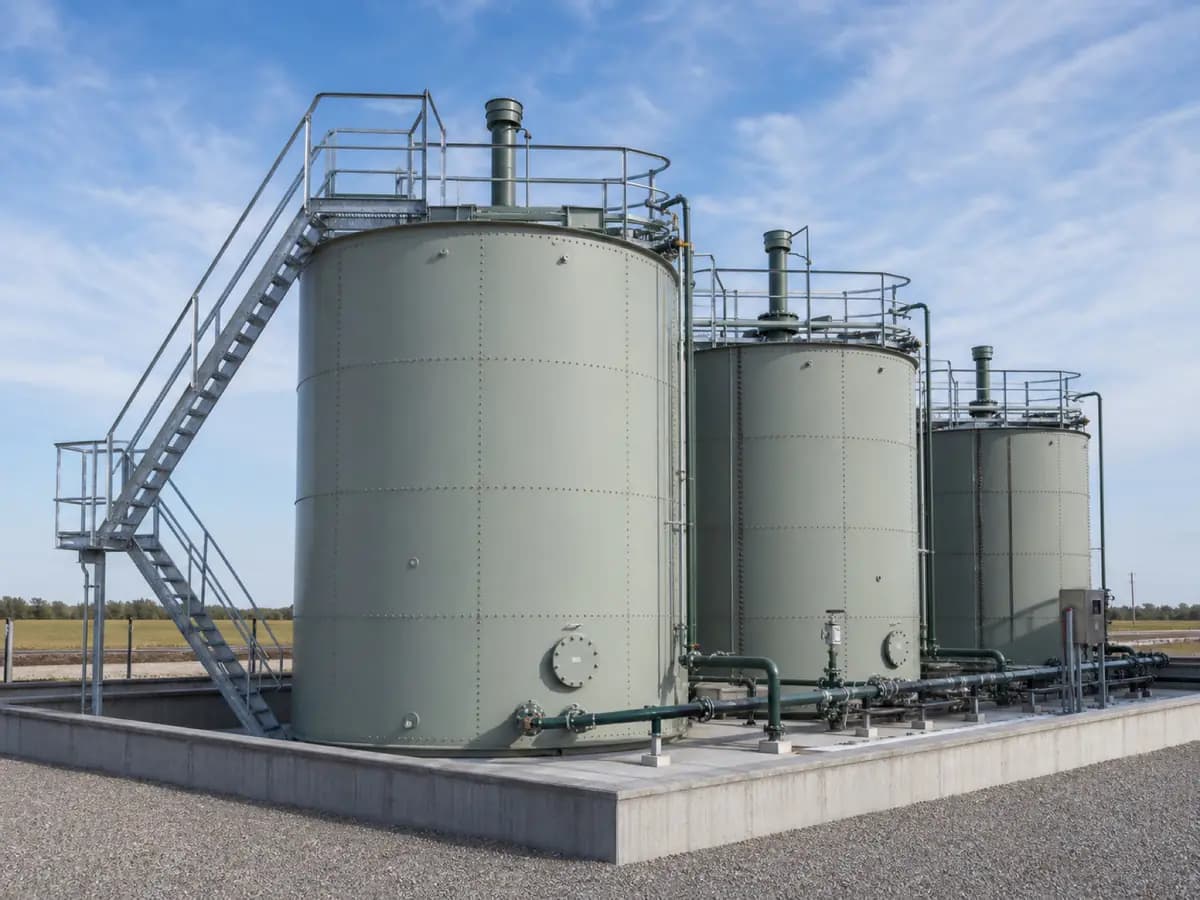
API Production Storage Tanks
API Production Storage Tanks for atmospheric storage of crude oil, produced liquids or compatible oilfield fluids at production and gathering sites. Review process cases, metering or storage basis, safety functions, interfaces, approvals and test records before requesting a comparable quotation.
Bolted Steel Oil Storage Tanks
Bolted Steel Oil Storage Tanks for modular field assembly of production or process-liquid storage where transport and site construction constraints favor bolted panels. Review process cases, metering or storage basis, safety functions, interfaces, approvals and test records before requesting a comparable quotation.
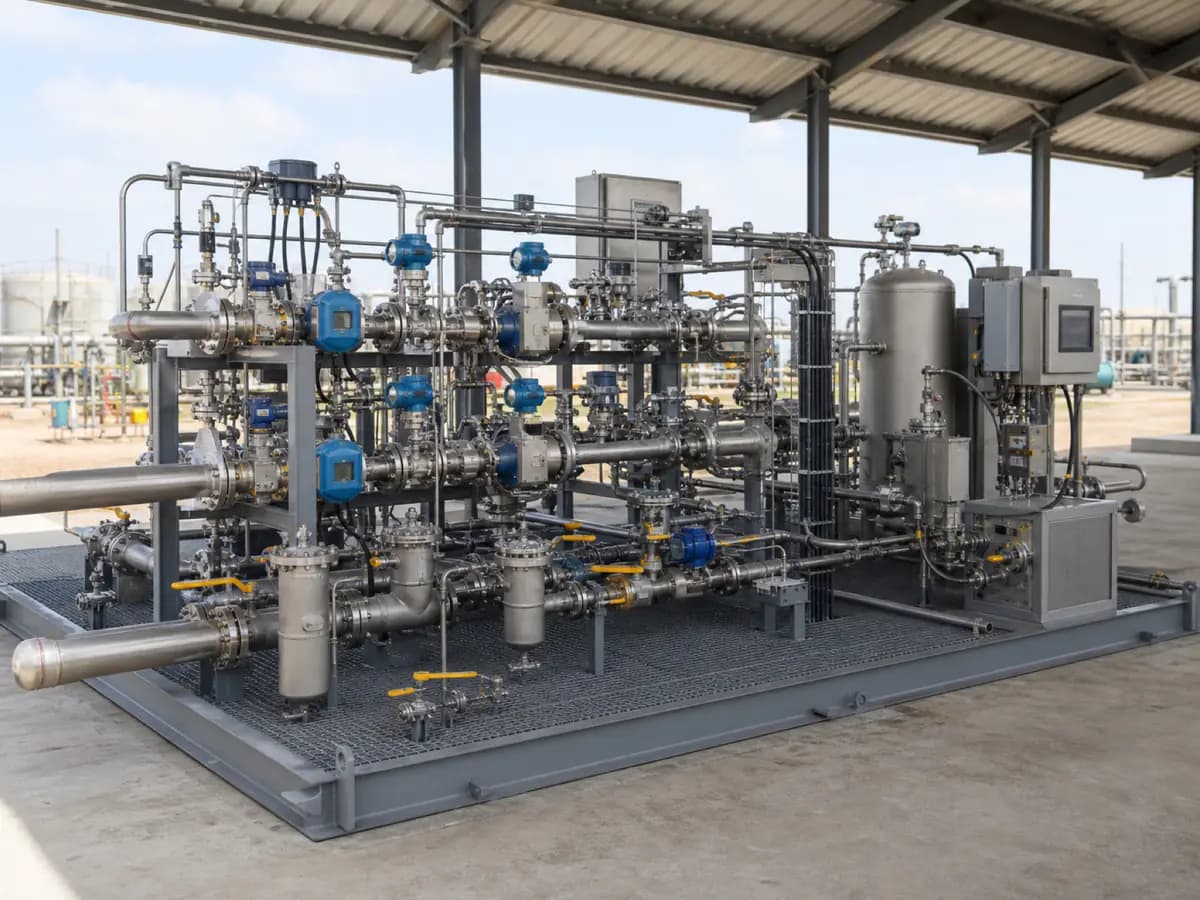
Lease Automatic Custody Transfer (LACT) Units
Lease Automatic Custody Transfer (LACT) Units for automatic measurement, sampling, quality checking and transfer of stabilized crude oil from lease storage into a pipeline or transport system. Review process cases, metering or storage basis, safety functions, interfaces, approvals and test records before requesting a comparable quotation.
Custody-Transfer Metering Skids
Custody-Transfer Metering Skids for fiscal or allocation measurement of liquid hydrocarbon transfers through one or more instrumented meter runs. Review process cases, metering or storage basis, safety functions, interfaces, approvals and test records before requesting a comparable quotation.